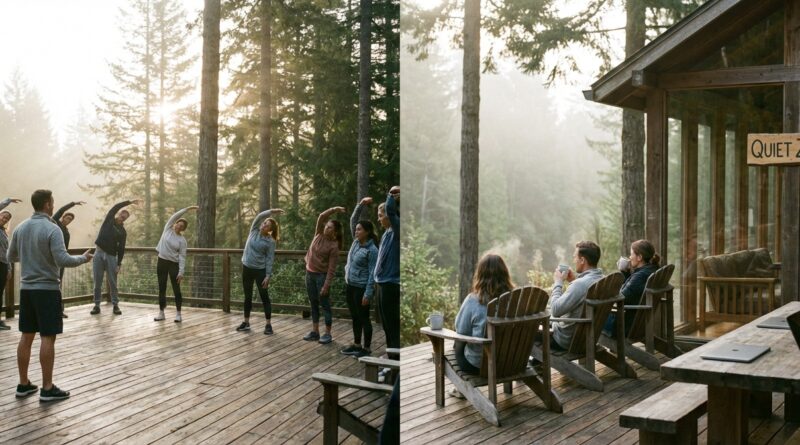
From Offsite To Burnout Recovery Retreat: Why 2026’s Smartest Teams Are Prescribing Rest, Not Just Strategy
You can feel the trap, can’t you. You are supposed to plan a retreat that lifts morale, rebuilds trust, sparks ideas, and somehow fixes months of stress in two or three days. Meanwhile, people are already tired. They are coming off packed calendars, patchy hybrid routines, and the kind of always-on work culture that makes even a “fun” offsite feel like one more obligation. That is why the old playbook keeps failing. If your last retreat was a blur of keynote decks, forced bonding, and late-night socials, you did not send people home refreshed. You sent them home needing another day off. The smartest teams in 2026 are changing the brief. A post pandemic corporate burnout recovery retreat is not a luxury spa weekend with a logo on it. It is a carefully designed reset. The goal is not to squeeze out maximum content. It is to create the conditions for people to rest, reconnect, and come back able to think clearly again.
⚡ In a Hurry? Key Takeaways
- A burnout recovery retreat works best when rest is treated as part of the agenda, not the gap between sessions.
- Cut the schedule by at least a third, add quiet time, and limit strategy sessions to the few decisions that truly need people in the same room.
- If people leave less tired, more connected, and clearer on next steps, the retreat has done more for culture and performance than any slide-packed offsite.
Why the classic offsite is breaking people, not helping them
Most retreats still follow a very old script. Fly everyone in. Start early. Pack every hour. Add a dinner, a team challenge, maybe a motivational speaker, then call it culture building.
That made some sense when office life gave people natural breaks. It makes a lot less sense now. Hybrid work has erased many of those boundaries. People are switching between chats, calls, shared docs, and home life all day long. Their brains are not empty when they arrive. They are already full.
So when leaders ask an offsite to fix burnout, low trust, fuzzy priorities, and weak collaboration all at once, the event gets overloaded. The schedule becomes a rescue mission. That is exactly what pushes people over the edge.
What a burnout recovery retreat actually is
A post pandemic corporate burnout recovery retreat is not about doing nothing. It is about doing fewer things on purpose.
The format starts from a simple idea. Burned-out teams do not need more input. They need recovery, safety, and enough space to process what has been happening.
That means the retreat should do three jobs well.
1. Lower the stress level
People need time without notifications, performance mode, and back-to-back sessions. If the body never comes down from alert mode, meaningful conversation does not happen.
2. Rebuild human connection
Not the awkward kind. Real connection often comes from unhurried meals, walks, small-group chats, and honest conversations with no slideshow in sight.
3. Create just enough clarity
You still need some work outcomes. But keep them narrow. Focus on the few decisions, priorities, or habits that will actually make daily work better when people return.
The shift smart teams are making in 2026
The best retreat planners are flipping the ratio. Instead of 80 percent content and 20 percent breathing room, they are moving closer to 40 percent guided work and 60 percent recovery, reflection, and connection.
That sounds risky until you see the results. People listen better. They are less defensive. The conversations get more honest. Strategy work becomes shorter because everyone is less mentally fried.
Some teams are even deciding that one giant annual event is the wrong tool altogether. If your budget or energy is stretched, it is worth reading From Offsite To Micro-Retreat Circuit: Why 2026’s Smartest Teams Trade One Big Trip For Quarterly Local Reset Days. For many groups, smaller reset moments spread through the year do a better job than one oversized trip that tries to carry the whole culture on its back.
How to design a retreat that helps people recover
Start with the real problem, not the wishlist
Ask leadership one blunt question. What is broken that truly requires people to gather in person?
If the answer is “everything,” slow down. That is not a retreat brief. That is panic in a nicer font.
Choose one primary outcome and two secondary ones. For example:
- Primary outcome: reduce stress and rebuild trust
- Secondary outcome: align on top three priorities for the quarter
- Secondary outcome: improve cross-team communication habits
That one step stops the event from turning into a three-day catch-all.
Design for energy, not just efficiency
Most agendas are built like airport timetables. That is the problem.
Build around human energy instead. Put demanding sessions in the late morning. Keep afternoons lighter. End earlier than you think you should. Protect time between sessions. If every minute is spoken for, people never reset.
A simple rule works well. No more than four hours a day of structured content. The rest should be meals, movement, small-group conversation, solo downtime, and optional activities.
Make rest visible in the schedule
If rest is not written into the agenda, it will be eaten by “just one more session.”
Label it clearly. Quiet hour. Device-free walk. Reflection block. Free afternoon. Optional wellness activity. Early finish.
This matters because employees often do not feel allowed to rest at work events unless leadership makes it explicit.
Trim the strategy work hard
This is where many retreats go wrong. Leaders think, “Since we have everyone together, let’s also cover planning, restructuring, training, product updates, culture work, and customer feedback.”
No. Pick the conversations that truly benefit from in-person nuance. Leave status updates, long presentations, and one-way information sharing for before or after the trip.
If a topic could be sent as a memo, do not make it a stage session.
Stop confusing forced fun with connection
Not everyone wants to build a raft, solve an escape room, or karaoke with their manager. Connection does not have to be loud to be effective.
Try calmer options. Shared meals without assigned icebreakers. Nature walks. Small hosted discussion circles. Creative but low-pressure workshops. Spaces where introverts are not punished for being introverts.
The test is simple. Would a tired person still find this restorative?
A practical blueprint for a two-day burnout recovery retreat
Before the retreat
Send a short survey. Ask what is draining people most, what would help them feel restored, and what one work issue most needs face-to-face discussion.
Then set expectations. Tell people this is not a marathon of presentations. Tell them there will be downtime. Tell them attendance at some social elements is optional. That alone lowers anxiety.
Day 1
Late morning arrival, not dawn patrol.
Welcome session with a plain-English goal for the retreat.
One short team health session. What has felt hard. What has helped. What needs to change.
Long lunch.
Free time or optional wellness block.
One focused strategy session on the top priority only.
Early dinner.
Unstructured evening, not mandatory “fun until 11.”
Day 2
Slow start.
Walk-and-talk or small group reflection.
One practical working session to agree next steps, owners, and no more than a handful of changes.
Lunch.
Closing check-out. What are you leaving behind. What are you taking back.
Departure while people still have enough energy to be decent to themselves at home.
What to avoid if you do not want a retreat backlash
Too many presentations
If people are staring at slides for hours, you have recreated the office in a nicer postcode.
Mandatory vulnerability
Psychological safety cannot be forced. Invite honesty. Do not demand confession.
Late-night bonding expectations
Exhausted people do not become closer because they stayed up longer.
No recovery time after travel
Travel itself is draining. Build that reality into the plan.
Measuring success by busyness
A full agenda is not proof of value. Sometimes it is proof nobody edited.
How to tell if your retreat worked
Do not judge it by whether everyone said it was “great” on the coach back. Judge it two to four weeks later.
Look for signs like these:
- People report feeling more energized, not just entertained
- Cross-team communication gets easier
- Managers notice lower friction and fewer small flare-ups
- The agreed actions actually happen because there were not too many
- People ask for the format again, instead of dreading the next one
You can also track simpler data. Pulse survey scores. Sickness days. Retention risk. Meeting load changes. Even whether people took their full downtime at the retreat is a useful clue. If nobody did, your culture still may not feel safe enough to rest.
When a retreat is the wrong answer
Sometimes the honest answer is that your team does not need a retreat first. It needs workload fixes, clearer priorities, better management habits, or fewer meetings.
A retreat can support recovery. It cannot cover up a bad operating model.
That is why the strongest leaders treat retreat design and workplace design as connected. If people come back to the same chaos, the benefit disappears in days.
At a Glance: Comparison
| Feature/Aspect | Details | Verdict |
|---|---|---|
| Traditional offsite | Packed agenda, long presentations, heavy evening social schedule, little quiet time | Good for information dumping. Poor for recovery. |
| Burnout recovery retreat | Lighter structure, clear rest periods, focused work sessions, optional activities, early finishes | Best choice when stress, disconnection, and low energy are the real issues. |
| Micro-retreat model | Smaller local reset days spread through the year, lower travel load, more regular maintenance | Often the most realistic option for teams that need recovery more than spectacle. |
Conclusion
The smartest retreat plans in 2026 are not trying to impress people with how much they can cram in. They are trying to help people breathe again. That is the real shift. Post-pandemic teams are spending more time in always-on hybrid setups and showing record levels of stress and burnout, yet most corporate retreats still copy pre-2020 playbooks that cram every minute with content. A burnout recovery retreat blueprint gives you a better way to plan. It helps people go home rested, reset, and genuinely reconnected. And that is what makes better culture, stronger creativity, and improved performance stick for longer than a week.