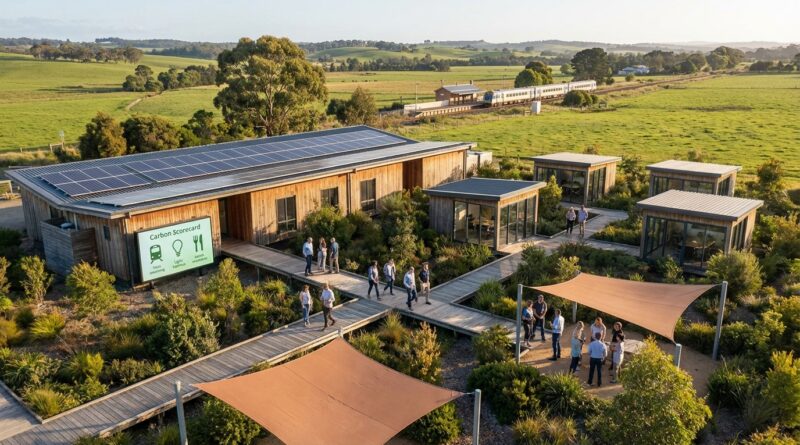
From Offsite To Carbon-Smart Retreat: Why 2026’s Sharpest Teams Treat Emissions Like a Line Item, Not an Afterthought
You can feel the eye-roll in the room when someone proposes a “team-building retreat” that means 200 flights, a resort ballroom, and a slide deck about values. HR and ops leaders are stuck in the middle. They need real face time because culture does not build itself on Slack, but they also need to defend the cost, the optics, and now the emissions. That last part used to sit in the nice-to-have pile. In 2026, it is a line item. Employees ask about it. Finance asks about it. ESG reporting pulls it into the same conversation as room rates and catering minimums. The smartest teams are not canceling retreats. They are redesigning them. They pick locations that cut travel miles, build agendas that justify the trip, and track carbon with the same seriousness they track attendance. Done right, a carbon-smart retreat is not a watered-down compromise. It is usually a better event, with less waste and a clearer reason to exist.
⚡ In a Hurry? Key Takeaways
- Treat retreat emissions like a budget category from day one, not a cleanup task after contracts are signed.
- Start with travel distance, venue energy use, food choices, and agenda quality. Those four decisions shape most of the impact.
- A lower-carbon retreat is often easier to defend to employees, finance, legal, and comms because the business case is clearer.
Why this suddenly matters so much
For years, offsite planning was mostly about headcount, hotel blocks, food, and whether the Wi-Fi would collapse under 300 laptops. Now there is another question hanging over every planning call. Was this trip worth the environmental cost?
That is not just PR pressure. It is internal pressure too. Employees are quicker to spot performative climate talk, especially when a company talks sustainability all year and then flies everyone across continents for two days of breakout sessions.
That is why one of the biggest sustainable corporate retreat trends 2026 is simple. Teams are finally measuring emissions before they book, not after someone on comms asks for a talking point.
The big mindset shift: carbon is now part of the event budget
Think of carbon as a shadow invoice. You may not pay it in cash the same way you pay the hotel, but it still lands on someone’s desk in the form of ESG reporting, employee trust, brand risk, and sometimes actual offset or reduction spending.
Sharp teams now ask four basic questions early:
1. How far are people traveling?
Air travel is usually the giant in the room. If most attendees need a long-haul flight, your retreat may already be in a hole before you pick the first coffee break snack.
2. Does the venue run efficiently?
Some properties publish energy, water, and waste practices. Others hand you vague marketing words. Ask for specifics. If they cannot give them, that tells you something.
3. Is the event design wasteful?
Buffets that overproduce, swag bags no one wants, printed binders, shuttle chaos, and half-empty sessions all add up. Waste is rarely just trash. It is poor planning wearing a name badge.
4. Is the business value clear enough to justify gathering in person?
This is the question many teams skip because it feels uncomfortable. But it matters most. If the agenda could have been three video calls, the carbon math gets harder to defend.
What carbon-smart retreats actually look like in 2026
They are not joyless. They are not all held in gray conference centers near a train station. Good planners are keeping the best parts of in-person connection while cutting the parts that were always wasteful anyway.
Regional hubs instead of one faraway “dream” location
Instead of pulling everyone to one distant beach, companies are choosing locations that reduce average travel distance. Sometimes that means one central city with strong rail links. Sometimes it means several smaller regional gatherings connected by a shared virtual keynote.
This sounds less glamorous on paper. In practice, it often improves attendance, lowers burnout, and cuts the sticker shock.
Shorter retreats with tighter agendas
Three highly intentional days beat five meandering ones. If every session has a reason to exist, people feel the value. That makes the trip easier to defend.
Better food planning
You do not need to make every meal vegan to make a dent. But reducing beef-heavy menus, using seasonal food, and planning portions more carefully can cut waste and cost at the same time.
Less swag, more useful takeaways
Most branded giveaways are landfill with a logo. Teams are swapping tote bags and cheap gadgets for things people actually value, or skipping swag altogether and putting that money into better programming.
That ties in nicely with a broader shift covered in Why 2026’s Best Corporate Retreats Feel Like Pop‑Up Wellness Labs, Not Offsites. The best events are becoming more thoughtful, more human, and less stuffed with old offsite habits that never worked especially well in the first place.
A simple carbon-smart retreat playbook
Start with a travel map before you shortlist venues
This is the easiest high-impact move. Pull attendee home bases into a spreadsheet. Estimate travel modes for each possible venue. You do not need fancy software at first. Even a rough map can reveal that the “perfect” destination adds hundreds of extra flight hours.
If two venues feel equal, pick the one that people can reach with fewer flights, more direct routes, or train access.
Write a “why in person” memo
Keep it short. One page is enough.
List the outcomes that truly need face time. Strategy reset. Executive trust-building. Cross-functional planning. Conflict repair. Team bonding after a merger. If you cannot explain why people need to be in the same room, that is a warning sign.
Ask vendors for proof, not promises
When venues or event partners say they are sustainable, ask what that means in plain English. Do they track energy use? Food waste? Recycling rates? Refill stations? Linen reuse? Local sourcing? Airport transfer planning?
You are not trying to trap them. You are trying to avoid paying extra for a green label with no real substance behind it.
Build the agenda to earn the travel
If people are taking planes, trains, or long drives, every major block of time should count. Mix collaboration, rest, social time, and decision-making. Cut filler. Cut status-update sessions that could have been pre-read materials.
Measure after the event and save the template
Track estimated emissions, budget, participation, outcomes, and employee feedback. Then keep that framework. The first carbon-smart retreat takes some setup. The second one gets much easier because your team is not starting from zero.
How to talk about it internally without sounding preachy
This part matters. Employees can tell when a company is trying to score moral points.
Keep the message practical. Say the company wants in-person time to be useful, fair, and responsible. Explain the choices you made. Chose a rail-friendly city. Cut unnecessary flights. Reduced waste. Designed an agenda with measurable outcomes. Shared the logic.
That lands better than dramatic climate slogans followed by a giant international resort booking.
What finance, legal, and comms want to hear
Finance
Show that lower emissions often come from smarter spending. Fewer long-haul flights. Less unused catering. Smaller swag orders. Better attendance because travel is easier. This is not just ethics. It is operational discipline.
Legal
Legal teams want claims to be supportable. So avoid fuzzy language like “net zero retreat” unless you can back it up. Stick to specifics. Reduced average travel distance by 28 percent. Chose a venue with published waste and energy data. Offered rail-first guidance where possible.
Comms
Comms wants a story that survives scrutiny. The strongest version is not “look how green we are.” It is “we made deliberate tradeoffs, measured what we could, and designed a retreat that created value without pretending impact does not exist.”
Common mistakes that make teams look careless
Booking the destination before checking attendee geography
This is how emissions spiral before planning really starts.
Using offsets as the whole strategy
Offsets may have a place, but they are not a substitute for reducing the biggest sources first. People notice when a company buys its way out of asking hard questions.
Calling every local menu item “sustainable” without data
Words matter. Be careful. If you cannot support the claim, do not make it.
Forgetting the human side
A carbon-smart retreat still has to feel worth attending. If it becomes austere, inconvenient, or joyless, people will resent it. The goal is not punishment. The goal is smarter design.
At a Glance: Comparison
| Feature/Aspect | Details | Verdict |
|---|---|---|
| Venue choice | Faraway resort may feel exciting, but a centrally located venue with train access usually cuts both emissions and travel headaches. | Pick convenience over fantasy unless the business reason is very strong. |
| Agenda design | Loose agendas create wasted travel. Tight, outcome-based sessions make the trip easier to justify. | High-value programming is as important as cutting emissions. |
| Sustainability claims | General green messaging is weak. Specific data on travel, food, waste, and venue practices is stronger. | Use proof, not buzzwords. |
Conclusion
Retreats are not going away, and they should not. Teams still need time together that feels real, focused, and human. But the old model of booking a flashy destination first and asking climate questions later is getting harder to defend. Retreat budgets are now colliding with ESG targets and with employees who expect more than lip service on climate. The good news is that a carbon-smart playbook does not kill the magic. It usually sharpens it. When you treat emissions like a real line item, you end up with gatherings that are easier to explain, easier to measure, and often better for the people attending too. That gives finance, legal, HR, and comms something rare. A retreat story they can stand behind when someone asks, very reasonably, if it was worth it for the planet and the P&L.