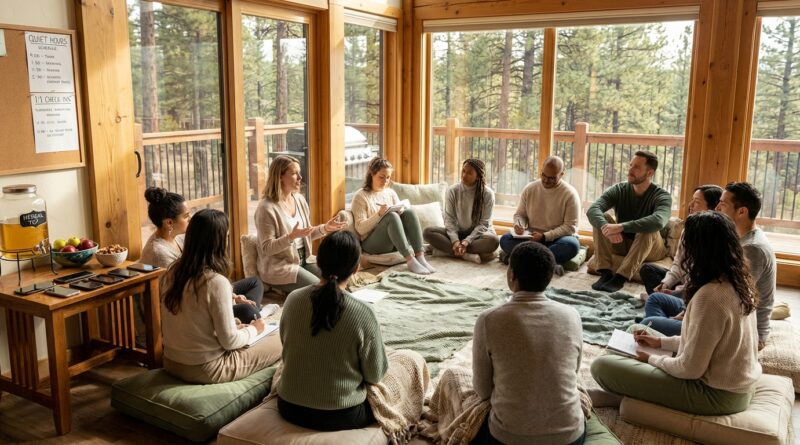
From Offsite To Care‑First Retreat: Why 2026’s Smartest Companies Put Mental Health At The Center Of Every Gathering
Your team does not need another retreat that feels like three days of meetings in a nicer hotel. If people are already stretched thin, spread across time zones, and quietly running on fumes, adding more presentations and compulsory bonding can make things worse, not better. That dread you sense when the calendar invite goes out is real. It usually means the event has been designed for optics, not recovery.
That is why one of the biggest mental health focused corporate retreat trends for 2026 is simple. Put care first, not as a side session between keynotes, but as the structure for the whole gathering. The smartest companies are starting with a different question. Not “How do we fit more into the agenda?” but “What does our team actually have the capacity for right now?” That shift changes everything. It creates space for honest conversations, better boundaries, and a retreat people leave feeling steadier from, not more depleted by.
⚡ In a Hurry? Key Takeaways
- A care-first retreat puts mental health, capacity, and psychological safety at the center, not as an add-on.
- Start by cutting the agenda by at least 25 percent, then build in choice, rest, and clear consent around participation.
- This is not about being soft. It is about reducing burnout, rebuilding trust, and getting more honest, useful outcomes from time together.
Why the old retreat model is starting to fail
For years, the company offsite followed a familiar script. Fly everyone in. Pack the schedule. Add a team dinner, maybe a trust exercise, and hope morale improves by magic.
That model made some sense in a world where many teams shared the same office rhythm. But work does not look like that anymore. People are remote, hybrid, overloaded, and often carrying stress that never quite switches off. A retreat built like it is still 2019 can feel strangely tone deaf.
When leaders ignore that reality, employees notice. They may smile through the activities, but inside they are doing the math. How many emails are piling up? How late will this run? Am I allowed to skip the “fun” event without looking disengaged?
That is why mental health focused corporate retreat trends are moving away from performance and toward recovery, reflection, and realistic human energy.
What a care-first retreat actually means
A care-first retreat is not a therapy camp. It is not a weekend of forced vulnerability, and it is definitely not a mindfulness app pasted onto a punishing schedule.
It is a retreat designed around three ideas.
1. Capacity
People have limits. Good retreat design respects mental bandwidth, physical energy, travel fatigue, caregiving responsibilities, and the simple fact that not everyone recharges the same way.
2. Consent
Not every person wants to speak in a circle, share personal struggles, or join every social activity. A care-first retreat gives people meaningful choices without punishing them for using them.
3. Mental health literacy
Leaders and managers need a shared language for stress, burnout, boundaries, and support. Not clinical jargon. Just enough understanding to spot warning signs, run healthier meetings, and avoid making things worse.
Why this matters more in 2026
Post-pandemic work has left many teams in a strange place. On paper, things may look stable. The projects are moving. The headcount is set. The meetings keep happening.
Under the surface, though, many teams are brittle. People are tired in ways that do not always show up on a dashboard. They are less patient, less creative, and less willing to stretch for a company that seems blind to the cost.
A retreat can either expose that problem or help repair it.
The companies getting this right understand something important. Mental health is no longer a nice extra. It is tied directly to retention, collaboration, decision-making, and whether people trust leadership when times get rough.
Signs your upcoming retreat needs a rethink
If any of these sound familiar, it may be time to change course.
- The agenda starts at breakfast and ends with mandatory evening social events.
- There is more time for presentations than conversation.
- No one has asked employees what would make the trip actually useful.
- Wellness appears as a single yoga session squeezed between strategy reviews.
- Attendance is “optional,” but everyone knows it is not really optional.
- There is no quiet space, no decompression time, and no plan for people who get overwhelmed.
None of that means leadership has bad intentions. Usually it means they are stuck using an old template. The fix is not complicated, but it does require a different mindset.
How to design a retreat people do not dread
Start with a pre-retreat pulse check
Before you book sessions, ask people what they need. Keep it short and specific. What is draining them right now? What would make the retreat feel worth the disruption? What kind of group activities feel energizing, and which feel forced?
You do not need a huge survey. Five smart questions can tell you more than a hundred assumptions.
Cut the schedule harder than feels comfortable
Most retreat agendas are too full. Then leaders wonder why people look glazed over by day two.
As a rule, if you think the schedule is light, it is probably just right. Protect white space. Leave room for travel recovery, quiet breaks, walks, one-to-one conversations, and actual thinking time.
Make participation flexible
Offer options. A group hike can exist alongside a quiet lounge. A discussion workshop can have verbal and written ways to contribute. Evening events can be encouraged without being treated like loyalty tests.
Choice matters because people regulate stress differently. Some need connection. Others need a little distance before they can reconnect.
Train managers before the retreat, not after
If leaders are going to host honest conversations, they need basic skills. How to listen without fixing. How to ask open questions. How to respond if someone shares that they are overloaded or near burnout.
This is one of the most practical mental health focused corporate retreat trends. Do not make the retreat the first time managers hear the words “psychological safety.” Give them a simple playbook ahead of time.
Build the environment for honesty
People open up when the room feels safe, not staged. That means clear ground rules, smaller discussion groups, and no pressure to disclose personal details. It also means leaders should model reality. Not oversharing, just honesty. “We know this has been a hard year” goes a lot further than “Let’s bring positive energy.”
Focus on norms, not just feelings
A useful retreat does more than let people vent. It helps the team agree on better ways of working. Think meeting limits, response time expectations, no-meeting blocks, manager check-in habits, and clearer escalation paths when someone is overloaded.
This is where the retreat becomes valuable long after everyone flies home.
What to include in a care-first retreat agenda
You do not need a radical reinvention. You need a smarter mix.
Keep these
- Clear business updates that help people understand where the company is going
- Small-group discussions with real questions, not scripted cheerleading
- Time for social connection that feels natural and low pressure
- Practical workshops on workload, communication, and sustainable team habits
Rethink these
- Back-to-back slide presentations
- Compulsory vulnerability exercises
- Late-night team activities after long workdays
- Competitive events that leave some people feeling excluded or on display
Add these
- Quiet rooms or decompression spaces
- Clear opt-out language for nonessential activities
- Longer breaks than you think you need
- Facilitated sessions on burnout prevention and boundary setting
- Follow-up plans with named owners, so the retreat changes real work habits
What leaders often get wrong
The biggest mistake is treating care as branding. Employees can spot that instantly. If the retreat talks about wellbeing but the company still rewards overwork, people will read the whole event as theater.
The second mistake is assuming mental health support means making everything serious. It does not. Good care-first retreats can still be fun. In fact, they are usually more enjoyable because people are not being pushed past their limit.
The third mistake is expecting one retreat to fix months or years of strain. It will not. What it can do is reset the tone, surface what has been hard to say, and help teams agree on better defaults.
How to know if it worked
Do not judge success by whether people smiled in the group photo.
Look for better signals.
- Did employees say they felt respected, not managed?
- Did hard issues come up in a way that felt constructive?
- Did managers leave with clearer commitments on boundaries and support?
- Did the team create a few specific norms they will actually use?
- Did people return to work feeling calmer and more connected, not behind and resentful?
Those are the markers that matter.
At a Glance: Comparison
| Feature/Aspect | Details | Verdict |
|---|---|---|
| Traditional offsite | Packed agenda, heavy on presentations, limited downtime, “fun” often feels mandatory | Can drain already tired teams |
| Care-first retreat | Built around capacity, consent, quiet space, realistic scheduling, and honest team discussion | Better for trust, focus, and long-term team health |
| Business impact | Care-first design can improve engagement, surface risks early, and help teams set healthier work norms | Most useful model for 2026 and beyond |
Conclusion
People do not need a prettier burnout machine. They need gatherings that match the reality of modern work. Post-pandemic, mental health has moved from perk to business-critical, but too many retreats are still built like it is 2019. A care-first retreat gives leaders something practical they can do right now, without waiting for HR to launch another generic wellness program. When you design the gathering around capacity, consent, and mental health literacy, three good things happen fast. Trust starts to come back. Hard truths are more likely to surface in a way that feels safe instead of performative. And the retreat becomes a live test run for better norms around workload, boundaries, and support. That is the real win. Not just a successful event, but a healthier way of working after everyone gets home.