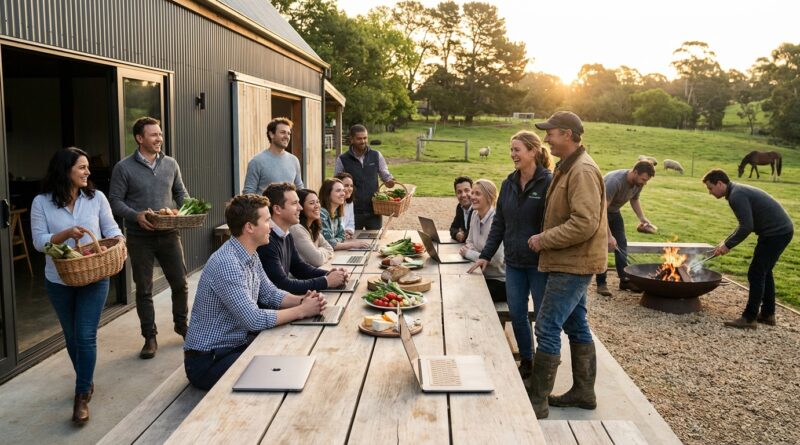
From Offsite To Caretaker Retreat: Why 2026’s Smartest Teams Share A House With Their Hosts
You can feel it the moment the calendar invite lands. “Annual offsite.” Same beige hotel ballroom. Same laminated name tags. Same awkward trust exercise that makes half the team want to fake a dentist appointment. If your company is hybrid or remote-heavy, that frustration gets sharper. Time together is rare, expensive and emotionally loaded. People do not want forced fun. They want fresh air, decent food, a little quiet and the kind of conversation that does not happen on Zoom.
That is why a different format is catching on fast in the post pandemic corporate retreat farm stay trend. Smart teams are swapping conference centers for host-run ranches, farm stays and rural homes where the owners are part of the experience. I call it the caretaker retreat. You stay where real people live and work, join a place with its own rhythms, contribute in light ways, and use that setting to reset how your team relates. Done well, it feels less like corporate theater and more like borrowing a wiser way to spend three days together.
⚡ In a Hurry? Key Takeaways
- The best 2026 offsites are moving away from hotel ballrooms and toward host-run farm stays, ranches and shared homes that create real connection.
- Keep the format simple. Plan a 48 to 72 hour retreat with light strategy sessions, optional hands-on activities and plenty of unstructured time.
- Pick safety and accessibility before charm. A beautiful property is not worth it if the beds, bathrooms, transport or emergency planning do not work for your team.
What a “caretaker retreat” actually is
It is not glamping with a slide deck. It is not a company camping trip where everyone has to milk a goat before breakfast. And it definitely is not “Survivor, but make it HR-compliant.”
A caretaker retreat is a short team stay at a host-run property, usually a ranch, farm stay, lodge, rural inn or large home, where the hosts are active stewards of the place. They are not just handing over keys. They shape the atmosphere. They often cook, guide, teach, tell stories, explain the land, or invite guests into simple routines that make the stay feel grounded.
That host presence matters. It changes the trip from a generic booking into a shared experience.
Why this model is taking off in 2026
The short version is simple. Teams are tired, budgets are tighter, and every in-person gathering now has to earn its airfare.
Post-pandemic travel habits have shifted toward agritourism, wellness stays and trips that mix work with meaningful downtime. People want spaces that feel human. A converted barn with a long dinner table and a host who knows every trail on the property often does a better job than a chain hotel with fluorescent lighting and a breakout room called Aspen B.
There is also a deeper reason. Remote work broke the old habit of casual connection. You no longer bump into a teammate by the coffee machine. So when you finally do gather, the environment has to help people slow down enough to connect for real.
Why sharing a house with hosts works better than renting an anonymous venue
It lowers the social temperature
Hotels can make everyone feel like they are still “on.” Bad coffee, rigid schedules, strange carpeting, constant background noise. A host-run property usually feels more lived in and less performative. People settle faster.
It gives the retreat a natural rhythm
Good hosts know how to pace a place. Breakfast at a big table. A walk after lunch. A fire pit after dinner. Those rhythms help people talk without being pushed into “icebreaker mode.”
It creates memorable shared context
Teams remember collecting eggs with the owner’s kid, learning why the orchard was replanted, or helping prepare dinner with vegetables grown on site. They do not remember the motivational speaker from Ballroom C.
What teams are really buying
Not just lodging. Not just meals. They are buying a temporary culture reset.
The best caretaker retreats give a team three things at once:
- A change of scene that helps people think differently
- A host-created environment that encourages easier conversation
- A little shared responsibility, which is often more bonding than any planned game
That last point is easy to miss. People tend to connect when they are doing ordinary things side by side. Setting tables. Walking a path. Watering seedlings. Chopping vegetables. These are low-pressure moments. They make room for the conversations your team has been too busy to have.
How to design one without making it weird
This is where many leaders get nervous. They hear “farm stay” and either picture a magical reset or a total fiasco. The truth is in the middle. The format works when you keep it practical.
Start with the right goal
Do not book a countryside property and then cram it with 14 hours of programming. Pick one primary outcome.
Usually it should be one of these:
- Reconnect the team after a period of remote work
- Help a new leadership group build trust
- Reflect on a big season and set a direction for the next quarter
- Welcome new hires into the culture
If you try to do strategy, team building, performance review cleanup, hiring alignment and a product roadmap all in one trip, the setting will not save you.
Use a 48 to 72 hour structure
This format works best when it is short. Long enough to relax. Short enough to stay focused.
Here is a simple template:
Day 1: Arrive and decompress
- Staggered arrivals
- Informal welcome from hosts
- Shared meal
- One gentle opening session, like “What has this year actually felt like?”
Day 2: Light strategy, real conversation, optional contribution
- Morning planning session, 2 to 3 hours max
- Long lunch and downtime
- Optional host-led activity, like gardening, trail walk, bread making, animal care or local history
- Dinner and unstructured evening
Day 3: Reflection and wrap-up
- Short session on decisions and next steps
- Personal reflection or pair walks
- Depart after lunch
Notice the word optional. That matters. Forced participation is the fastest way to ruin this kind of retreat.
How to choose the right host-run property
The best-looking place on Instagram is not always the best retreat site. You are not choosing a backdrop. You are choosing a temporary operating system for your team.
Look for hosts, not just owners
Ask who will actually be present. Will they be around? Do they like groups? Have they hosted work retreats before? Can they help shape the flow without taking over?
Check for spaces with different energy levels
You need:
- One room for structured conversation
- Several places for small-group chats
- Quiet corners for introverts
- Outdoor space if weather allows
Audit the boring stuff
This is the part that saves you.
- Reliable bathrooms
- Enough private or semi-private sleeping arrangements
- Wi-Fi that works well enough for emergencies
- Clear transport instructions
- Dietary flexibility
- Heating, cooling and bug control
Ask about accessibility early
Do not wait until after booking to ask if there are stairs everywhere, uneven paths, shared baths only, or no quiet spaces for neurodivergent team members. Rustic should never mean exclusion.
Questions to ask before you book
- What kinds of teams have stayed here before?
- How many people can sleep comfortably, not just legally?
- What accessibility limits should we know about?
- What happens in bad weather?
- What medical or emergency support is nearby?
- Which activities are genuinely optional?
- Can we bring our own facilitator, or do you provide one?
- What quiet hours or house norms should we respect?
- What level of interaction do hosts usually have with guests?
What “contribution” should mean, and what it should not
This part needs a little care. The caretaker retreat works because guests feel part of a place, not because employees become unpaid labor.
Good contribution looks like this:
- Helping harvest herbs for dinner
- Joining a host-led trail cleanup for an hour
- Setting tables together
- Learning a simple land-care task as a group
Bad contribution looks like this:
- Mandatory physical labor
- Activities designed to test endurance
- Anything humiliating, competitive or fake-rugged
- Tasks that replace paid staff work
The goal is participation, not performance.
How to avoid the “forced fun” trap
If your team quietly dreads retreats, this is usually why. Someone confused bonding with programming.
A few simple rules help:
- Make at least one-third of the schedule unstructured
- Offer activities, do not command them
- Keep group sharing prompts specific and short
- Do not make people reveal personal trauma to prove trust
- Skip competitive games unless your team genuinely likes them
You are trying to create comfort, not content.
What leaders often get wrong
They over-schedule
People need margin to notice each other again. Leave room for walks, naps, coffee and side conversations.
They under-communicate
Tell people exactly what kind of retreat this is. Is it strategic? Restorative? Social? Mixed? If people expect one thing and get another, resentment starts early.
They pick aesthetics over logistics
A cedar hot tub does not fix six adults sharing one bathroom.
They ignore consent
Not everyone wants to share a room, hike at sunrise or pet livestock. Good retreat planning respects different bodies, beliefs and comfort levels.
How to message the retreat so people do not dread it
Your invite sets the mood. Be plain about what this is and what it is not.
For example:
“We are trying a smaller, slower offsite this year. We will stay at a host-run farm property for two nights. Expect a mix of light planning, shared meals, optional outdoor activities and plenty of downtime. This is not a bootcamp, not a trust-fall event and not a 12-hour workshop. We want time to think, reconnect and return with a clearer sense of how we work together.”
That kind of note lowers anxiety right away.
Budget reality: Why this can make sense even now
At first glance, a private rural stay sounds indulgent. Sometimes it is. But compared with conference-center packages, restaurant buyouts, AV fees and city hotel rates, a host-run property can be surprisingly reasonable, especially for small to midsize teams.
You are also spending on something people may actually remember. That matters. Face time is both rare and precious now. If you are flying people in, a more intentional setting often gives you better cultural value per dollar than a generic venue ever will.
Risk, insurance and common-sense safety
This is the grown-up part of retreat planning, and it should not be skipped.
- Confirm the property is legally operating for group stays
- Ask for liability coverage details
- Share allergies, mobility needs and emergency contacts in advance
- Plan transportation clearly, especially if roads are rural
- Set alcohol expectations before the trip
- Have a point person for medical issues and schedule changes
If the property includes animals, water features, tools or uneven terrain, ask how guest safety is normally handled. A relaxed retreat still needs real planning.
Who this model is best for
Caretaker retreats work especially well for:
- Remote-first startups
- Small departments that need trust more than spectacle
- Leadership teams doing reflection and direction-setting
- Creative teams that think better outside formal rooms
They are less ideal for very large groups, highly confidential strategy summits that need strict privacy controls, or teams with broad accessibility needs that a rural property cannot support.
How to know if your retreat worked
Do not measure success by whether everyone posted sunset photos.
Ask instead:
- Did people actually talk across functions and levels?
- Did the setting help people relax without checking out?
- Did you leave with a few clear decisions?
- Would people willingly come back?
If the answer is yes, you probably got it right.
At a Glance: Comparison
| Feature/Aspect | Details | Verdict |
|---|---|---|
| Traditional hotel offsite | Predictable logistics, familiar setup, but often generic, over-programmed and forgettable | Good for scale, weaker for genuine connection |
| Caretaker retreat at a farm stay or ranch | Host-led atmosphere, shared spaces, natural rhythm, optional hands-on activities, stronger sense of place | Best for smaller teams that want real conversation and cultural reset |
| Adventure-style team building camp | High energy, high structure, often physically demanding and hit-or-miss for comfort or inclusion | Use carefully, easy to tip into forced fun |
Conclusion
If your team hears “offsite” and thinks “please no,” the answer may not be a better keynote or a fancier hotel. It may be a smaller, calmer and more human setting. That is why the post pandemic corporate retreat farm stay trend matters. Budgets are tighter, expectations are higher and hybrid work has made in-person time too valuable to waste on copy-paste experiences. The caretaker retreat model gives People Ops leads and founders a pattern they can actually use this quarter. Find a host-run property with the right setup. Keep the stay to 48 to 72 hours. Mix light strategy with reflection, optional contribution and plenty of breathing room. Check accessibility and risk before charm. Most of all, resist the urge to over-design every minute. When you do this well, the retreat stops feeling like a service purchase and starts feeling like joining a tiny intentional community for a few days. For remote-heavy teams in 2026, that is not a gimmick. It is often exactly what people have been missing.