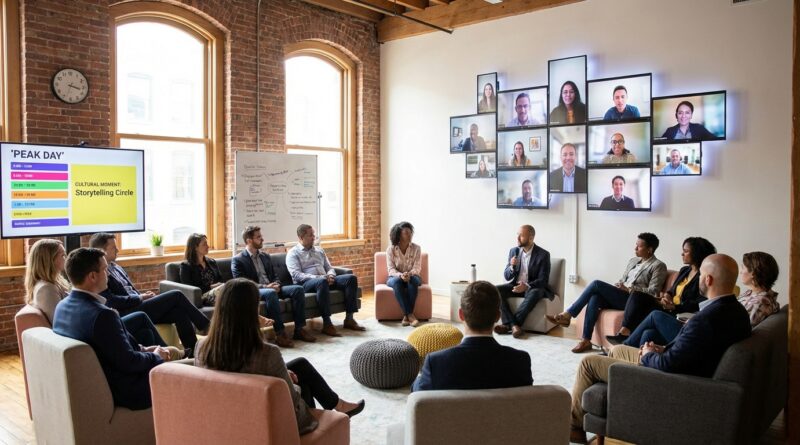
From Offsite To Flex-Window Retreat: Why 2026’s Smartest Teams Anchor Gatherings To Hybrid ‘Peak Days’
Your office is packed on Tuesday, busy on Wednesday, and practically echoing on Friday. Sound familiar? A lot of leaders are feeling stuck here. They are being pushed to bring people together more often, while employees are trying to protect family routines, commute costs, and the flexibility they fought hard to keep. That old offsite formula, fly in Thursday, bond Friday, fly home Saturday, now creates more friction than excitement. People ask fair questions. Do we all need to travel? Why are we blocking a whole week? Why are we doing this during the least practical days on the calendar? The smartest answer for 2026 is not canceling retreats. It is redesigning them. A flex-window retreat anchors the gathering around the midweek days when hybrid teams already tend to show up, then gives people more choice on arrival, departure, and attendance format. That makes the event easier to say yes to, easier to budget, and far more likely to matter.
⚡ In a Hurry? Key Takeaways
- A flex-window retreat works best when you center the shared experience on Tuesday through Thursday, not the old Thursday through Saturday template.
- Start by identifying your team’s real “peak days,” then build optional arrival and exit windows around those days.
- This model cuts travel stress, reduces political friction around RTO, and still gives teams a real moment of connection.
Why the old offsite schedule is breaking down
Classic offsites were built for a different working world. Back then, most people were already in the office all week, business travel felt routine, and giving up a Thursday or Friday did not spark a debate about childcare pickups or a three-hour train ride.
That is not the setup anymore. Hybrid work changed the rhythm of the week. For many companies, Tuesday through Thursday are the natural overlap days. Monday is often used to plan. Friday is protected for deep work, errands, or simply staying sane.
So when leaders schedule a retreat that stretches into the least practical parts of the week, they are not just planning an event. They are accidentally picking a side in the flexibility fight.
That is why more teams searching for hybrid work corporate retreat ideas 2026 are moving away from rigid offsites and toward a more flexible gathering model.
What a flex-window retreat actually is
Think of it as a retreat with a firm center and soft edges.
The center is the part everyone is expected to join. Usually this lands on Tuesday afternoon through Thursday afternoon, because that is when people are already most likely to be available, commuting, and mentally in work mode.
The soft edges are where you give people choices.
How the schedule usually works
One group arrives Monday night. Another arrives Tuesday morning. Local staff may join only for the core two days. Parents or caregivers may leave Thursday after the main sessions instead of staying for a formal final dinner. Remote-first employees might come in person for the core block and skip the optional social add-ons.
You still get a shared story. You just stop pretending every employee has the same life setup.
What stays mandatory
Keep the high-value moments inside the core window. That usually means strategy sessions, team planning, key workshops, executive Q&A, and one strong social experience.
Outside that window, make things optional. Welcome drinks. Extra activity day. Casual breakfast. Local sightseeing. Nice to have, not career-defining.
Why this works better for hybrid teams in 2026
The biggest win is simple. It matches how people already work.
You are not asking employees to bend their lives around a nostalgic event format. You are building the event around known attendance patterns.
It lowers the emotional resistance
People are much more open to a retreat when it does not feel like a stealth return-to-office policy. A flex-window retreat says, “We need shared time for a reason,” not, “We need to prove everyone still works here.”
It protects focus time
Monday and Friday are often the best days for concentrated work. If your retreat eats both, employees return to a pileup of unfinished tasks, missed handoffs, and weekend resentment.
Use the middle of the week for collaboration. Leave the edges for catch-up and recovery.
It helps your budget stretch further
Not everyone needs the same number of hotel nights. Not every meal needs to be covered. Not every session needs every person in the room the whole time.
That means you can spend more on the moments that matter and less on forced attendance.
How to design the “peak days” correctly
This is where many teams guess, and guessing gets expensive.
Look at actual attendance data
Check badge data, desk booking trends, meeting patterns, and travel feasibility. If your office naturally fills up Tuesday and Wednesday, do not schedule your biggest workshop for Friday morning.
Ask one practical question
Instead of asking, “When would you like the retreat?” ask, “Which two or three days are most realistic for you to be fully present?”
That gets more useful answers. People are better at naming workable constraints than ideal fantasy calendars.
Build around energy, not just logistics
The best core day is not simply the cheapest hotel night. It is the window when people are most likely to be alert, open, and socially available.
For many teams, that means starting after travel stress has settled and ending before people mentally check out for the weekend.
What to put in the core window
If you only get one high-overlap block, make it count.
Use it for decisions, not presentations
No one should fly in to watch 90 slides they could have read at home.
Use the core retreat block for things that are genuinely better in person. Hard conversations. Cross-team planning. Whiteboard work. Trust-building. Product tradeoffs. The kind of discussion where tone and timing matter.
Create one memorable shared moment
This is the part people remember six months later. Not the lanyard. Not the muffins.
It might be a customer panel, a team challenge, a future-state workshop, or a live problem-solving session that gets everyone involved. If you want the destination itself to help shape behavior, this is where a piece like From Offsite To Living Lab: Why 2026’s Smartest Retreats Turn The Destination Into A Culture Prototype fits nicely. The big idea is smart. Do not just visit a place. Use the setting to test the kind of culture you say you want.
End with clarity
Every team should leave knowing three things. What decisions were made. What happens next. Who owns what.
If people go home with good photos but fuzzy priorities, you held a field trip, not a retreat.
What to make optional without weakening the event
This is the balancing act. Too much optionality and the retreat becomes mushy. Too little and it becomes a burden.
Good optional elements
Arrival-night drinks. Early-morning wellness activities. Extended local experiences. Departure-day social time. Side meetups by function or region.
Bad optional elements
The main strategy session. The team charter discussion. Executive ask-me-anything. Any moment that affects visibility, decision-making, or future work assignments.
If skipping something could hurt someone politically, it is not optional. Be honest about that.
How to avoid the “retreat as loyalty test” problem
This is where many otherwise smart plans go wrong.
Employees can tell when a gathering is really about connection and when it is secretly about monitoring commitment. If the event language sounds like, “We need everyone together to rebuild culture,” people hear, “We do not trust hybrid work.”
Say why this gathering exists
Be specific. For example: “We are bringing everyone together to align on next year’s plan, fix cross-team bottlenecks, and make three decisions that are hard to make on Zoom.”
That lands better than vague talk about energy and togetherness.
Do not punish constraints
Some people really cannot stay the extra night. Some cannot travel at all in a given month. Build that reality into the plan from the start, rather than making exceptions feel embarrassing.
Separate belonging from attendance style
People should not feel like second-class employees because they joined only for the core block or took the first train home after the closing session.
That is one reason the flex-window model works. It gives structure without turning life logistics into a character test.
A sample flex-window retreat format for 2026
Monday evening
Optional arrivals. Light dinner for travelers. No major content.
Tuesday morning
Regional arrivals and check-in. Quiet work block for early arrivals. Informal meetups.
Tuesday afternoon
Official start. State of the company. Team priorities. Cross-functional working session.
Tuesday evening
Shared dinner or one signature experience.
Wednesday
Full core day. Workshops, planning, collaboration, decision-making, team breakouts.
Thursday morning
Final alignment, owner handoffs, leadership Q&A, written next steps.
Thursday afternoon
Core program ends. Departures begin. Optional social activity for those staying.
Friday
No mandatory programming. Travel, recovery, or optional local networking.
This simple shift can save goodwill without losing the value of gathering in person.
How to explain it to finance, HR, and skeptical employees
Each group worries about something different.
For finance
Frame it as precision, not indulgence. You are reducing wasted hotel nights, unnecessary meals, and low-value attendance. The budget goes to the core moments that improve coordination.
For HR
Frame it as fairness and inclusion. The model respects caregivers, long-distance commuters, and hybrid schedules while keeping core collaboration intact.
For employees
Frame it as respect. You are asking for focused presence during the moments that matter most, not maximum disruption for the sake of tradition.
Common mistakes to avoid
Trying to please everyone equally
You cannot build a perfect schedule for every life situation. Build a strong core and flexible edges instead.
Overpacking the agenda
If every minute is scheduled, people lose the hallway conversations and small-group time that make in-person gatherings worth the effort.
Confusing attendance with impact
A longer retreat with more people is not automatically better. A shorter, sharper retreat with the right people in the right sessions often does more.
Keeping the old language
If you call it an offsite but run it like a modern hybrid gathering, people will still picture the old model. Explain the new format clearly so expectations match reality.
At a Glance: Comparison
| Feature/Aspect | Details | Verdict |
|---|---|---|
| Traditional offsite timing | Often runs Thursday to Saturday or stretches across low-attendance days, which clashes with hybrid schedules and home routines. | Less practical for 2026 teams. |
| Flex-window retreat model | Centers required sessions on midweek peak days, with optional arrival and departure windows around the core program. | Best fit for hybrid teams. |
| Employee experience | Respects commute realities, caregiving needs, and focus time while still creating shared momentum and clear decisions. | Higher buy-in, lower friction. |
Conclusion
Leaders are in a tight spot. They are caught between return-to-office pressure and a workforce that has built real lives around flexibility. That is exactly why the old retreat template now feels so loaded. A flex-window retreat gives you a smarter middle path. You anchor the gathering to the hybrid peak days when people are most able to show up, protect Monday and Friday for focus and life logistics, and still create a meaningful shared experience people talk about afterward as the moment things clicked. If you are looking for practical hybrid work corporate retreat ideas 2026, this is one of the clearest places to start. Do not drag your team back to 2019. Build gatherings around how they actually work now.