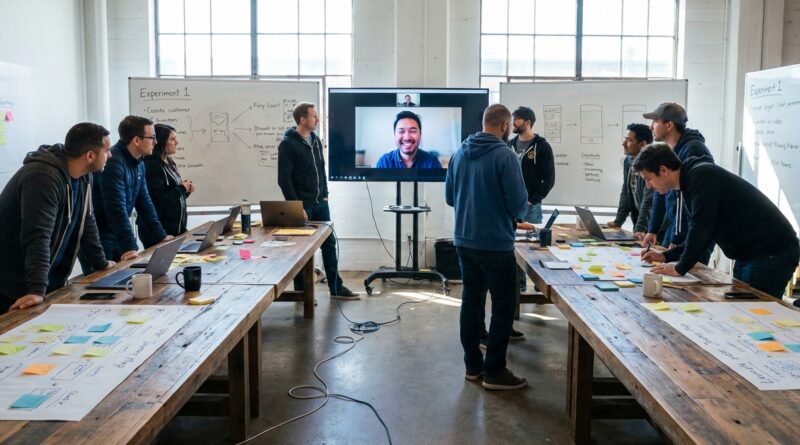
From Offsite To Impact Sprint: Why 2026’s Smartest Corporate Retreats Are Built Around One Real Customer Problem
Everyone knows the feeling. You fly people in, book the nice hotel, schedule the dinners, run the icebreakers, and head home with a tote bag full of swag and a calendar full of follow-up meetings. Then the awkward question lands. What did we actually change? That question is why the smartest post pandemic corporate retreat ideas with real business impact are starting to look less like celebrations and more like focused work weeks. Not joyless work. Real work, pointed at one customer problem that matters right now. That shift makes sense. Travel budgets are tighter. Hybrid teams are scattered. Finance wants proof. Employees do too. A retreat that works as an impact sprint gives leadership something better than good vibes. It gives them a tested fix, a sharper plan, clearer ownership, and evidence that bringing everyone together solved something customers were already complaining about. That is much easier to defend than another offsite built around generic bonding and slide decks.
⚡ In a Hurry? Key Takeaways
- Smart retreats in 2026 focus on one real customer problem, not a packed agenda of team-building sessions.
- Start with support tickets, churn data, or sales objections, then build the retreat around fixing that one issue.
- This approach makes travel easier to justify because you come back with measurable progress, not just photos and promises.
Why the old offsite formula is wearing thin
For years, corporate retreats got a free pass. If the team felt disconnected, you brought everyone together. If morale dipped, you added a resort, a keynote, and maybe a cooking class.
That used to be enough. It is not enough now.
Post-pandemic work changed the math. Companies learned they could work across time zones. Employees learned to spot “performative culture” from a mile away. Leaders learned that every travel dollar now needs a story attached to it.
That is why post pandemic corporate retreat ideas with real business impact are getting more practical. The question is no longer, “How do we make this retreat memorable?” It is, “What customer pain point can this week actually move?”
That single change fixes a lot. It gives the event a purpose. It cuts filler from the agenda. It also stops the common problem where sales talks about one thing, product talks about another, and customer success is left thinking, “You all know customers are angry about onboarding, right?”
What an impact sprint retreat actually is
Think of it as an offsite with a job to do.
Instead of building the week around broad themes like innovation, alignment, or culture, you build it around one urgent customer problem. Not ten. One.
Examples are easy to spot:
- New customers are dropping off in the first 14 days.
- Support tickets about billing keep spiking.
- Enterprise deals stall because setup feels too complex.
- Customers love the product, but cannot figure out reporting.
Then the retreat becomes a sprint. The team spends a few days understanding the issue, mapping the customer journey, reviewing real feedback, making decisions, building a fix, and assigning owners for what happens next.
By the time everyone flies home, there is a concrete result. Maybe it is a redesigned onboarding flow. Maybe it is a new support playbook. Maybe it is a prototype, a policy change, or a decision that had been stuck for six months because nobody could get the right people in the same room.
Why this works better for hybrid teams
Hybrid work is great for focused individual tasks. It is not always great for cross-functional problem solving. Anyone who has sat through a six-person video call where half the people are muted and one person says “Sorry, can you repeat that?” knows this already.
An impact sprint retreat uses in-person time for the thing it is best at. Fast decisions. Shared context. Hard conversations. Whiteboard work. Customer playback. Trade-offs made in real time.
That matters because scattered teams often do not lack talent. They lack shared focus.
When everybody rallies around one customer issue, the retreat stops feeling like an interruption to work. It becomes the work.
How to choose the right customer problem
This is where many leaders get tripped up. They pick a problem that is too broad, too political, or too vague.
Start with evidence, not executive instinct
The best retreat themes come from patterns you can prove. Look at:
- Top support ticket categories
- Lost deal notes from sales
- Customer success escalations
- Churn reasons
- User session recordings
- NPS comments
If customers keep saying the same thing, believe them.
Make sure the problem is narrow enough
“Improve customer experience” is too big. “Reduce time to first value for new customers from 10 days to 3” is much better.
A good retreat problem has three traits. It is painful. It is specific. It can be moved by the people in the room.
Pick something that crosses teams
If the issue only belongs to one department, you probably do not need a retreat. You need a normal working session.
The sweet spot is a problem that needs product, support, operations, sales, and leadership in the same room to solve.
How to structure the retreat so it does not drift into fluff
This is the practical part. If you want a retreat to produce business impact, the schedule needs guardrails.
Day 1: Get brutally clear on the problem
Start with customer reality. Play actual call clips. Read complaint emails. Show the data. Let the team hear the friction in the customer’s own words.
This wakes people up fast. It also stops abstract discussion.
Day 2: Map causes and make decisions
Now dig into why the problem exists. Is it process? Product design? Messaging? Training? Ownership gaps? Usually it is a mix.
The goal is not endless brainstorming. It is deciding what will change.
Day 3: Build and test
Create a prototype, a draft workflow, a revised script, or a pilot plan. If possible, put it in front of real customers or frontline staff before the retreat ends.
Day 4: Assign owners and metrics
This is the difference between a useful retreat and a dead document. Every action needs an owner, a timeline, and a metric.
If nobody owns it, it was just an interesting conversation in a nicer zip code.
What leaders should measure after the retreat
If you want finance and the board to see the trip as a smart use of money, measure outcomes that connect directly to the chosen problem.
For example:
- Fewer onboarding drop-offs
- Lower support volume in one category
- Faster implementation time
- Higher conversion from trial to paid
- Better customer satisfaction on a specific step
Also measure internal speed. Did decisions happen faster because the right people were present? Did the team leave with fewer open questions? Did work that normally takes six weeks get done in four days?
Those are real gains. They count.
What employees get out of this, beyond another plane ride
There is a cultural reason this model is catching on. People are tired of fake urgency and fake fun.
Employees do not mind gathering in person. Most actually like it when it is thoughtful. What they resent is being pulled away from meaningful work for sessions that feel scripted, vague, or disconnected from what customers need.
An impact sprint respects people’s time. It treats employees like adults. It says, “We brought you here because your judgment matters, and we want to fix something real together.”
That tends to land better than a trust fall followed by a keynote about resilience.
Common mistakes that ruin these retreats
There are a few patterns worth avoiding.
Trying to solve too much
One retreat. One customer problem. Once leaders start adding second and third priorities, the whole thing gets muddy.
Inviting the wrong group
If the people closest to the customer are missing, you are guessing. Bring frontline voices into the room.
Over-scheduling social time
Yes, shared meals and some downtime matter. Keep them. But do not let the agenda tilt so far toward “experience” that the working core disappears.
No follow-through plan
The retreat should end with a 30, 60, and 90-day plan. Otherwise the energy fades before people unpack their bags.
At a Glance: Comparison
| Feature/Aspect | Details | Verdict |
|---|---|---|
| Traditional offsite | Mix of presentations, team-building, and broad strategy chats with few concrete outputs. | Feels good in the moment, but hard to justify later. |
| Impact sprint retreat | Built around one customer problem, with decisions, owners, metrics, and a near-term plan. | Best option for real business impact and clearer ROI. |
| Hybrid team value | Uses rare in-person time for cross-functional work that is hard to do on video calls. | Strong fit for 2026 work realities. |
Conclusion
The retreat is not dead. It just has to grow up. Travel is under scrutiny, hybrid work is here to stay, and leaders are expected to show return on every gathering. A retreat built as an impact sprint meets that pressure head on. It turns a cost center into something easier to defend. It gives scattered teams a shared mission. Most important, it creates visible proof that time away from desks solved something customers actually care about. In 2026, that is the standard. And honestly, it should be. If people are going to leave home, board a flight, and spend a week together, the result should be more than better selfies and a nicer slide deck. It should be the most useful work week of the quarter.