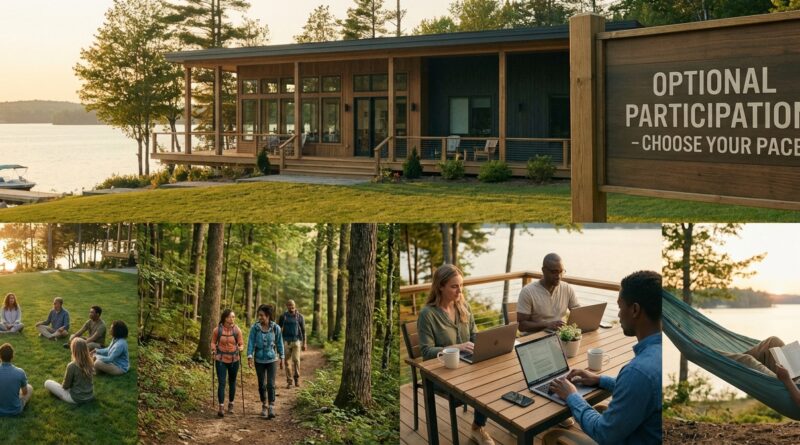
From Offsite To Opt‑Out Friendly: Why 2026’s Smartest Retreats Let People Say No Without Losing Culture
People are tired of being told that a retreat is “optional” when everyone knows it is not. That tension has only grown since the pandemic. Some employees are juggling childcare, eldercare, health issues, tight budgets, or plain old social burnout. Others want in-person time, but not a three-day marathon of trust falls, late dinners, and forced bonding. Leaders feel the squeeze too. If attendance is low, the retreat can look like a waste of money. If attendance is pushed too hard, resentment creeps in and culture takes the hit anyway. That is why opt out friendly corporate retreats 2026 are getting real attention. The smartest teams are not giving up on gathering. They are redesigning it. The goal is simple. Make attendance a real choice, make the time together worth it, and stop treating “no” like a loyalty problem.
⚡ In a Hurry? Key Takeaways
- Opt-out friendly retreats work because they replace pressure with genuine choice, which leads to better participation and less quiet resentment.
- Start by making only the highest-value sessions core, then build optional tracks, quiet time, and remote ways to join key moments.
- This approach helps caregivers, introverts, neurodiverse staff, and budget-conscious teams without needing a bigger retreat budget.
Why mandatory fun stopped working
For years, many companies treated offsites like a shortcut to culture. Get everyone in one place, add a packed agenda, throw in a dinner or activity, and hope people leave feeling more connected.
Sometimes that worked. Now, not so much.
Employees are more honest about burnout. They are more aware of personal limits. They are less willing to burn a whole week of energy proving they are “team players.” A retreat that ignores that reality can backfire fast.
The problem is not in-person time itself. Most teams still want some. The problem is the script around it. If every session feels compulsory, if every meal becomes networking homework, and if skipping one activity feels risky, the retreat starts to feel like a test instead of support.
What “opt-out friendly” actually means
This is not the same as making everything loose and chaotic. It means planning a retreat that respects different needs from the start.
It gives people real choices
A real choice means employees can skip the retreat, skip parts of it, or attend in a way that fits their capacity without being quietly punished later.
It separates must-have time from nice-to-have time
Most retreats only need a few shared moments to do the heavy lifting. A strategy session. A team reset. A leadership Q&A. A celebration meal. Everything else does not need to carry the same weight.
It designs for humans, not idealized employees
Caregivers may need shorter travel. Introverts may need downtime. Neurodiverse employees may need clearer schedules and quiet spaces. Someone dealing with health issues may want to attend the work sessions but skip the social activity. That should be normal, not awkward.
Why this model is gaining ground in 2026
The teams getting this right have noticed something simple. Attendance numbers are not the same thing as engagement.
You can fill every seat and still get low-energy participation, hallway grumbling, and people counting the minutes until they can leave. Or you can create a retreat where fewer people attend, but the people who do show up are present, ready, and glad to be there.
That trade-off is often worth it.
It also fits a wider shift in retreat planning. Smart teams are questioning old habits across the board, from agenda design to travel impact. If your team is already rethinking costs and footprint, it is worth reading From Offsite To Carbon-Smart Retreat: Why 2026’s Sharpest Teams Treat Emissions Like a Line Item, Not an Afterthought. The same mindset applies here. Be intentional. Stop treating tradition as a good enough reason.
The hidden benefits leaders often miss
Better trust
When people believe they can say no without damage to their reputation, trust goes up. That matters far beyond the retreat itself.
More honest culture
An opt-out friendly retreat sends a message. We want your participation, not your performance of participation. That is a healthier culture signal than any branded tote bag or sunset cocktail hour.
Higher quality conversations
People who feel trapped tend to hold back. People who choose to be there tend to contribute more. You get sharper discussion, stronger feedback, and less emotional drag in the room.
Stronger inclusion
This matters a lot. Mandatory retreat culture often favors people with fewer outside responsibilities, more social stamina, and fewer sensory or accessibility barriers. Choice makes the event more fair.
How to build an opt-out friendly retreat without losing culture
1. Be clear about the purpose
Do not call a retreat “important for culture” and leave it there. Tell people exactly what the in-person time is for.
For example:
We are gathering to reset priorities for the next six months, strengthen cross-team relationships, and give people face time with leaders.
That helps employees decide if and how they can take part. It also forces leadership to cut fluff.
2. Define the true core sessions
Pick the few moments that matter most. Keep them short, useful, and well-run.
A common mistake is treating the entire retreat as equally essential. It rarely is. Mark sessions as:
- Core for all attendees
- Optional based on role or interest
- Social and fully optional
That one change lowers pressure immediately.
3. Make “no” safe and boring
This is a big one. Opting out should not trigger follow-up guilt, awkward jokes, or performance anxiety.
Managers need a script. Something simple works best:
“We would love to have you there, but if this one does not work for you, that is okay. We will make sure you still get the important updates and connection points.”
If leaders say that but then reward only the people who attended, staff will notice. Fast.
4. Offer partial attendance options
Not everyone can do the full trip. Some can join one day. Some can skip the evening events. Some may attend virtually for key sessions. Build those options in from the start.
This is often the easiest win because it keeps the culture value while lowering the life disruption.
5. Protect downtime
People need air in the schedule. Not every hour has to be productive on paper.
Build in breaks that are real breaks. No surprise “networking opportunities.” No guilt if someone takes a walk, sits alone, or calls home.
6. Design social time with variety
One loud group dinner is not everyone’s idea of connection. Offer more than one way to take part.
Good options include:
- Small group meals
- Quiet coffee chats
- Walk-and-talk sessions
- Hands-on activities with low social pressure
- Solo recharge windows
The aim is not to remove fun. It is to stop defining fun too narrowly.
What to say in the invitation
The invitation sets the tone. If the message sounds like a loyalty test, people will feel that from line one.
A better version sounds like this:
“We are planning this retreat to help the team reconnect, share priorities, and spend some thoughtful time together in person. We know everyone has different schedules, needs, and energy levels. Attendance is encouraged, not assumed. We will share core sessions clearly, offer flexible ways to participate where possible, and make sure anyone who cannot attend is not left out of key decisions.”
That language is calm, respectful, and grown up.
Common mistakes that ruin the idea
Calling it optional, then tracking who was “committed” enough to come
If attendance becomes an unofficial scorecard, the whole thing falls apart.
Overstuffing the schedule
A humane retreat with twelve back-to-back sessions is still exhausting.
Forgetting the people who stayed home
If non-attendees miss key context, relationships, or visibility, opting out becomes costly. Share takeaways. Record important sessions. Set up follow-ups.
Making social events the real center of power
If all the meaningful access to leadership happens late at night over drinks, the retreat is not actually flexible. It just looks flexible on paper.
A simple pilot plan for your next offsite
If your team is curious but nervous, do not rebuild everything at once. Pilot the model.
Start with one retreat and three rules
- No one is penalized for declining
- Only two or three sessions are truly core
- At least one social block and one rest block are fully optional
Then measure the right things
Do not only track headcount. Ask:
- Did attendees feel the trip was worth their time?
- Did non-attendees still feel included?
- Did managers handle opt-outs respectfully?
- Were discussions better than at past retreats?
Those answers will tell you far more than raw attendance.
At a Glance: Comparison
| Feature/Aspect | Details | Verdict |
|---|---|---|
| Attendance model | Mandatory retreats push for full turnout. Opt-out friendly retreats allow full, partial, or no attendance without stigma. | Choice usually creates better goodwill and stronger participation. |
| Agenda design | Old-school agendas pack every hour. Better 2026 plans focus on a few high-value shared moments and leave breathing room. | Less packed often means more useful. |
| Culture impact | Pressure can create compliance, but not trust. Flexible participation supports inclusion, honesty, and long-term belonging. | Opt-out friendly is the stronger culture play. |
Conclusion
Opt-out friendly retreats are not a watered-down version of culture. In many cases, they are the grown-up version. They accept that people can care deeply about their team and still say no to a trip, a dinner, or a packed agenda. That shift matters. By normalising choice instead of arm-twisting, you cut silent resentment, make space for neurodiverse and caregiving employees, and improve the quality of participation from the people who do attend. For teams that still believe in the value of gathering, but are tired of forcing it, this is a practical place to start. You do not need a bigger budget. You do not need a flashier location. You just need a retreat design that treats people like adults.