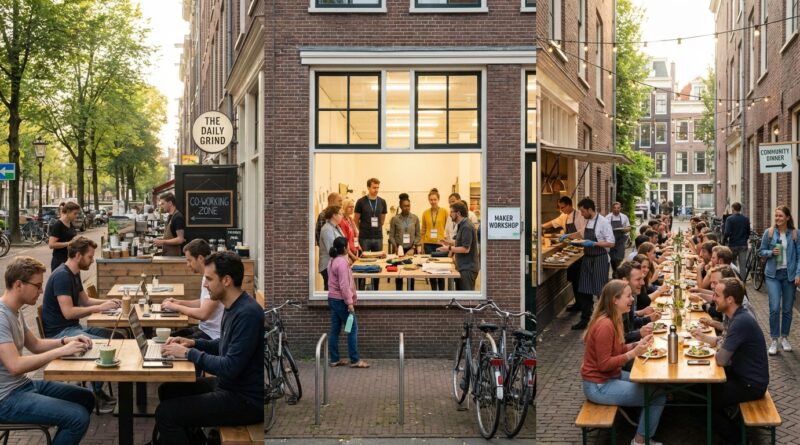
From Offsite To Pop-Up Village: Why 2026’s Smartest Retreats Move Into The Neighborhood, Not The Boardroom
You can feel the brief before you even open it. “Make this retreat transformational.” Translation: somehow create deep human connection, justify the budget, avoid anything that feels wasteful or out of touch, and please do not trap everyone in another beige ballroom with stale coffee and a forced icebreaker. That pressure is real. After the pandemic, people still want to meet face to face, but they want it to feel grounded. Safer. More useful. More human. That is why some of the smartest 2026 retreat plans are not heading farther away. They are moving into walkable neighborhoods and turning them into temporary campuses. Think morning strategy in a local studio, lunch with neighborhood caterers, small group sessions in nearby shops or galleries, and evening meals that actually tell the story of the place. For anyone planning a post pandemic corporate retreat local community immersion experience, this model is practical, memorable, and far less tone deaf than the old resort playbook.
⚡ In a Hurry? Key Takeaways
- A neighborhood-based “pop-up village” retreat often works better than a traditional resort offsite because it feels more authentic and connected to real life.
- Start by picking one walkable district, then map meeting space, food, lodging, and evening activities within a 10 to 15 minute walk.
- This format can improve safety, support local businesses, and stretch your budget if you keep logistics simple and partner with trusted local hosts.
Why the old retreat model suddenly feels wrong
For years, the formula was easy. Fly everyone somewhere nice. Rent conference rooms. Add a team-building activity. Call it culture.
That formula is now showing its age. Not because people hate travel. They do not. It feels wrong because many teams are more aware of cost, health, local impact, and time away from home than they were in 2019.
People have also changed their standards. If they are going to leave their routines, they want the in-person time to feel worth it. Not staged. Not generic. Not like the same event dropped into a different zip code.
That is where the “pop-up village” idea comes in. Instead of placing your team in one sealed-off venue, you use a neighborhood as your retreat campus. The city becomes part of the program, not just the view outside the shuttle window.
What a “pop-up village” retreat actually is
Think of it as a retreat made from several small, real places instead of one large, fake-feeling one.
The basic shape
A pop-up village usually includes:
- A walkable neighborhood as the central setting
- One anchor space for all-hands sessions
- Several smaller spaces for breakouts
- Food and coffee from local businesses
- Lodging nearby, often in one or two hotels or apartment-style stays
- A shared local project or ritual that gives the event meaning
The result feels less like a conference and more like a temporary home base.
Why people respond to it
It matches how people actually want to gather now. Smaller groups. Fresh air. Room to move. Real food. Actual neighborhoods. Encounters that cannot be copied and pasted into every city.
That matters because memory is built from context. Nobody talks about Ballroom C six months later. They do remember the bakery that opened early for the team, the bookstore owner who hosted a discussion, or the evening walk that turned coworkers into friends.
Why this works so well in 2026
Several trends are all pointing in the same direction.
1. Teams want less spectacle and more substance
“Transformational” used to mean big production. Now it often means the opposite. People want conversations that feel honest and settings that feel grounded.
2. Budgets are under pressure
Big resorts come with big minimums. Neighborhood retreats let organizers mix and match. You can spend on the moments that matter most and keep the rest simple.
3. Travel fatigue is real
A retreat that is closer to where teams already live, or at least easier to reach, can get better attendance and less grumbling. Shorter travel days also preserve energy for the actual event.
4. Local impact matters more
Many companies want their events to do some good, even in small ways. A neighborhood model makes that easier because your budget flows to nearby businesses, artists, food makers, and community groups.
5. Safety is easier to manage when the plan is human-sized
Smaller venues, shorter walks, and fewer giant crowd points can make the whole experience feel calmer. Not risk-free, of course, but easier to understand and support.
How to design a post pandemic corporate retreat local community immersion plan
You do not need a huge team or a giant event agency to do this. You need a tight footprint and a clear rhythm.
Step 1: Pick the neighborhood before you pick the venue
This is the biggest mental shift. Most planners start with the meeting room. Start with the district instead.
Look for:
- 10 to 15 minute walkability
- Reliable transit or easy airport access
- A mix of food, meeting, and evening options
- Good lighting and a comfortable street feel
- A sense of identity. Historic, creative, waterfront, maker-focused, culinary, artsy, whatever fits your team
If the neighborhood has no personality, the retreat will have to work much harder to create one.
Step 2: Choose one anchor space
You still need a home base. This is where the whole group can gather for kickoffs, keynotes, or closing sessions.
Good anchor spaces include:
- A small theater
- A gallery or cultural center
- A coworking venue with event capacity
- A community hall with modern AV
- A restaurant with a private daytime buyout option
The anchor space should feel easy, not grand. Good Wi-Fi, clean sound, natural light if possible, and enough flexibility to rearrange the room quickly.
Step 3: Build breakout sessions into nearby places
This is where the village feeling starts to click. Instead of assigning every session to the same carpeted room, spread smaller groups across local spaces.
Examples:
- Leadership roundtables in a design studio
- Creative workshops in an artist co-op
- Customer story sessions in a bookstore event room
- Manager training in a café before public opening hours
Each space should have one job. Keep the format simple. Do not make every room do everything.
Step 4: Make food part of the story
Bad retreat food drains energy fast. Generic buffet lines also make every event feel the same.
A better approach is to spread meals across trusted local partners. One breakfast spot. One bakery. One family-style dinner. One tasting-led lunch. One mobile coffee cart.
This creates rhythm and supports nearby businesses without turning the schedule into a food tour. Keep it curated, not chaotic.
Step 5: Add one small legacy project
This is where community immersion becomes more than a marketing phrase.
Your team does not need to repaint an entire neighborhood in 90 minutes. In fact, please do not force a shallow volunteer stunt just to tick a box.
Instead, choose one modest, locally useful contribution. For example:
- Fund and assemble care kits with a neighborhood nonprofit
- Sponsor a public art micro-project chosen by local organizers
- Support a school, garden, or library through a practical materials drive
- Pay local speakers and makers for workshops instead of asking for “exposure”
The best legacy projects are small enough to do well and relevant enough to matter.
A simple 3-day blueprint you can adapt
Day 1: Arrive and settle in
Keep day one light. Travel days are messy.
- Afternoon arrivals and hotel check-in
- Neighborhood welcome walk in small groups
- Opening session in the anchor space
- Casual dinner hosted by local chefs or restaurants
The goal is orientation, not overload.
Day 2: Deep work plus local connection
- Breakfast from a local partner
- Morning all-hands strategy session
- Breakouts across nearby venues
- Lunch in rotating small groups
- Afternoon legacy project or local guided experience
- Evening meal with storytelling, music, or neighborhood hosts
This is the core day. Make it the strongest one.
Day 3: Reflection and wrap
- Optional walk, yoga, or quiet coffee meetup
- Team reflection sessions
- Commitment setting and next steps
- Simple closing lunch, then departures
People should leave with clarity, not a hangover and a tote bag.
Vendor checklist for a neighborhood-based retreat
If you are trying this for the first time, this checklist keeps the idea practical.
Core vendors
- Anchor venue manager
- 2 to 4 breakout space hosts
- Primary catering or restaurant partners
- Coffee and snack provider
- AV support contact
- Local transportation backup, even if most movement is by foot
- Photographer who knows the area
- Local guide, historian, or host if that fits the program
Questions to ask every partner
- What is the exact capacity for seated and standing groups?
- What are the access and bathroom details?
- What Wi-Fi and power setup is available?
- What are the noise levels during our time slot?
- Who is the day-of contact if something changes?
- What is your cancellation or weather backup plan?
Those questions are not glamorous, but they save events.
Common mistakes that can sink the idea
Trying to use too many locations
A pop-up village should feel easy to navigate. If people need maps, vans, and three text threads just to get lunch, you have gone too far.
Confusing “local” with “unstructured”
Authentic does not mean sloppy. You still need timing, signage, host contacts, dietary planning, and a clear communication plan.
Booking charming spaces with terrible infrastructure
That cute studio with exposed brick may also have weak Wi-Fi, one bathroom, and no sound treatment. Visit in person if you can.
Treating the neighborhood like a backdrop
Real community immersion means respectful partnership. Pay people fairly. Ask what helps. Do not build your entire program around local flavor and give nothing back.
How to sell this idea to cautious leadership
Some leaders will hear “multiple local venues” and think “logistical headache.” That is fair. Your job is to show that this is not chaos. It is a tighter, smarter format.
Frame the benefits in plain language:
- Lower dependence on one expensive venue
- More memorable employee experience
- Better use of local partners and more flexible spending
- Shorter travel and a softer sustainability story
- More natural team connection because people move through a real place together
If you need a simple pitch, try this: “We are not making the retreat bigger. We are making it more human.”
At a Glance: Comparison
| Feature/Aspect | Details | Verdict |
|---|---|---|
| Traditional resort retreat | One venue, easy central logistics, but often expensive and emotionally flat | Good for simplicity, weaker for authenticity |
| Pop-up village model | Multiple nearby local spaces, stronger atmosphere, more planning needed up front | Best choice for meaningful connection and local immersion |
| Budget and impact | Can spread spend across local vendors, reduce venue minimums, and create visible community value | Often the smartest 2026 tradeoff if kept walkable and focused |
Conclusion
The retreat question in 2026 is not just “Where can we fit everyone?” It is “What kind of experience feels right now?” Right now, post-pandemic teams are hungry for in-person time that feels authentic, not manufactured. People want to travel less, feel safer, support local economies, and come home with stories that are more meaningful than a bar tab. A retreat model that turns a walkable neighborhood into your campus solves several headaches at once. It cuts reliance on big-box venues, stretches budget through local partnerships, and builds genuine connection by giving people shared rituals in real spaces instead of isolated meeting rooms. Best of all, this is not some abstract trend piece. It is usable. Pick a neighborhood. Map the walk. Choose an anchor space. Build a 2 to 3 day rhythm. Add one locally relevant legacy project. Done well, your retreat stops feeling like an escape from real life and starts feeling like a better way to meet inside it.