From Offsite To Sensory‑Smart Retreat: Why 2026’s Most Inclusive Gatherings Are Designed For Brains, Not Job Titles
You can feel the problem before the retreat even starts. The calendar invite says “reconnect, align, celebrate,” but half the team is already tired. Some are burned out. Some are dreading the travel. Some are quietly thinking about the loud dinner, the freezing ballroom, the endless icebreakers, and the awkward pressure to look cheerful for two straight days. That is not a people problem. It is a design problem. A sensory smart corporate retreat starts from a simple idea. If you want people to do their best thinking together, you have to make the room work for actual human brains, not just the org chart. That means less noise, more choice, clearer schedules, better lighting, shorter sessions, and spaces where people can step back without looking “difficult.” The companies getting this right in 2026 are not making retreats softer. They are making them usable, which is often the difference between forced attendance and real connection.
⚡ In a Hurry? Key Takeaways
- A sensory smart corporate retreat is built to reduce overload, with quiet zones, clear schedules, optional activities, and lower-stimulation spaces.
- Start by redesigning the basics first. Lighting, noise, seating, breaks, food timing, and communication rules matter more than flashy entertainment.
- This is not just a comfort issue. It helps protect neurodivergent employees, reduces burnout, and makes in-person time more useful for everyone.
Why the old offsite model is breaking down
For years, the standard retreat formula looked impressive on paper. Big venue. Packed agenda. Team dinner. Icebreaker. Keynote. Breakout. Social event. Repeat.
But for a lot of employees, especially in hybrid teams, that formula lands like sensory overload with a lanyard.
Open-plan networking spaces are loud. Hotel conference rooms often have harsh lighting and terrible acoustics. Schedules run too long. Meals are crowded and unpredictable. “Fun” is mandatory. By day two, people are not bonding. They are managing themselves.
This hits neurodivergent employees especially hard, but not only them. Burned-out parents, introverts, people with migraines, employees with anxiety, and anyone running on low sleep can all struggle in the same environment.
Leaders then wonder why the retreat felt flat, why participation was uneven, or why culture still feels fragile after everyone gets home. Usually the answer is simple. The event asked people to perform connection instead of making connection easier.
What a sensory smart corporate retreat actually means
A sensory smart corporate retreat is not a silent wellness weekend. It is a gathering designed with different nervous systems in mind.
Think of it as good event design with empathy built in.
It starts with lower sensory load
That means softer lighting where possible, fewer blasting microphones, less background music, and rooms that do not force hundreds of people into one noisy box all day.
It gives people more control
People should know what is happening, when it starts, how long it lasts, and whether participation is expected or optional. Surprises are fun in movies. They are not always fun in corporate settings.
It respects energy, not just attendance
The goal is not to keep everyone “on” from breakfast to late drinks. The goal is to help people contribute well during the moments that matter.
The biggest mistake planners make
They assume inclusion is about adding one quiet room at the back of the venue and calling it done.
That is better than nothing, but it is not enough.
If the whole retreat is built around overstimulation, one recovery room becomes a bandage on a bad plan. A truly sensory smart corporate retreat bakes accessibility into the full experience.
That includes the invitation, the agenda, the room setup, the food plan, the social layer, and the follow-up.
How to design for brains, not job titles
1. Make the agenda readable and predictable
Send the full schedule early. Include session length, room size, noise level if relevant, and whether each item is mandatory, recommended, or optional.
That one move lowers anxiety fast. People can plan their energy. They can prepare for presentations. They can also spot the moments when they may need a break.
This is also where opt-out culture matters. If every session is technically optional but socially required, employees know it. That is why the thinking in From Offsite To Opt-Out Friendly: Why 2026’s Smartest Retreats Let People Say No Without Losing Culture fits so well here. A retreat becomes more inclusive when people can skip certain parts without paying a hidden social penalty.
2. Cut the marathon sessions
Ninety-minute presentations in a dim room are not a culture strategy. They are a test of endurance.
Use shorter blocks. Mix listening with discussion. Build in real breaks, not five-minute hallway sprints. Give people at least one low-demand block where they can process, walk, or simply reset.
3. Create different kinds of spaces
Not every useful interaction happens in the main room. A better retreat has zones.
For example:
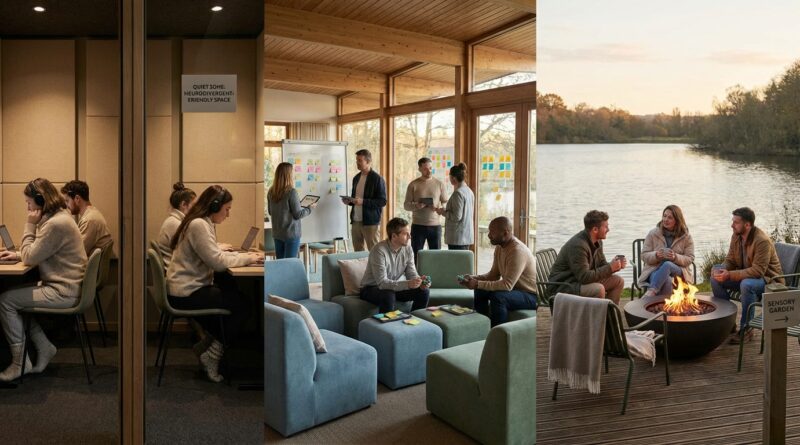
- A quiet room with no calls, no music, and low lighting
- A soft social area for calm one-to-one chats
- A working lounge for people who need to catch up without hiding in their hotel room
- An outdoor option if weather allows
This makes the event feel less like one giant performance and more like a place people can actually use.
4. Ditch forced fun
If your team only bonds when trapped in a competitive game after ten hours of meetings, that is a warning sign.
Instead of one big mandatory evening event, offer layers of social time. A quiet dinner table. A walk. A casual dessert hour. A board game corner. An early finish for people who are done.
Choice often creates better participation than pressure.
5. Think about sound before you think about swag
Noise is one of the fastest ways to drain people. Choose venues with decent acoustics. Avoid constant background music. Use microphones that are clear, not painfully loud. If a space echoes badly, that is not a minor detail. It changes how well people can listen, think, and stay regulated.
6. Normalize stepping out
Tell people directly that taking breaks is fine. Put it in the opening remarks. Put it in the printed agenda. Train managers not to read a quick exit as disengagement.
When stepping out is normalized, people use that option early and briefly, instead of pushing through until they are fully overwhelmed.
7. Ask better pre-event questions
Do not wait for employees to ask for special treatment. Many will not.
In your pre-event form, ask about dietary needs, mobility needs, schedule constraints, quiet-space preferences, and environmental concerns like lighting or noise sensitivity. Keep the wording simple and respectful. The point is to invite useful information, not demand personal disclosure.
Why this matters even if your team is not talking about neurodiversity much
Plenty of workplaces still treat neurodiversity as a niche issue. It is not.
Even when employees do not formally identify themselves, the signs are already there. People avoid crowded sessions. They skip dinners. They go quiet after long presentations. They need recovery time after “high-energy” events that leadership thought were inspiring.
A sensory smart corporate retreat helps those employees, yes. It also helps everyone else.
Good signage helps everyone. Clear expectations help everyone. Better breaks help everyone. Lower noise helps everyone. Optional social formats help everyone.
That is the nice thing about thoughtful design. It rarely serves just one group.
What leaders get wrong about “culture”
Some leaders still believe culture is built by proximity alone. Put people in the same hotel for two days and magic will happen.
Usually, it does not.
Culture is built when people feel safe enough to participate honestly, contribute in ways that fit their strengths, and leave with more trust than they arrived with. If the format overwhelms them, the room may be full, but the connection is shallow.
This is why the retreat should act like a live test of the working norms you want back at the office and in hybrid life. Clear communication. Flexible participation. Respect for focus. Better meeting hygiene. More thoughtful collaboration.
If your retreat ignores those values, your team notices.
Simple upgrades that make a big difference
- Share a visual agenda with break times clearly marked
- Offer name badges with optional conversation cues, like “happy to chat” or “taking it slow”
- Provide noise-reducing headphones or earplugs at check-in
- Use smaller breakout groups instead of giant discussion tables
- Choose seating people can move, not fixed rows all day
- Set a quiet breakfast option alongside the main social one
- End earlier than you think you need to
- Give remote or partial-attendance options where practical
None of this is flashy. That is exactly why it works.
How to pitch this idea internally
If you are trying to sell this to leadership, do not frame it as a “nice extra.” Frame it as risk reduction and performance support.
You are reducing accidental exclusion. You are helping more people stay engaged. You are lowering the chance that the retreat drains the very employees you most want in the room. You are also making the company look more credible when it says it cares about wellbeing and inclusion.
And if budget is tight, this approach can actually help. You may spend less on overproduced entertainment and more on basics that improve the whole experience.
At a Glance: Comparison
| Feature/Aspect | Details | Verdict |
|---|---|---|
| Traditional offsite format | Long plenaries, loud social events, packed schedules, and little privacy or recovery time. | Looks energetic, but often leaves people drained and less able to connect. |
| Sensory smart corporate retreat | Clear agenda, quiet zones, lower-stimulation spaces, optional social layers, and real breaks. | More inclusive, more practical, and better for useful in-person collaboration. |
| Culture impact | Old model rewards stamina and social performance. Smarter design rewards participation and trust. | The sensory-smart approach is more likely to create lasting value after the event. |
Conclusion
Right now, companies are tightening hybrid rules and asking people to come back together just as burnout, anxiety, and neurodiversity needs are showing up more clearly in every survey. That is exactly why a sensory smart corporate retreat matters. It gives teams a way to be in the same place without recreating the worst parts of the office. You swap echoey ballrooms and back-to-back plenaries for quiet zones, low-stimulation work blocks, optional social layers, and communication rules people can actually follow. That does more than make a retreat feel nicer. It helps leaders avoid accidental exclusion, protects high-value people who get overwhelmed easily, and turns the event into a real-world test of the inclusive habits you want in daily hybrid work. If employees are openly questioning forced culture days, this is a useful next step. Less performance. More thoughtful design. Better outcomes for actual humans.