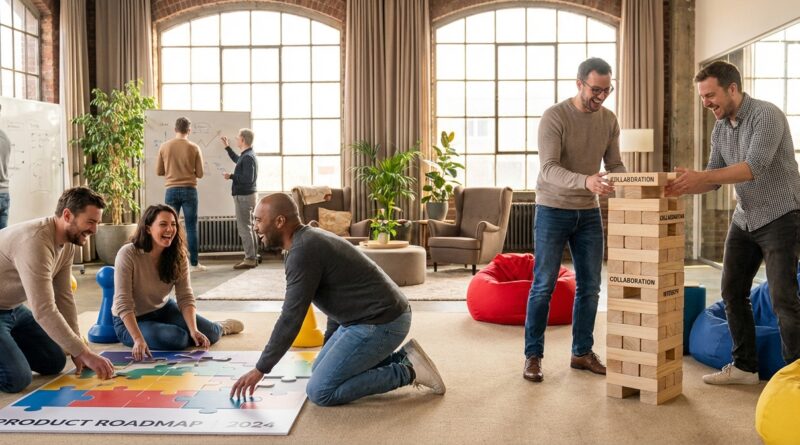
From PowerPoint To Playground: Why 2026’s Sharpest Corporate Retreats Are Built Around Shared Play, Not Trust Falls
You can feel it five minutes into most company retreats. The room is cold. The coffee is bad. Someone is clicking through slide 37 while everyone else quietly checks email under the table. Then, right at the end, there is a rushed “fun” activity that feels more like an obligation than a break. If you are tired of offsites that feel like work in a different zip code, you are not imagining it. A lot of teams are. That is exactly why the best post pandemic corporate retreat play based team building plans for 2026 are changing the script. They put shared play near the center, not as a reward after the real agenda is done, but as the thing that helps people reconnect. Not awkward trust falls. Not forced vulnerability. Actual play. Games, movement, problem-solving, friendly competition, hands-on challenges, and space to laugh together. It is easier to budget, easier to defend, and far more likely to leave people saying, “That was actually worth going to.”
⚡ In a Hurry? Key Takeaways
- Shared play works better than packed slide decks because it builds trust through real interaction, not forced participation.
- Start by cutting presentation time in half and replacing it with low-pressure group games, movement, and creative team challenges.
- The best retreat activities are optional, inclusive, and designed for different comfort levels, mobility needs, and personalities.
Why the old retreat formula is wearing people out
The old model assumes that if you gather people in one place, connection will just happen. It usually does not.
What happens instead is familiar. Leadership wants to “make the most” of travel costs, so the agenda gets crammed full. Every department wants time. Every executive wants a slot. Before long, the retreat becomes a conference with name tags.
Then organizers notice morale is flat, so they bolt on a trivia round, a cocktail hour, or a trust exercise. By then, people are mentally done.
That is the key problem. Most retreats treat connection like dessert. Teams need to treat it like the main course.
This is also why more companies are moving away from stiff hotel-ballroom thinking and toward spaces that feel more human. If you want a good companion read on that shift, From ‘Offsite’ to ‘Third Space’: Why 2026’s Smartest Corporate Retreats Happen Near Home, Not in HQ or a Hotel makes the case well. The setting matters because people relax differently when the room does not feel like a quarterly review with better snacks.
Why shared play works better than trust falls
Trust falls ask people to perform trust. Play gives them a chance to build it naturally.
That sounds small, but it changes everything.
When people play a game together, solve a goofy challenge, build something physical, or move through an activity with a clear shared goal, they show parts of themselves that never come out in meetings. The quiet analyst turns out to be hilarious. The manager everyone thinks is stiff becomes the calmest problem solver in the room. The new hire suddenly has a moment to shine.
That kind of discovery is where team trust really starts.
Play lowers the social temperature
A lot of workers are still carrying some social rust after years of remote and hybrid work. Even confident people can feel oddly formal when they get together in person. Shared play helps because it gives everyone something to do besides “network.”
And let’s be honest. “Network with your coworkers” is not a sentence that fills people with joy.
Play creates stories people remember
People rarely come back from an offsite talking about the keynote. They talk about the scavenger hunt that went off the rails, the cooking challenge where finance somehow won, or the team puzzle that took three departments to crack.
Those stories matter. Shared memories are social glue.
Play gives you ROI people can actually feel
Leaders are under pressure to show that retreat spending has value. Fair enough. Play-centered retreats are easier to defend because they support real outcomes.
- Better morale because the event does not feel draining
- Stronger cross-team relationships because people mix outside their normal org chart
- Higher retention because employees leave feeling seen, not processed
- More honest collaboration because people have already built some comfort together
What “play-based team building” really means
It does not mean turning your engineers into camp counselors or making everyone wear matching T-shirts.
Good post pandemic corporate retreat play based team building is structured, intentional, and respectful of adult energy. It uses play as a design tool.
Good play is guided, but not over-managed
You want enough structure that people know what they are doing. You do not want so much control that the activity feels scripted.
Think of the difference between:
- A timed team challenge with clear rules and room for creativity
- A forced sharing circle where everyone says one “vulnerable truth” before lunch
One creates momentum. The other creates fake intimacy.
Good play has many ways to participate
Not everyone wants to climb a wall, sing karaoke, or sprint across a field. That does not mean they do not want to join in. It means the retreat should offer different kinds of play.
For example:
- Creative play, like collaborative art, cooking, or building challenges
- Strategic play, like escape rooms, team quests, and puzzle games
- Light physical play, like lawn games, mini golf, or guided movement sessions
- Social play, like improv games, storytelling prompts, or game lounges
The win is variety. Let people enter through the door that feels natural to them.
How to design a retreat people will not dread
If you are planning one, here is the practical part.
1. Cut the agenda harder than you think
If every leader says their session is essential, your retreat is already in trouble.
A simple rule helps. Keep presentations to the information that truly needs live discussion. Everything else can go into a pre-read, a follow-up video, or a short written recap.
If people traveled to be together, use that time for things that only work well in person.
2. Put play early, not late
This is a big one.
Do not save the good part for after eight hours of updates. Put shared play in the first half of day one, when people still have energy and are still awkward around each other. That is when it does the most good.
Early play breaks the stiffness fast.
3. Mix teams on purpose
If marketing stays with marketing and engineering stays with engineering, you are not building many new bridges.
Create mixed groups. Not random chaos, but thoughtful mixes across tenure, role, and department. That is where new trust starts.
4. Design for introverts too
Play should not punish quieter people.
Use activities with clear tasks, smaller groups, and optional social intensity. Many introverts love games and challenges. They just hate being put on the spot in front of 80 people.
5. Build in recovery time
This gets missed a lot. Even fun can be tiring.
Leave room between sessions. Add quiet corners. Make phone breaks normal, not sneaky. People enjoy activities more when they do not feel trapped inside a schedule.
What to stop doing right now
Some retreat habits need to go.
Stop using “fun” as a patch for bad planning
If the day is overloaded, no evening activity will save it.
Stop forcing fake vulnerability
You do not build trust by cornering people into emotional performance. Let closeness grow from shared experience.
Stop measuring success by attendance alone
People showing up is not proof the retreat worked. Pay attention to what happens after. Do cross-team chats increase? Do employees mention the retreat positively? Do new hires integrate faster? Does collaboration feel smoother in the next few months?
Stop treating play like fluff
Done well, it is not fluff at all. It is a practical way to help people reconnect as humans, which is often exactly what remote and hybrid work has worn thin.
Examples of retreat play that actually works
You do not need a circus budget. You need smart design.
Challenge-based activities
- Team scavenger hunts in a walkable neighborhood
- Escape room style puzzle circuits
- Build-and-race challenges using simple materials
Hands-on shared experiences
- Cooking competitions with rotating team roles
- Collaborative mural or maker sessions
- Short film or photo-story challenges
Low-pressure social games
- Tabletop game lounges
- Trivia with mixed teams and funny categories
- Story-driven icebreakers that feel like conversation, not homework
Light movement and outdoor play
- Lawn games and mini tournaments
- Guided walks with team prompts
- Beginner-friendly wellness sessions that are not too earnest
The best option depends on your team, but the pattern is the same. Make it social. Make it easy to join. Make it feel like real life, not a lesson wearing a clown nose.
How to explain the business case to leadership
If someone in the room thinks play sounds soft, speak their language.
Point out that the goal is not amusement for its own sake. The goal is stronger working relationships, better morale, and retention support in a labor market where people remember how a company makes them feel.
Also remind them that tired employees do not become loyal because they sat through more slides in a resort conference room.
They stay when they feel connected.
They stay when work includes people they trust.
They stay when the company creates moments that feel human, not staged.
At a Glance: Comparison
| Feature/Aspect | Details | Verdict |
|---|---|---|
| Traditional offsite agenda | Heavy on presentations, light on interaction, “fun” pushed to the end when energy is gone | Often expensive, tiring, and easy to forget |
| Play-based retreat design | Uses shared games, movement, and creative challenges to build trust early and naturally | Better for morale, cross-team bonding, and memorable team connection |
| Inclusive participation | Offers multiple activity types, avoids forced vulnerability, and respects different comfort levels | Most likely to create real buy-in and measurable value |
Conclusion
Leaders do need to justify every travel dollar right now. That is exactly why the stale retreat formula makes less and less sense. If people leave more drained than connected, the company paid for a change of scenery, not a better team. A play-centered retreat model is a smarter bet. It helps morale, supports retention, and builds cross-team trust in a way people can actually feel when they get back to work. More importantly, it taps into what many post-pandemic teams miss most: laughing together, moving together, and seeing each other as full humans again. Swap the performative team building for well-designed shared play, and your next offsite has a real shot at becoming the story people tell when they explain why they stayed.