From Retreat To Residency: Why 2026’s Boldest Offsites Turn Employees Into Local Citizens For A Week
You know the pattern. Everyone flies in. There are name badges, workshops, a nice dinner, maybe a sunrise yoga session nobody really asked for, and one polished group photo for LinkedIn. Then everyone goes home, opens Slack, and slips right back into the same habits. Two weeks later, the retreat feels more like a field trip than a turning point. That is the frustration behind the post pandemic corporate retreat residency trend. Leaders are starting to see that if hybrid work is now normal, culture cannot be fixed with a 36-hour hotel stay and a keynote. The bolder move for 2026 is the short residency. Instead of dropping employees into a conference room, teams spend a week living and working in one place with local routines, local partners, and structured projects that make values visible. The goal is not just bonding. It is to help people act like temporary local citizens, so the experience sticks after the flight home.
⚡ In a Hurry? Key Takeaways
- A residency works better than a standard retreat when you want trust, belonging, and follow-through, not just attendance.
- Start with a five to seven day plan that mixes team work, local involvement, and clear post-trip commitments.
- If you do this, measure outcomes like cross-team projects, retention, and accountability, not just whether people had fun.
Why the old retreat model is wearing thin
The classic offsite was built for a different work world. Most people were in an office most of the time. The retreat was a break from the routine. Now the routine is already broken up. People work from home, co-working spaces, airport lounges, and the office two or three days a week. That changes what an offsite has to do.
A short hotel retreat can still be useful for announcements, planning, and face time. But it often fails at the harder stuff. It does not give people enough time to relax into real conversation. It does not show company values in action. And it rarely creates the kind of shared memory that changes how teams work later.
That is why the post pandemic corporate retreat residency trend is getting attention. Companies are asking a better question. Not, “How do we gather everyone for a few days?” but, “How do we create a temporary way of living and working together that people will remember and build on?”
What a residency actually is
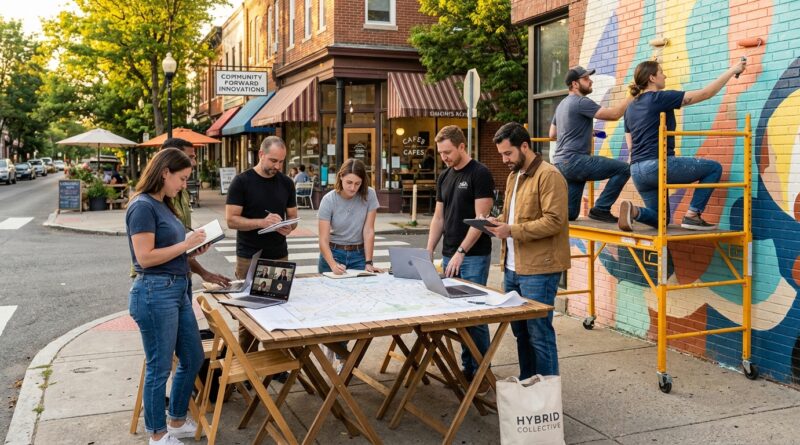
Think of a residency as a retreat with a spine. It is longer, usually five to seven days. It is rooted in one neighborhood or town instead of a sealed hotel environment. And it has a clear structure that mixes work, shared living rhythms, and participation in the local place.
It is not just a longer retreat
The extra days matter, but the design matters more. In a residency, the team might:
- Work from a local studio, school, or community hub instead of a ballroom
- Partner with local groups on a small project
- Eat in neighborhood spots instead of only catered buffets
- Split into cross-functional groups with real deliverables
- Build in quiet time, reflection, and informal time together
That shift changes the feel of the week. People stop performing “retreat mode” and start settling into a shared routine. That is where real connection usually begins.
It turns values into something visible
Every company says it cares about trust, collaboration, and community. A residency gives you a chance to prove it. If one afternoon is spent helping a local partner solve a real problem, people see whether leaders listen, whether teams share credit, and whether the company can be useful outside its own walls.
That is much more powerful than another slide with the word “belonging” in a pastel font.
Why this works better for hybrid teams
Hybrid teams often know each other in fragments. One person is great in Zoom meetings. Another is funny at lunch. Another always gets things done but barely speaks in big calls. In a standard retreat, there is not enough time for those fragments to become a fuller picture.
A residency gives people repeated, low-pressure contact. They might solve a work problem in the morning, walk to lunch together, meet a local organizer in the afternoon, and debrief over dinner. That layering matters. It helps people build trust in a way that no single workshop can force.
It also gives newer employees a faster on-ramp. Instead of needing six months of scattered office days to learn how the company really works, they get a concentrated week of seeing habits, norms, and relationships up close.
The biggest difference is the story people bring home
Most retreats create memories. Few create stories with staying power. A residency can do that because it gives people a shared arc.
There is a beginning. The team arrives and learns the setting. There is a middle. People work, contribute, get uncomfortable, adapt, and notice each other in a different light. Then there is an end. The team leaves with a clearer sense of what happened and what comes next.
That shared story becomes useful back at work. “Remember what we did in Lisbon,” or “Let’s handle this like we did during the residency,” is more than nostalgia. It is a shortcut to group identity and better habits.
How to design a residency without turning it into chaos
This is where some leaders get nervous, and fairly so. A residency can sound vague, expensive, or hard to manage. It does not have to be. The best ones are structured enough to create results and loose enough to feel human.
1. Pick one clear purpose
Do not try to fix everything in one week. Choose the main job of the residency. It might be:
- Building trust across departments
- Helping a newly merged team form relationships
- Turning company values into action
- Creating shared ownership around a strategy shift
If the purpose is fuzzy, the week will feel fuzzy too.
2. Choose a place with real local texture
You do not need a luxury destination. In fact, too much polish can work against you. A good residency location has walkability, local partners, useful meeting spaces, and enough character that people feel they are somewhere real, not inside a corporate bubble.
3. Build a rhythm, not a marathon
People cannot be “on” from breakfast to midnight for five days. A good rhythm usually includes:
- Morning work sessions
- Afternoon field activities or local collaboration
- Evening meals with space to breathe
- Short daily reflection time
Leave white space in the schedule. Some of the most useful moments happen while walking between places or having coffee before the day starts.
4. Give people a real shared task
Connection happens faster when people are doing something together. The task should be concrete enough that progress is visible. For example, teams might design a process improvement, build a customer research plan, help a local nonprofit with a tech challenge, or produce a small pilot that continues after the trip.
5. End with commitments that survive the airport
This part is often skipped. Before everyone leaves, capture three things:
- What the team learned
- What will change in day-to-day work
- Who owns each next step
If nobody owns the follow-up, the residency becomes a nice memory and not much more.
What leaders often get wrong
The biggest mistake is treating the residency like a prettier retreat. If all you do is move the same presentations to a more charming town, nothing fundamental changes.
The second mistake is making it too worthy. Yes, local involvement matters. But this is not about parachuting in for forced volunteering and a photo opportunity. Good partnerships are respectful, useful, and designed with local organizations, not dumped on them.
The third mistake is measuring vibes instead of outcomes. It is nice if people say the week was inspiring. It is better if you can point to stronger cross-team work, better retention, faster onboarding, or fewer misunderstandings in the months that follow.
How to know if a residency worked
You do not need a giant analytics project, but you do need more than a smiley-face survey. Look for practical signs:
- Did employees build new relationships outside their usual circle?
- Did managers follow through on the commitments made during the week?
- Did one or two projects continue after the residency?
- Did employees mention the experience in later planning, onboarding, or feedback conversations?
- Did the local partnership create something worth repeating next quarter?
That last point is especially important. One reason this model is appealing is that it can compound. You can return to the same place, revisit the same local partners, and build a longer story over time. That makes the gathering part of how the company works, not just an annual escape.
Who should try this first
Not every company needs to throw out every traditional offsite. But a residency makes a lot of sense for:
- Remote-first companies trying to create stronger identity
- Hybrid teams that only overlap in person mid-week
- Organizations going through rapid growth or change
- Leadership teams that need trust, not just planning time
- Companies tired of spending a lot on retreats with little lasting effect
If that sounds familiar, the trend is worth watching closely. It is not about being trendy. It is about finally matching the gathering format to the way people actually work now.
At a Glance: Comparison
| Feature/Aspect | Details | Verdict |
|---|---|---|
| Standard hotel retreat | Short, presentation-heavy, easy to organize, but often light on lasting behavior change. | Good for announcements. Weak for culture repair. |
| Short residency | Five to seven days, shared routines, local projects, clearer follow-through, stronger relationship building. | Best choice for hybrid teams that need trust and belonging. |
| Success measurement | Track ongoing collaboration, retention, accountability, and repeatable community ties, not just attendee satisfaction. | Measure outcomes, or you will miss the point. |
Conclusion
Hybrid work is not going away, and that means culture gets harder to build when people mainly meet on screens and overlap in person for a day or two. That is why the residency model matters. It gives teams more time together in a natural setting, turns company values into visible action instead of slogans, and creates a shared story that actually survives the trip home. In a market full of generic wellness offsites and slide-heavy strategy days, a short, structured residency is a practical way to design for trust, belonging, and accountability instead of just attendance. Better still, it can keep paying off. The same local partners, neighborhood projects, and team habits can be revisited over time, so the offsite becomes part of how the company works. Not just a perk. Not just a photo. Something people can build on.