How to Turn Remote Teams into True Culture Carriers With a Three‑City ‘Micro‑Retreat’ Circuit
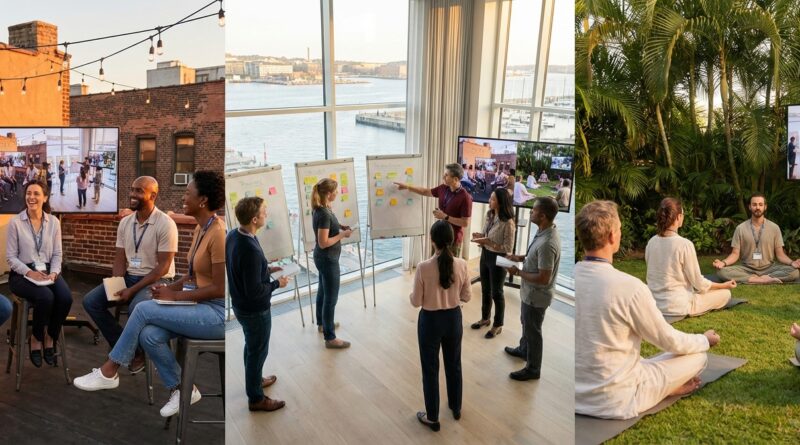
Everyone can feel the pressure. Leadership wants an in-person moment that rebuilds culture. Finance wants the bill to stay sane. Employees, meanwhile, do not want a punishing cross-country or intercontinental trip just to sit in a hotel ballroom and hear the same slides they could have watched on Zoom. That is the heart of many post pandemic corporate retreat trends for remote teams. People still want connection, but they want it in a way that respects time, energy and real life. A three-city micro-retreat circuit is one of the smartest answers I have seen. Instead of dragging the whole company to one resort, you take the same retreat concept to three regional hubs over a few weeks. Staff attend the location closest to them. The company still creates one shared story, one theme and one cultural moment, but with less travel, less waste and a much better chance people show up ready to engage.
⚡ In a Hurry? Key Takeaways
- A three-city micro-retreat circuit replaces one giant offsite with three smaller regional gatherings tied together by one theme and one shared experience.
- Pick hubs based on where people actually live, keep each stop to one or two nights, and repeat a core agenda with local touches.
- This format usually cuts long-haul travel, lowers fatigue and carbon impact, and often gives you better participation than a single destination retreat.
Why the old offsite model is starting to creak
For years, the classic answer was simple. Book a resort. Fly everyone in. Pack the schedule. Hope culture happens.
That plan now runs into three very real problems.
First, distributed teams are truly distributed. Your product manager may be in Austin, your designer in Lisbon, your sales lead in Toronto and your finance team spread across five more places. A single location will always be easy for some people and rough for others.
Second, travel tolerance is lower than it was before. People are more protective of family time, recovery time and their general sanity. They are not being difficult. They are being honest.
Third, budgets are tighter. HR and ops leaders are being asked to prove value, not just book something that looks impressive in a slide deck.
That is why post pandemic corporate retreat trends for remote teams are shifting away from one big blowout and toward formats that feel more human.
What a three-city micro-retreat circuit actually looks like
Think of it as a traveling retreat, not three separate events.
You choose three regional hubs where the largest clusters of employees already live. Then you run the same retreat in each city over a short time window, usually two to six weeks.
The basic structure
Each stop includes:
- One unifying theme, such as trust, innovation, customer empathy or “how we work together now”
- The same signature sessions in every city
- A local venue and local flavor
- A mix of work, social time and recovery time
- Shared content capture so everyone feels part of the same larger story
So your London group, Chicago group and Singapore group do not attend identical carbon copies. They attend the same “festival” in three versions.
Why this works better for remote culture
Culture does not come from forcing everyone into the same room. It comes from giving people a shared memory, a shared language and a sense that the company sees them as humans, not hotel occupancy.
It respects geography
When people can get to a retreat in a short flight or train ride, they arrive with more energy. They are less likely to lose two extra days to travel. They are more likely to stay present.
It raises participation
Attendance often improves because the trip feels doable. Someone who would say no to a long-haul journey may happily attend a nearby one-night retreat.
It helps introverts and mixed personalities
Huge company offsites can be overwhelming. Smaller city-based gatherings make it easier for people to speak, connect and actually remember each other.
It gives culture a local accent
A company can have one identity while still making room for regional personality. That is often what remote teams are missing. Not just corporate values on a poster, but a real sense of belonging where people live.
How to choose the three hubs
This is where many teams overcomplicate things. Start with a map and some common sense.
1. Follow employee density
Pick the places that reduce total travel time for the highest number of people. Do not choose hubs because they sound glamorous. Choose them because your people can reach them without feeling punished.
2. Check travel friction, not just distance
A city may look central on paper but be a pain to reach. Look at direct flights, train links, visa issues, airport transfer times and hotel availability.
3. Consider time zones and sequence
If you are running the same retreat three times, the order matters. Start with the city where your planning risk is lowest. Learn from the first stop. Improve the second. Polish the third.
4. Use simple attendance thresholds
A practical rule is this. If a hub allows a solid regional cluster to attend with less than four to five hours of total travel door to door, it is probably worth considering.
Build one theme, not three disconnected agendas
This is the secret sauce.
If each city gets a completely different event, you do not have a circuit. You have three admin-heavy retreats and a confused culture story.
What should stay the same
- The retreat name and visual identity
- The core purpose
- The flagship keynote or opening session
- One workshop format all cities complete
- One shared ritual, such as team storytelling, a values wall or a customer challenge
- One common takeaway every attendee brings back
What should change by city
- Food and venue style
- Guest speakers with regional relevance
- Local team hosts
- One city-specific activity or neighborhood experience
Think Broadway show, not board meeting. Same script. Different stage.
Balance wellness and work like you actually mean it
One reason old-school offsites fall flat is that they claim to care about wellbeing, then schedule people from breakfast to late-night drinks.
That does not feel generous. It feels trapped.
A healthier retreat rhythm
For a one-night micro-retreat, a better flow looks like this:
- Late morning arrival
- Warm welcome and lunch
- Two focused work sessions
- Long break for recharge or local walk
- Shared dinner or cultural activity
- Optional social time, truly optional
- Next morning reflection, practical planning and wrap-up by lunch
This keeps the event useful without feeling like emotional boot camp.
Make wellness visible, not cosmetic
Offer quiet space. Build in breaks. Keep alcohol from becoming the main event. Give people time to process. If your retreat says “we care about people” but the schedule says “perform constantly,” people notice.
Capture content so the circuit becomes company lore
This is the part many teams forget. The retreat should not end when people go home.
You want the three-city circuit to become an internal myth. The good kind. The thing people reference months later.
What to capture
- Short video clips from each city
- Employee stories about what surprised them
- Photos of the shared ritual or workshop outputs
- A simple highlights reel after each stop
- A final all-company recap that stitches the cities together
How to make it feel shared
Use the same opening question in every city. Ask attendees to finish the same sentence. Have each group contribute to one digital artifact, like a culture manifesto, customer promise board or “how we work now” playbook.
That way each city leaves its own fingerprints on one company-wide story.
Practical budgeting tips that keep this from getting silly
Yes, three events sound expensive at first. But one giant retreat hides a lot of painful costs. Long-haul flights, extra hotel nights, airport transfers, lost workdays and lower attendance all add up.
Where micro-retreat circuits often save money
- Shorter average travel distance
- Fewer international flights
- Lower accommodation needs
- Smaller venues with better rates
- Less burnout-related downtime
Where to avoid waste
- Do not overbrand everything
- Do not rent oversized spaces
- Do not copy a trade show
- Do not fill gift bags with junk people throw away
Spend on comfort, good facilitation and smart content capture. Cut the fluff.
Common mistakes to avoid
Treating the retreat like a roadshow of presentations
If people spend most of the time listening passively, you have just moved Zoom into a nicer room.
Ignoring local context
One theme should unite the circuit, but each city still needs some local heartbeat.
Making attendance feel mandatory in a weird way
Encourage strongly, explain the value clearly, but understand that distributed teams include carers, parents, people with health concerns and people with complex travel realities.
Forgetting what happens after
A retreat without follow-through becomes a pleasant memory. A retreat with clear next steps becomes culture.
How to measure whether it worked
You do not need a complicated dashboard. Start with a few signs that matter.
- Attendance rate by region
- Travel time saved versus a single-location offsite
- Post-event feedback on energy, connection and usefulness
- Cross-team collaboration increases in the following quarter
- Whether people keep referencing retreat ideas in meetings and chat
If employees are still talking about moments, not just logistics, that is usually a very good sign.
At a Glance: Comparison
| Feature/Aspect | Details | Verdict |
|---|---|---|
| Travel burden | Three regional hubs usually mean shorter trips, fewer visa headaches and less jet lag than one global resort event. | Strong win for distributed teams |
| Culture impact | Shared theme plus local experiences can create a stronger sense of belonging than a one-size-fits-all offsite. | Better if designed as one story |
| Budget control | Multiple events add planning work, but lower average travel and simpler venues often keep total costs more realistic. | Often more cost-effective than a large destination offsite |
Conclusion
If your team is spread out and your leadership still wants a real-world cultural moment, you do not have to choose between “everyone flies somewhere expensive” and “we stay on Zoom forever.” A three-city micro-retreat circuit sits neatly in the middle. It fits the post-pandemic reality that travel tolerance is lower, distributed work is sticking around and every budget line now gets a second look. Done well, it cuts long-haul travel and carbon impact, meets people closer to where they actually live and still gives the company a landmark experience to rally around. The key is simple. Pick hubs based on real employee geography, create one theme that holds the whole circuit together, give wellness the same weight as work and capture the moments so they live on after the last flight home. That is how a retreat stops being a diary entry and starts becoming company culture.