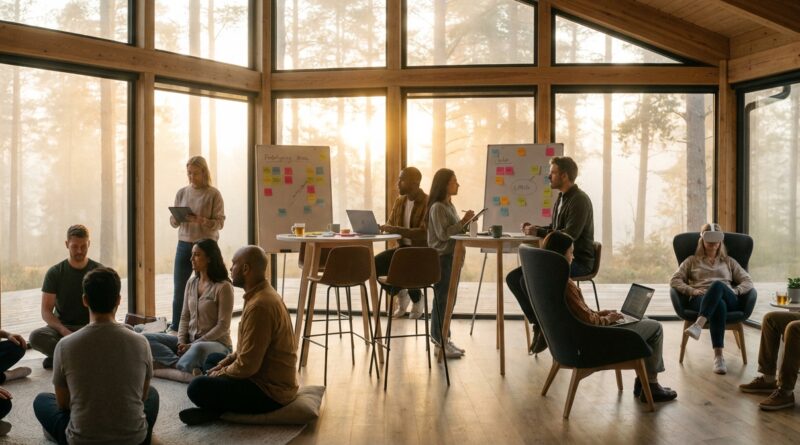
Why 2026’s Best Corporate Retreats Feel Like Pop‑Up Wellness Labs, Not Offsites
HR teams are in a tough spot. Employees are tired, hybrid work is not going away, and the old idea of a corporate retreat can feel weirdly out of touch. Nobody wants to burn budget on flights, hotel swag, and a packed agenda of slide decks only to come home more drained than before. That is why the best post pandemic corporate retreat wellness trends in 2026 look less like offsites and more like pop-up wellness labs. The goal is not to “treat” people for two days. It is to test better ways of working, resting, and connecting that can continue after everyone gets home. Think guided recovery sessions, better meeting design, sleep-friendly schedules, manager coaching, and team rituals that actually stick. When a retreat is built this way, it becomes easier to explain to finance, easier to trust for employees, and far more useful for company culture than a resort weekend with forced fun.
⚡ In a Hurry? Key Takeaways
- The best 2026 retreats are designed as pop-up wellness labs, where each activity has a clear purpose tied to wellbeing, performance, or team connection.
- Start with small experiments like quiet hours, better meeting rules, recovery blocks, and manager coaching, then measure what changes after the retreat.
- This approach gives HR and culture leaders a stronger answer to CFO budget questions because the retreat is not just a perk. It is a test bed for healthier work.
Why the old offsite model is losing people
Classic offsites were built for a different time. Get everyone in one place. Push through a packed schedule. Add a team dinner. Maybe throw in a ropes course. Then call it culture.
That formula feels thin now. Employees have spent years rethinking what work takes out of them. They notice when leadership talks about burnout but plans an event with 7 a.m. breakfasts, back-to-back sessions, and late-night social pressure.
People are not asking for less ambition. They are asking for more honesty. If a company says it cares about sustainable performance, the retreat should show what that looks like in real life.
What a “pop-up wellness lab” actually means
This is not a spa weekend in business casual clothes. It is a retreat format where the company tests practical ideas that could improve daily work.
Each activity needs a hypothesis
For example:
- If we shorten meetings and add quiet focus blocks, do teams report lower stress and better output?
- If managers learn how to spot overload earlier, does that reduce team friction next quarter?
- If employees get structured time for recovery and reflection, do they leave with more clarity and stronger trust?
That is the big shift. Every session has a reason to exist.
Wellness is built into the schedule, not tacked on
The new retreat model does not hide one yoga class in the corner and call it wellbeing. It changes the whole shape of the event.
That might include:
- Later start times to respect sleep and travel fatigue
- Shorter sessions with real breaks
- Walking meetings and outdoor workshops
- Phone-free recovery windows
- Food that supports energy instead of afternoon crashes
- Facilitated conversations about workload, belonging, and team habits
In other words, the retreat itself becomes a live demo of healthier work.
Why this works better in a hybrid world
Hybrid teams do not just need face time. They need better systems. A retreat can help with that, but only if it solves for the reality people live in the other 48 weeks of the year.
That is why 2026 retreats are more likely to focus on rituals and practices than on one-time inspiration. Teams might test a new weekly check-in format. Or agree on response-time norms. Or create manager playbooks for spotting burnout before it gets serious.
If your workforce is spread across regions, a single big retreat may not even be the smartest move. A better option can be smaller, more focused gatherings. That is part of why pieces like How to Turn Remote Teams into True Culture Carriers With a Three‑City ‘Micro‑Retreat’ Circuit are resonating. They reflect the same pressure many People teams feel now. Build culture, keep costs sane, and make the in-person time count.
How HR can explain the budget without sounding defensive
This is where the wellness lab framing really helps.
Instead of saying, “We need a retreat because morale is low,” you can say, “We are running a structured in-person test of work practices that affect retention, collaboration, and wellbeing.” That lands differently.
Talk to finance in outcomes, not vibes
Connect the retreat to specific business questions:
- Can we reduce burnout signals in high-pressure teams?
- Can we improve manager consistency across hybrid teams?
- Can we raise trust and belonging enough to help retention?
- Can we cut the hidden cost of poor meetings and constant context switching?
You do not need fake precision. You do need a plan.
Measure a few things well
Good retreat metrics are simple and believable:
- Pre- and post-retreat pulse surveys
- Manager confidence scores
- Adoption of new team norms after 30 and 90 days
- Participation rates in follow-up practices
- Employee comments about workload, recovery, and connection
If the retreat changes nothing back at work, employees will notice. Finance will too.
What the best retreat agendas look like now
The strongest agendas feel calmer, but they are often more intentional.
Less content stuffing, more useful depth
Instead of 12 presentations, teams get a smaller number of high-value sessions. A morning might include a leadership Q&A, a guided workshop on team friction, and a recovery block before lunch. That sounds simple because it is. Simplicity is part of the point.
Connection is designed, not forced
People still want to bond. They just do not want awkward icebreakers dressed up as magic. Better options include:
- Small-group story sessions
- Peer coaching circles
- Skill swaps
- Shared local experiences with a clear theme
- Cross-functional problem-solving walks
These create real conversation without making adults feel like summer campers.
Recovery stops being treated like laziness
This may be the biggest cultural signal of all. When leadership protects downtime during a retreat, employees notice. It says, “We are serious about energy management, not just output.”
That can mean quiet rooms, optional solo time, screen-free periods, and schedules that do not punish introverts or parents who are already juggling a lot.
What employees are really reading into these events
Most workers are not judging a retreat by the hotel star rating. They are reading the event like a culture memo.
Do leaders listen, or just perform listening?
Is wellbeing real, or is it branding?
Are managers being trained to work better, or is the burden still on employees to “self-care” their way out of structural problems?
This is why the pop-up wellness lab idea matters. It moves the retreat away from empty symbolism and toward proof. Proof that the company is willing to test, learn, and change how work feels.
How to build one without making it feel clinical
You do not need white coats and stress trackers everywhere. The retreat should still feel warm, human, and enjoyable.
Use a simple structure
- Observe: Gather honest input on stress, collaboration, and team habits.
- Test: Try new formats, rituals, and recovery practices on-site.
- Commit: Pick a short list of changes to continue after the retreat.
- Follow up: Check what actually stuck after 30, 60, and 90 days.
Keep the language human
Do not tell employees they are part of an experiment. Tell them the company is using the retreat to find better ways to work together and support each other. Same idea. Better tone.
Mix evidence with experience
The best retreats combine what research says with what your people actually need. Maybe your data points to overload. Maybe your managers need coaching. Maybe your remote employees need more belonging. Start there.
Common mistakes to avoid
Turning wellness into another performance demand
If every activity feels mandatory and optimized, people will shut down. Give choice. Offer optional sessions. Leave breathing room.
Using wellness to avoid harder culture problems
Meditation will not fix bad management. A sound bath will not solve unclear priorities. Do not use soft experiences to dodge structural issues.
Forgetting the return home
The retreat is only the beginning. If the office and the remote workflow snap right back to chaos on Monday, the event becomes a very expensive interruption.
At a Glance: Comparison
| Feature/Aspect | Details | Verdict |
|---|---|---|
| Traditional offsite | Heavy agenda, generic team-building, little connection to daily work once people return | Feels dated and harder to defend on budget |
| Pop-up wellness lab retreat | Activities are tied to specific wellbeing or performance goals, with follow-through plans and simple measurement | Best fit for post-pandemic culture and CFO scrutiny |
| Micro-retreat model | Smaller regional gatherings, lower travel stress, more flexibility for hybrid teams | Strong option when one big retreat is too costly or too blunt |
Conclusion
The big idea is simple. A retreat in 2026 works better when it is not sold as a reward, but designed as a real-world lab for healthier work. That shift helps People teams make a stronger case internally because the event is tied to clear goals, not just good intentions. It also matches how employees judge culture now. They want proof that leadership takes recovery, connection, and sustainable performance seriously. When evidence-based wellness, immersive experiences, and hybrid work realities are built into one plan, the retreat stops feeling like a tone-deaf perk and starts feeling useful. That is the opportunity in the latest post pandemic corporate retreat wellness trends. Done right, the retreat is not the end of the culture story. It is the place where a better one starts.