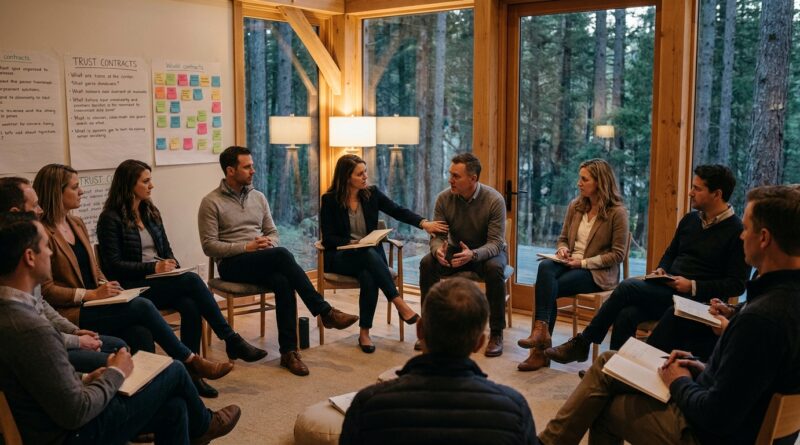
From Offsite To Repair-Retreat: Why 2026’s Smartest Teams Now Use Gatherings To Fix Broken Trust, Not Just ‘Get Aligned’
People are tired of fake togetherness. That is the real problem many leaders are finally willing to say out loud. After layoffs, return-to-office flip-flops, budget cuts, and those painful “fun” retreats where nobody mentions the obvious tension in the room, trust took the hit. Not productivity. Not output. Trust. That matters because once trust cracks, every all-hands feels scripted, every team-building exercise feels awkward, and every expensive offsite starts to look like a bad cover version of culture. This is why the idea of a repair-retreat is catching on. Instead of pretending everyone just needs better alignment, it starts with a more honest question. What got broken, and what would it take to repair it? For teams thinking hard about corporate retreat trust rebuilding, that shift is not just smart. It may be the only format employees still find believable.
⚡ In a Hurry? Key Takeaways
- A repair-retreat works best when the goal is trust rebuilding, not just strategy updates and morale theater.
- Start with honest listening, guided dialogue, and written commitments that have owners, deadlines, and follow-up dates.
- This format lowers the risk of an expensive retreat backfiring because staff can see real accountability, not just polished optics.
Why the old offsite format stopped working
The classic company retreat used to follow a familiar script. Nice venue. Big keynote. A few breakouts. Maybe a trust fall if things got especially bleak. Then everyone went home with branded water bottles and the same unresolved issues they arrived with.
That format struggles now because employees have sharper radar for anything that feels performative. If a company has gone through layoffs, mixed messages, leadership turnover, or a messy RTO push, people do not want another slide deck about values. They want proof that leaders understand what happened.
That is the heart of corporate retreat trust rebuilding. You cannot rebuild trust by talking around the damage. You have to name it.
What a repair-retreat actually is
A repair-retreat is not a rebrand of team-building. It is a structured gathering built around repair, not hype. The purpose is simple. Surface the trust fractures, talk about them safely, and leave with specific commitments.
It starts from a different assumption
A normal offsite assumes the team is mostly fine and just needs alignment. A repair-retreat assumes something important has been strained. Communication. Psychological safety. Faith in leadership. Confidence that feedback matters.
It treats trust like work, not mood
This is what makes it useful. Trust is not treated like a vague feeling that appears after a group dinner. It becomes a work topic with inputs, patterns, and next steps.
It has receipts at the end
The best repair-retreats do not end with “great discussion.” They end with written commitments, named owners, timelines, and a plan to report back. That one difference changes how the whole event feels.
Why leaders are making this shift in 2026
Because the old language no longer lands. “Getting aligned” sounds thin if people still feel burned. Staff can spot the gap between polished messaging and lived reality in seconds.
Leaders also have a budget problem. If an offsite costs six figures, people will ask what changed because of it. “We had some great energy in the room” is not enough. A repair-retreat gives planners and executives a more defensible answer. We identified the trust issues. We documented them. We assigned action. We measured follow-through.
That is a much stronger case than saying the venue had a nice rooftop.
What usually broke trust in the first place
Trust rarely disappears because of one dramatic event. Usually it wears down through a stack of smaller injuries.
Layoffs handled badly
If people felt blindsided, or watched leaders speak in vague corporate code while teammates disappeared, that leaves a mark.
Return-to-office whiplash
Many teams were told one thing, then another, then another. Flexibility became policy, then exception, then policy again. That confusion made leadership seem unreliable.
Listening without action
Surveys, town halls, anonymous forms. Employees have seen plenty of feedback channels that led nowhere. Over time, that teaches people not to bother being honest.
Retreats that ignored the room
This may be the most fixable one. Teams remember when a company flew everyone in, put on a cheerful show, and carefully avoided the actual tension. Those events do not build trust. They usually drain more of it.
If that sounds familiar, this piece on From Offsite To Repair-Retreat: Why 2026’s Smartest Teams Now Use Offsites To Fix Broken Trust, Not Just Strategy Decks captures why the standard playbook is falling flat.
What a good repair-retreat looks like in practice
This is where many teams get nervous. They worry a trust-focused retreat will turn into a complaint festival. It should not. A good repair-retreat is structured, facilitated, and contained.
1. Pre-work happens before anyone boards a plane
People should not arrive cold. Use anonymous surveys, listening interviews, or small-group input sessions to identify the real trust themes ahead of time. This helps planners separate one-off gripes from repeated patterns.
Ask plain questions:
Where has trust improved?
Where has it been damaged?
What behaviors from leaders help?
What behaviors make people hold back?
2. Leadership names reality early
The opening matters. If leaders act like everything is great, people shut down. A stronger start sounds more like this: “We know the last few years created strain. We are here to understand it clearly and commit to repair.”
Short. Direct. Human.
3. Skilled facilitation keeps it safe and useful
This is not the moment to ask managers to “just lead a candid chat.” Use experienced facilitators. They help people speak honestly without turning the room into blame theater. They also make sure senior voices do not dominate.
4. Dialogue leads to commitments
The retreat should move from stories to patterns to actions. For example:
“We do not know how decisions get made.”
Becomes:
“We will publish decision notes for org changes within 72 hours.”
“Feedback disappears into a black hole.”
Becomes:
“We will share top themes from each pulse survey and what will change because of them.”
5. Follow-up is built in before the event ends
This is the part that makes or breaks corporate retreat trust rebuilding. Before people leave, set the check-in dates, owners, and reporting format. If possible, schedule them on the calendar right there.
What not to do
Some mistakes are almost guaranteed to make things worse.
Do not force vulnerability
People do not owe public confession to prove they are team players. Create options for anonymous input and smaller discussions.
Do not combine “repair” with a giant sales pitch
If half the agenda is hard trust work and the other half is self-congratulatory leadership messaging, employees will notice the mismatch.
Do not ask for honesty and punish it later
If someone raises a tough point during the retreat and gets iced out afterward, the damage multiplies. Fast.
Do not treat one event like a magic fix
A repair-retreat can open the door. It cannot replace steady, boring, visible follow-through. That is where trust actually rebuilds.
How to justify the budget without sounding defensive
Planners are in a rough spot right now. They are expected to create meaningful in-person experiences while also proving those experiences are worth the money. Fair enough.
The strongest case for a repair-retreat is that it solves a current business problem. Trust affects retention, speed, candor, and manager effectiveness. When trust is low, people hedge, stay quiet, second-guess, and leave. That gets expensive.
So the budget story should be practical:
We are not paying for vibes.
We are paying for a structured intervention.
We are using the gathering to repair communication and psychological safety.
We will track commitments and report outcomes.
That lands better with finance, leadership, and staff.
How to measure whether it worked
You do not need a perfect formula. You need believable signals.
Look for movement in these areas
Pulse survey scores on trust and psychological safety.
Participation rates in follow-up feedback.
Manager behavior changes employees can actually see.
Retention trends in teams that were under strain.
Quality of cross-functional communication after the event.
One more useful measure is simple. Ask employees 60 to 90 days later: “Did the company follow through on what it said at the retreat?” That answer tells you a lot.
Who should consider a repair-retreat right now
Not every company needs one. But many do.
This format is especially useful if your team has recently gone through layoffs, restructuring, leadership changes, culture backlash, hybrid work tension, or a failed offsite that left people more cynical than before.
If you can feel the trust problem but nobody can quite say it in meetings, that is often the sign.
At a Glance: Comparison
| Feature/Aspect | Details | Verdict |
|---|---|---|
| Traditional offsite | Focuses on strategy, presentations, and surface-level bonding, often without addressing recent tension or distrust. | Fine for stable teams. Weak for damaged trust. |
| Repair-retreat format | Uses pre-work, guided dialogue, facilitation, and written commitments to address real fractures directly. | Best option for corporate retreat trust rebuilding. |
| Post-event accountability | Traditional retreats often stop at recap slides. Repair-retreats build in owners, timelines, and progress check-ins. | Essential if you want staff to believe the event mattered. |
Conclusion
Employees are not asking for perfection. They are asking for honesty, follow-through, and a reason to believe the company means what it says. That is why the repair-retreat idea matters right now. Planners are under pressure to justify big budgets, and staff are openly skeptical of anything that smells like performative culture. A repair-retreat meets the moment because it admits the last few years caused harm, turns anonymous grumbling into guided dialogue, and ends with written commitments people can measure. For culture-minded operators, that is the difference between hosting another glossy offsite and creating a credible intervention that can improve retention, engagement, and psychological safety. If trust is the real problem, then fixing trust should be the agenda.