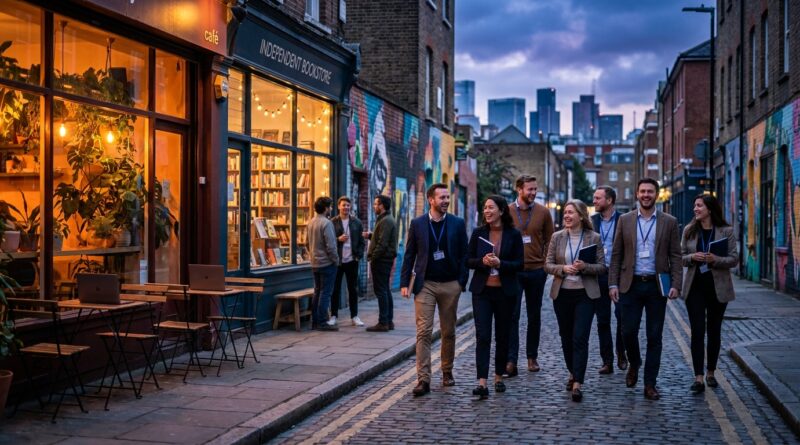
From Offsite To Hyper-Local Retreat: Why 2026’s Smartest Teams Now Turn Their Own City Into The Venue
Your CFO sees the airfare line item and winces. Your team sees the word “retreat” and pictures stale coffee, forced icebreakers, and eight hours under hotel ballroom lighting. That frustration is real. Retreats are supposed to reset a team, not feel like an expensive meeting in a different zip code. That is why more companies are shifting to local company retreat ideas post pandemic. Instead of burning budget on flights, baggage fees, airport delays, and generic resort packages, they are using their own city as the setting. The smart version is not “everyone meet in the office, but with muffins.” It is a carefully planned day or two built around strategy, movement, neighborhood energy, good food, and clear business goals. Think morning planning in a museum loft, afternoon breakouts in local spots, and a closing session that turns good conversation into actual next steps. It feels fresher, costs less, and gives people a reason to show up fully.
⚡ In a Hurry? Key Takeaways
- Hyper-local retreats can give teams better connection and clearer business outcomes without five-figure travel costs.
- Start with a 30 to 60 minute radius and build the day around three parts: focused strategy time, small-group neighborhood experiences, and a strong closing ritual.
- The best local retreats are not random fun days. They need clear goals, easy logistics, and enough flexibility for hybrid teams and different energy levels.
Why the old offsite model is wearing people out
For a while, the classic answer was simple. Book the flights. Reserve the hotel. Put everyone in one place and hope “team bonding” happens.
But the math is harder now. Flights are pricey again. Hotels are not getting cheaper. A lot of teams are still hybrid, which means some people already travel just to get to the office city in the first place. Add meals, rides, and lost time in transit, and one retreat can eat a surprising amount of budget.
Then there is the human side. People want in-person time to count. If they are going to leave home, arrange childcare, or sit on a train at 6 a.m., they want more than a generic slideshow and a trust exercise nobody asked for.
That is the opening for hyper-local retreats. They cut waste without feeling cheap, if they are planned well.
What a hyper-local retreat actually is
A hyper-local retreat uses the city around your office as the venue. Not just one venue, either. The city becomes the canvas.
That could mean:
- Morning strategy work in a library event room, boutique cinema, gallery, greenhouse, or coworking loft.
- Small-group breakouts spread across nearby neighborhoods.
- A shared lunch or dinner that reflects the city’s food culture.
- A final session that ties the whole day back to hiring, product goals, customer problems, or the next quarter’s plan.
The key is simple. It should feel different from a normal workday, but still connected to real work.
Why local company retreat ideas post pandemic are catching on
1. Finance wants proof
Leaders now have to explain why in-person gatherings are worth the money. A local format makes that easier. You can show lower travel costs, lower carbon impact, and more frequent touchpoints instead of one giant annual blowout.
2. Employees want connection without burnout
People still want to know their coworkers as humans. They just do not want to lose two travel days to do it. A city-based retreat gives them novelty and face time without draining the whole week.
3. Culture teams want something that feels real
No one remembers “Conference Room B at the airport hotel.” People do remember making plans in a historic theater lobby, splitting into neighborhood teams, and ending the day at a local restaurant everyone talks about afterward.
4. Hybrid teams need shorter, smarter gatherings
When some employees are remote and some are local, the retreat has to be focused. Hyper-local events make it easier to gather the people who can attend in person while keeping the format tight and purposeful.
The blueprint: how to build a great local retreat
Start with one question
What should be different on Monday because this retreat happened?
If you cannot answer that, you are planning a field trip, not a retreat.
Your answer might be:
- The product and sales teams leave with one shared message.
- Managers align on next quarter priorities.
- New hires build real relationships with key teammates.
- The team solves one sticky cross-functional problem.
Pick a radius, not a resort
Set a practical travel boundary. Usually 30 to 60 minutes from the office works well. That keeps the day easy enough for broad attendance while still opening up plenty of options.
Look for venues that feel unlike the office but still support actual work. Good picks include:
- Art centers
- Private dining rooms
- University spaces during breaks
- Independent theaters
- Creative studios
- Botanical gardens with meeting rooms
The venue should support conversation, sound control, Wi-Fi, seating, and food access. Pretty is nice. Functional is important.
Design the day in chapters
The easiest mistake is cramming everything into one long room session. Better retreat days have shape.
A simple structure looks like this:
- Chapter 1: Morning strategy session in one shared venue.
- Chapter 2: Small-group breakouts in nearby neighborhood spots.
- Chapter 3: Shared meal with a local angle.
- Chapter 4: Closing reflection and action planning.
That rhythm matters. It keeps energy up and makes the day feel like an experience, not a calendar block.
What to include, and what to skip
Do include
- One clear business problem to work on.
- Time for people to talk in groups of three to six.
- Movement between spaces.
- Food worth remembering.
- A closing ritual, even if it is simple.
Skip or rethink
- Three straight hours of presentations.
- Forced vulnerability exercises.
- Activity overload.
- Cheap filler that wastes attention.
- Anything that sounds fun but has no link to the team’s goals.
If your team wants more purpose-driven formats, it is worth looking at From Offsite To Micro-Mission Retreat: Why 2026’s Smartest Teams Now Do Impact Work Instead Of Trust Falls. It is a good reminder that people respond better when the day feels meaningful, not manufactured.
Sample hyper-local retreat formats
The strategy sprint
Best for leadership teams or cross-functional groups that need alignment.
- 8:30 a.m. breakfast and state of the business
- 10:00 a.m. facilitated planning session
- 12:00 p.m. lunch at a standout local restaurant
- 1:30 p.m. breakout groups in nearby cafes or rented studios
- 4:00 p.m. report-backs and decision list
- 5:30 p.m. casual closing toast
The neighborhood breakout day
Best for larger teams who need connection plus fresh thinking.
- Start together in one central venue
- Split into small teams by challenge or department
- Send each team to a different neighborhood stop
- Give each group one mission and one customer-style prompt
- End together for lessons and next steps
The city culture retreat
Best for morale, onboarding, or reconnecting after growth.
- Morning company story session in an unusual venue
- Guided local food experience or market walk
- Small group conversations on values and work habits
- Closing circle focused on how culture shows up in actual decisions
How to make it feel special without overspending
This is where a lot of teams get stuck. They worry local means boring.
It does not. “Special” usually comes from thoughtfulness, not price.
Use one memorable anchor
Maybe it is the venue. Maybe it is the meal. Maybe it is a private after-hours museum room or a chef-led tasting. Pick one thing people will talk about, then keep the rest simple.
Give people a story to tell
“We had our Q2 planning retreat” is forgettable. “We mapped our next launch in a converted greenhouse, then split into neighborhoods to pressure-test ideas with customer prompts” is a story.
Keep logistics invisible
The smoother the day feels, the more premium it feels. Clear directions, timed transitions, dietary planning, weather backup, and realistic pacing matter more than branded swag.
A practical budget mindset
You do not have to spend tiny money to save huge money. The point is better return, not just lower cost.
Ask yourself:
- What are we cutting by staying local?
- What one or two upgrades matter most?
- What outcome are we buying?
Often the savings from flights and hotel rooms can be shifted into better facilitation, better food, better local venues, or a more frequent retreat schedule. That is usually a smarter trade.
Common mistakes that ruin local retreats
Treating the office like a retreat venue
If people are sitting at the same desks with the same interruptions, the magic is gone. Even a nearby offsite room can make a big difference.
Confusing “fun” with “useful”
A fun activity can help. But if nobody knows why they are there, the day feels empty by 2 p.m.
Trying to pack in too much
One good strategy session, one meaningful breakout, and one memorable meal is enough. Overstuffed schedules make people tired and cranky.
Ignoring different energy levels
Not everyone wants to shout through a scavenger hunt. Build in quiet moments, seating, and options.
No landing at the end
If the day ends with “thanks everyone,” most of the value evaporates. Close with decisions, owners, and deadlines.
How to include hybrid and remote team members
This part matters. A hyper-local retreat can be local without being exclusionary.
- Bring in remote staff for one key retreat each quarter rather than every gathering.
- Stream the morning strategy section if needed.
- Assign mixed breakout teams that include remote voices asynchronously before the event.
- Share a same-day recap with decisions, photos, and next actions.
- Give remote employees a parallel local experience in their own city when possible.
The goal is not perfect symmetry. It is fair inclusion and clear communication.
Why this format often works better than a big annual offsite
Big annual trips can still make sense for some companies. But many teams get more value from smaller, more frequent gatherings that solve actual problems.
A local retreat can happen twice a year, or even quarterly for leadership groups. That means less pressure to make one giant event do everything. It also means people remember the work because they use it sooner.
That is the hidden advantage. Hyper-local retreats are not just cheaper. They are easier to repeat, refine, and connect to real business cycles.
At a Glance: Comparison
| Feature/Aspect | Details | Verdict |
|---|---|---|
| Cost control | Cuts flights, hotel stays, and large travel reimbursements while still allowing investment in venues, meals, and facilitation. | Strong win for finance-conscious teams. |
| Employee experience | Feels fresher than an office meeting and less draining than multi-day travel, especially for hybrid staff. | Best when the day has clear structure and real purpose. |
| Business impact | Works well for alignment, problem-solving, onboarding, and culture-building when tied to specific outcomes. | Often higher signal than a generic destination offsite. |
Conclusion
Retreat travel costs have quietly crept back up, and most leaders no longer get a free pass on “it was good for morale.” They have to show value. That is exactly why hyper-local retreats are landing so well. They trade planes, per diems, and generic hotel space for thoughtful experiences within a short radius of the office. Done right, that can mean strategy work in an unexpected venue, breakout conversations across different neighborhoods, a meal that actually reflects the city, and a closing moment that connects the whole thing back to business priorities. It answers three real post-pandemic needs at once. Employees get connection without the full travel hangover. Finance gets focus without obvious waste. Culture leaders get something that feels specific to their team instead of copy-pasted from a vendor deck. If your current choice is “expensive trip” or “sad conference room,” there is a better third option. Use your city. Plan with purpose. Make the day feel like a landmark moment, not just a meeting with slightly better snacks.