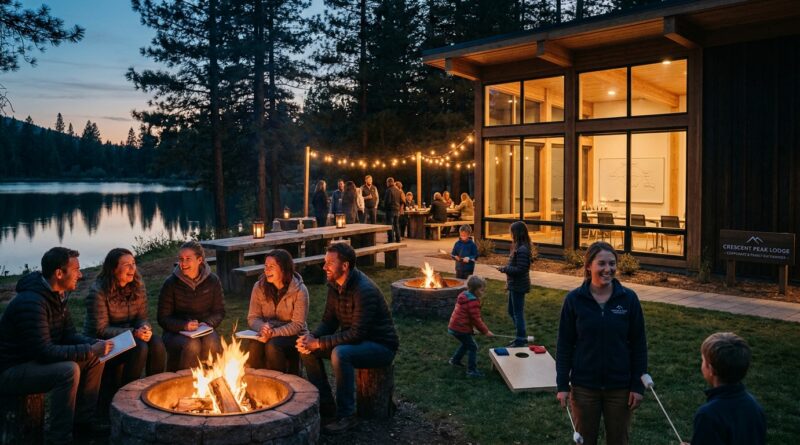
From Offsite To Belonging Retreat: Why 2026’s Smartest Teams Now Invite Families To Rebuild Culture
The old offsite playbook is starting to look a little out of touch. You ask people to fly across the country for “connection,” then quietly expect a partner, grandparent, babysitter, or stressed-out co-parent to absorb the chaos back home. A lot of good employees are done pretending that is no big deal. That is the real tension behind the rise of the post pandemic corporate retreat with families. Leaders still need face time. Teams still need a shared room, not just another grid of tired faces on video. But workers also want proof that “people first” means something when travel is involved. The smartest companies in 2026 are not turning retreats into kiddie parties or watering down business time. They are doing something more practical. They are redesigning the whole event around belonging, with serious work sessions for employees, optional family-friendly parts around the edges, and a structure that respects real life instead of bulldozing over it.
⚡ In a Hurry? Key Takeaways
- A post pandemic corporate retreat with families can strengthen culture because it respects home life instead of treating it as an inconvenience.
- Start with a split design. Keep core strategy sessions adults-only, then add optional partner and kid-friendly meals, activities, and downtime.
- The goal is not extravagance. It is retention, lower burnout, better attendance, and a retreat people do not resent before it even starts.
Why the old offsite model is suddenly failing
For years, offsites ran on a pretty simple assumption. Employees would go. Home would somehow cope. Work would get its bonding moment. End of story.
That assumption does not hold up as well now.
Hybrid work changed the emotional math. People got used to being more present at home. School pickups, elder care, shared calendars, and the ordinary rhythm of family life became more visible. Not easier, just more visible. So when a company says, “Come away for three days so we can build culture,” employees are doing a different kind of calculation than they did in 2018.
They are asking, who pays for the stress at home? Who covers the childcare gap? Who carries the mental load while I am in a breakout room talking about vision statements?
That is why attendance can look fine on paper while enthusiasm drops through the floor. People may still show up. They are just not feeling cared for.
What a belonging retreat actually means
A family-inclusive retreat is not a free-for-all. It is not kids running through keynote sessions. It is not a vague “bring whoever” invite with no plan behind it.
A belonging retreat is more structured than that.
It usually has three clear layers.
1. Protected business time
The company still gets what it came for. Strategy sessions, planning workshops, leadership Q&As, team breakouts, and decision-making blocks stay focused and professional.
2. Optional shared time
Breakfasts, welcome receptions, outdoor dinners, local excursions, and closing celebrations can include partners or children. That gives people a way to connect without forcing every minute into “team building.”
3. Built-in breathing room
This matters more than many planners realize. Families need downtime. So do employees. If every hour is scheduled, the retreat turns into another endurance event.
Done well, this approach tells staff something powerful. We want your full attention for the work, and we are not going to pretend your life disappears to make that happen.
Why smart teams are making this move now
There are three big reasons this is catching on.
Retention pressure is real
Top performers have more choices than managers sometimes admit. If travel feels punishing, they can start saying no, or start looking elsewhere. Family-aware retreats remove one quiet source of resentment.
Companies need in-person time to count
Travel budgets are under scrutiny. If a company is going to spend real money on flights, rooms, food, and venues, leaders want a result that goes beyond a few slide decks and awkward happy-hour small talk.
When people arrive less stressed and less guilty about being away, they participate more fully. That alone can make the retreat better value.
Culture now has to feel believable
Employees can spot a values mismatch from a mile away. A company cannot talk about well-being and flexibility all year, then run an offsite that wrecks family logistics and calls it “connection.”
That disconnect lands badly. A retreat that acknowledges real life feels more credible.
How to plan a post pandemic corporate retreat with families without losing the business goal
This is the part leaders worry about most. Fair enough. If family inclusion is handled poorly, the retreat can become messy, expensive, and unclear.
So keep it simple.
Set the retreat’s non-negotiables first
Before you talk about activities or rooms, define the core outcomes. What must happen in person? What decisions need the room? Which sessions need privacy or deep focus?
Once that is clear, everything else gets easier.
If your retreat is mainly for roadmap planning, keep the business blocks tight and intentional. If it is more about rebuilding connection after a rough year, you may want more shared social time around the edges.
Make family inclusion optional, not performative
Not everyone wants to bring a partner or child. Some employees are single. Some are caregivers in different ways. Some want a clean break for two days. That is fine.
The point is not to create a new social pressure. It is to remove an old burden.
Offer options. Do not create a loyalty test.
Choose the right venue, not just the prettiest one
A venue can look amazing in photos and still fail this format completely.
You need practical things. Safe walking paths. Family-friendly room layouts. Nearby activities. Flexible dining. Quiet spaces. Reliable childcare partners if offered. Good transport. Staff who understand mixed groups.
If you are already rethinking what retreats should feel like, it is also worth looking at models that build meaning into the trip itself. A useful example is From Offsite To Civic-Impact Retreat: Why 2026’s Boldest Teams Trade Trust Falls For Real-World Change, which shows how companies are moving away from stale offsite habits and toward experiences that feel more human and more worth the travel.
Be clear about what the company pays for
This is where confusion can sink goodwill fast.
Spell it out early. Does the company cover the employee’s travel and room, but families pay their own airfare? Are meals included for partners? Is childcare subsidized? Are family activities optional add-ons? Is there a cap?
Clarity beats generosity with fine print.
Design for different life stages
Families are not one thing. Parents of toddlers need different support than employees traveling with teens. Some people may bring a spouse. Others may bring one child. Others may travel solo and simply want fewer after-hours obligations.
Good retreat design makes room for that mix.
Think in categories, not assumptions.
What should be included, and what should not
Good fits for family-inclusive retreats
Welcome dinners. Casual breakfasts. Outdoor picnics. Short local outings. Pool or beach windows. A closing meal. Light entertainment. Structured kids’ programming during selected business hours. Partner meetups for those who want them.
Bad fits for family-inclusive retreats
Mandatory spouse attendance. Twelve-hour schedules. Open-ended drinking culture. Late-night “networking” as a hidden requirement. Venues with no child-safe spaces. Agendas that assume everyone has the same home setup.
This should feel considered, not chaotic.
The mistakes companies make when they try this for the first time
They confuse inclusion with constant togetherness
People do not need to be together every minute to feel connected. In fact, forcing that usually backfires.
They make the event too work-heavy for families, or too family-heavy for work
You need both lanes. Employees should not feel they are failing at work because family is nearby. Families should not feel dragged into a corporate marathon.
They skip the logistics survey
Never guess what people need. Ask in advance. Who would likely bring family? What ages? What accessibility needs exist? What would make attendance easier? Anonymous answers will tell you far more than leadership assumptions.
They ignore equity concerns
If only some employees can realistically use the benefit, you need a balance. That might mean offering a solo-travel wellness credit, flexible stipend options, or alternate support so the retreat does not feel like it only rewards one type of household.
How to pitch this internally without sounding soft or naive
If you are trying to sell this idea to finance, operations, or a skeptical executive team, keep the argument grounded.
Do not pitch it as a perk. Pitch it as a smarter retreat design.
- It can improve attendance from people who might otherwise opt out.
- It reduces the hidden stress that weakens participation.
- It makes travel spend more defensible because the event better matches current employee reality.
- It supports retention in a labor market where culture claims are tested by actual behavior.
This is not about making work trips cute. It is about removing friction that stops good people from showing up fully.
A simple format that works
If you want a practical model, here is one many teams can use.
Day 1
Afternoon arrivals. Casual family-friendly welcome dinner. No heavy programming.
Day 2
Morning to mid-afternoon business sessions. Parallel childcare or optional family activities. Late afternoon free time. Shared dinner in the evening.
Day 3
Short wrap-up session for employees. Brunch or local outing for everyone who wants it. Departures.
Notice what is missing. No jam-packed schedule. No fake fun. No expectation that every family member must become part of the company’s personality.
How you know it worked
Do not just measure whether people attended. Measure whether the retreat changed anything.
Useful signs of success
- Higher participation from employees who usually decline travel
- Better feedback on stress, logistics, and usefulness
- More meaningful cross-team interaction
- Stronger post-event trust in leadership
- Lower grumbling about the trip before and after it happens
If people come back saying, “That actually worked for my life,” you are onto something.
At a Glance: Comparison
| Feature/Aspect | Details | Verdict |
|---|---|---|
| Traditional offsite | Employees travel alone, home life is treated as separate, and business goals often compete with personal stress. | Still workable for some teams, but increasingly tone-deaf. |
| Belonging-first retreat | Focused work sessions stay protected, while optional family-friendly moments reduce guilt and improve attendance. | Best fit for teams trying to rebuild culture without burning people out. |
| Poorly planned family retreat | No clear rules, vague budget, weak childcare planning, and too much pressure to socialize. | Avoid. It creates new stress instead of solving old stress. |
Conclusion
The reason this idea matters is simple. Leaders need something they can use this quarter, not someday. Group travel reports and venue guides are already pointing to a rise in experience-focused, human-centric retreats where talent retention, well-being, and connection matter as much as budgets and slide decks. At the same time, hybrid work changed what being present at home looks like, and many strong employees are quietly opting out of travel that punishes their families. A post pandemic corporate retreat with families is not a magic fix, and it is not right for every company. But when it is planned with clear business goals, honest budgeting, and real respect for people’s lives, it solves three problems at once. It makes the trip worth the spend, shows employees that leadership understands modern life, and turns one shared weekend into a stronger culture signal. For teams under pressure to bring people together without pushing more talent away, that is not a fluffy idea. It is a smart next move.