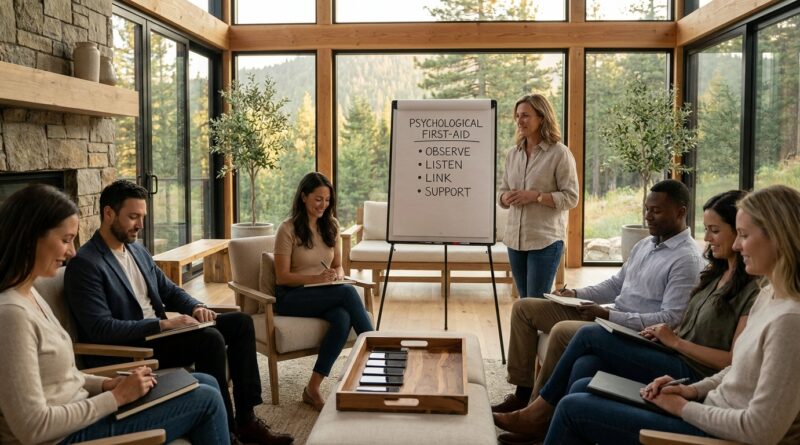
From Offsite To Psychological-First-Aid Retreat: Why 2026’s Smartest Teams Now Treat Burnout Like An Incident, Not A Vibe
By the time many teams arrive at an offsite now, they are already running on fumes. That is the uncomfortable truth. People smile for the group photo, nod through the keynote, and quietly check Slack under the table. Managers often have it worst. They were the shock absorbers through layoffs, hybrid confusion, return-to-office fights, and the long aftertaste of pandemic stress. So if your retreat feels flat, tense, or weirdly fragile, you are not imagining it. The old format is failing tired people. That is why the smartest companies are rethinking the post pandemic corporate retreat burnout psychological first aid question altogether. They are treating burnout less like a mood problem and more like an incident response problem. In plain English, that means building retreats around recovery, emotional safety, and practical reset habits, not just strategy decks, trust falls, and one vague panel on wellbeing.
⚡ In a Hurry? Key Takeaways
- Smart teams in 2026 are treating burnout like an operational risk, so retreats now need recovery structure, not forced fun.
- Start with simple practices such as five-minute reset breaks, device-light windows, and clear after-hours boundaries built into the agenda.
- A psychological-first-aid retreat is not therapy, but it can make teams safer, calmer, and better prepared to handle stress without causing more harm.
Why the old offsite model is starting to break
For years, the standard company retreat followed a familiar script. Big kickoff. Packed schedule. Team-building game. Strategy workshop. Dinner. Maybe a yoga session if someone wanted to tick the wellness box.
That script assumes people arrive with enough emotional battery left to participate. A lot of them do not.
Fresh workplace data keeps pointing the same way. Engagement is not naturally bouncing back. Stress is still stubbornly high. Managers are often less engaged than they were a few years ago, even though they are expected to hold culture together. That matters because managers usually shape the mood of the retreat. If they are depleted, the whole event feels heavy.
Hospitality and travel trends are showing the other half of the picture. Wellness-focused retreats are growing fast, but not just in the spa-and-smoothie sense. The demand is shifting toward structured recovery. Nervous-system reset. Sleep support. Digital detox. Quiet space. Guided decompression. In short, people want help getting out of constant alert mode.
What “psychological first aid” means in a retreat setting
The phrase can sound more clinical than it needs to. Psychological first aid is really about helping people stabilize under stress. It is practical, immediate, and human.
Think of it as the emotional version of keeping a first-aid kit in the office. You are not doing surgery. You are helping people breathe, regroup, feel safe, and avoid making things worse.
What it is
A psychological-first-aid retreat gives people a structure for handling overload in the moment. It teaches small, repeatable habits they can use during conflict, after hard conversations, or when the day starts feeling too loud.
What it is not
It is not group therapy. It is not making people share trauma in front of coworkers. It is not replacing mental health care. And it absolutely should not turn a retreat into a forced vulnerability marathon.
The goal is simpler. Help people notice stress early, reduce pressure where possible, and create norms that protect capacity.
Why burnout should be treated like an incident, not a vibe
“Burnout” often gets discussed as if it were a fuzzy feeling. Something abstract. Something personal. But inside a company, burnout has visible operational effects.
It slows decision-making. It raises conflict. It makes small problems feel huge. It increases mistakes. It makes managers less patient and teams less generous with each other. It also turns retreats into expensive exercises in pretending everything is fine.
That is why more leaders are starting to ask better questions.
Not “How do we make this retreat more exciting?”
But “How do we make this retreat safer and more restorative for people whose stress load is already high?”
That shift matters. It moves the conversation away from blame. Burnout is not proof that somebody failed at self-care. It is often a sign that the system has run hot for too long.
What a better retreat agenda looks like
A recovery-focused retreat does not have to feel soft or unproductive. In fact, it often creates better strategic conversations because people are less fried.
1. Build in five-minute reset protocols
Most agendas cram sessions back to back, then wonder why attention collapses by lunch. A better plan uses short decompression windows between major blocks.
That can be as simple as:
- Two minutes of quiet before a workshop starts
- A guided breathing reset after a difficult discussion
- A brief outdoor walk between planning sessions
- A no-talking transition break after lunch
These are tiny changes. They work because they interrupt the stress build-up before it spills over.
2. Give managers peer-support scripts
Many managers want to help a stressed employee, but in the moment they freeze. Not because they do not care. Because they do not know what to say.
Give them simple scripts:
- “You do not need to push through this alone. Want to step out for five minutes?”
- “What feels most urgent right now?”
- “Do you want problem-solving, or just a little breathing room?”
- “What would help you rejoin without feeling overwhelmed?”
This is the kind of detail that turns a retreat into practice for real life at work.
3. Set clear availability rules
Nothing kills recovery faster than a “restorative” retreat where everybody is secretly still on call.
So be direct. Define when devices should be away. Define what counts as a true emergency. Define who is covering urgent issues back home. Define when nobody is expected to reply.
People relax faster when the rules are not vague.
4. Use device-light windows, not total phone bans
Some organizers go too far and ban phones entirely. That can backfire, especially for anxious employees, caregivers, or people who simply need a little control over their environment.
Try device-light windows instead. For example, no laptops during breakfast. No Slack during the afternoon recovery block. Phones allowed, but not on the table during peer sessions.
That feels manageable. And it still teaches people how to step out of constant pings.
5. Protect sleep like it matters, because it does
If your retreat includes late-night drinks, early-morning sessions, and “optional” networking that is clearly not optional, you are sabotaging the whole event.
Recovery needs time. If you want sharper conversations on day two, stop treating exhaustion like enthusiasm.
This is one reason the shift described in From Offsite To Burnout Recovery Retreat: Why 2026’s Smartest Teams Are Prescribing Rest, Not Just Strategy is catching on. Teams are starting to see rest as part of the design, not a luxury extra.
How to spot a retreat that will make burnout worse
Some warning signs are easy to miss because they look normal on paper.
- An agenda with no white space
- Mandatory fun after emotionally heavy sessions
- One token wellness speaker, then business as usual
- Leaders preaching boundaries while replying to email all day
- No quiet room, no opt-out option, no decompression plan
- Managers expected to support others without support themselves
If that sounds familiar, the retreat may be adding strain while pretending to fix it.
How to pitch this idea internally without sounding dramatic
This part matters, because some leaders still hear “mental health” and assume the conversation is vague, expensive, or hard to measure.
Keep it grounded.
Use the language of performance and risk
You are not asking for a spa weekend. You are asking for a better operating environment. Stress affects judgment, collaboration, retention, and recovery time after conflict. Those are business issues.
Frame it as rehearsal
A retreat is one of the few places where you can safely test how people respond to overload. If a team cannot navigate pressure in a carefully planned environment, it will struggle even more back in normal work.
Start small if needed
You do not need to redesign every offsite from scratch. Start with one recovery block, one device-light period, one manager support session, and one explicit after-hours boundary. Then gather feedback.
What employees should ask for
If you are not the person planning the retreat, you can still push the event in a healthier direction.
Ask questions like:
- Will there be quiet spaces and real downtime?
- Are we expected to stay available to clients or Slack during the event?
- How are managers being supported, not just staff?
- Is there a plan for difficult conversations or emotional overload?
- Will participation in social activities be truly optional?
These are reasonable questions. They do not make you difficult. They make you realistic.
At a Glance: Comparison
| Feature/Aspect | Details | Verdict |
|---|---|---|
| Traditional offsite | Packed agenda, heavy strategy focus, token wellness add-on, lots of social pressure | Often drains already stressed teams |
| Psychological-first-aid retreat | Recovery blocks, reset practices, support scripts, clear boundaries, quieter pacing | Better fit for post-pandemic stress reality |
| Manager support | Traditional model assumes managers can absorb stress. Better model supports them as high-risk load bearers | Important and often overdue |
Conclusion
Across workplace and hospitality data, one pattern keeps flashing red. Engagement and mental health are not bouncing back on their own. Gallup’s 2026 State of the Global Workplace points to manager engagement falling sharply since 2022 while everyday stress stays above pre-pandemic levels. That means the people leading your retreat may be the most depleted people there. At the same time, retreat formats built around recovery, digital quiet, and nervous-system reset are gaining real momentum. Put those trends together with hybrid work and return-to-office tension, and the message is clear. The retreat is not just a perk anymore. It is one of the few controlled settings where a company can practice a healthier response to overload. If you replace forced fun with five-minute reset routines, peer-support scripts, clear after-hours rules, and device-light windows, you do more than make the event nicer. You help protect your team’s capacity. That is not indulgent. It is smart, practical, and overdue.