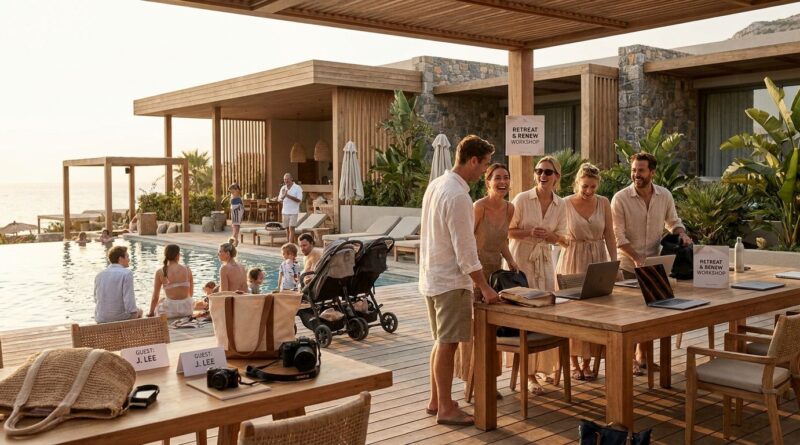
From Offsite To Bleisure-Retreat: Why 2026’s Smartest Teams Now Let People Add Real Vacation To Company Trips
Retreat planners are running into the same polite resistance over and over. People are not saying they hate offsites. They are saying something more practical. If a company trip eats up a week of energy, childcare planning, travel stress, and calendar space, they want more from it than two packed meeting days and a rushed flight home. That is the heart of the post pandemic corporate retreat bleisure trends story in 2026. Employees are trying to fit work, rest, family time, and actual life into one crowded schedule. So the smartest teams are not treating vacation add-ons like a fancy extra anymore. They are building them in on purpose. A well-designed retreat now gives staff the option to stay a little longer, bring a partner later, or turn the trip into a real reset. Done right, that does not feel wasteful. It feels humane, modern, and surprisingly smart for the budget too.
⚡ In a Hurry? Key Takeaways
- Teams now get better turnout and happier staff when offsites include an easy option to add personal vacation time.
- Start with simple policies, flexible check-out dates, and clear split-payment rules so employees can extend trips without confusion.
- Bleisure works best when boundaries are clear. Company time, personal time, insurance, and duty-of-care rules should be spelled out in writing.
Why the old offsite model is wearing people out
For years, the standard company retreat formula was simple. Fly in. Sit through presentations. Do a team dinner. Fly back exhausted.
That used to be tolerated because business travel had a certain built-in value. It felt rare. It felt like a break from routine. It sometimes even felt glamorous.
Now it often feels like one more thing to manage.
People are coming off years of changed work habits, tighter staffing, higher travel prices, and home lives that are packed wall to wall. Parents have school calendars to juggle. Caregivers have family needs that do not pause. Even workers without kids are guarding their limited personal time much more carefully.
So when a retreat takes three or four days including travel, employees naturally ask a fair question. If I am already going all that way, why can’t this trip also give me some real personal value?
What bleisure means in 2026
Bleisure is just business plus leisure. Not exactly a new idea, but it has changed.
In the past, it was often casual. Someone stayed an extra night if they felt like it. Maybe they paid for a weekend on their own after a conference.
In 2026, smarter companies are planning for it from the start.
That means retreat organizers now ask questions like these:
- Can staff extend their hotel stay at the group rate?
- Can they arrive a day early to adjust and rest?
- Can the retreat schedule leave breathing room instead of packing every hour?
- Can employees split costs cleanly between company and personal spending?
- Can the location itself support both work sessions and actual downtime?
This is why the shift matters. Bleisure is no longer just a perk for a few frequent flyers. It is becoming part of how good employers make travel feel worth it.
Why companies are saying yes to it
It helps attendance
Some employees quietly dodge offsites. They do not always say no directly. They cite deadlines, family conflicts, or travel fatigue. Sometimes those reasons are completely true. Sometimes they are also a sign that the trip just does not feel worth the disruption.
When people can add two days of personal time, the same trip becomes easier to justify.
It makes the budget easier to defend
This sounds backward at first. Why would adding leisure make a work trip easier to defend?
Because employees are much more likely to value, support, and show up for a retreat that gives them something back. A trip that people love is less likely to be seen as a wasteful line item when finance starts trimming.
If you want a good example of how the retreat format itself is changing, this piece on From Offsite To Bleisure-Plus Retreat: Why 2026’s Smartest Teams Now Design Trips Staff Actually Want To Extend captures the bigger shift well.
It supports retention without sounding like HR spin
Workers can tell the difference between a poster on the wall about wellness and an actual policy that respects their time.
Letting someone turn a required trip into a mini-break feels concrete. It says, we know your life is full, and we are not pretending this travel has no personal cost.
Why retreat owners should care
If you run a venue, lodge, resort, or retreat property, this trend matters a lot.
Owners who still package retreats as all-business, tightly controlled, one-size-fits-all events may find that planners hesitate. The location may be beautiful, the meeting room may be polished, and the food may be great. But if employees cannot easily extend the stay or make the trip work for real life, the property becomes a harder sell.
The opposite is also true.
Retreat venues that make bleisure easy can stand out fast. Not by being flashy. By being practical.
That includes things like:
- Flexible booking windows before and after group dates
- Simple room extension policies
- Separate billing for company and personal charges
- Family-friendly room options for post-retreat stays
- Local guides for activities people can enjoy without a huge extra planning lift
- Good Wi-Fi for those who need a soft landing between work and time off
How to package bleisure without making it messy
1. Separate company time from personal time clearly
This is the big one.
People need to know exactly when the company-paid portion starts and ends. They also need to know what happens after that. Is the employee covered by company travel insurance during personal days? Does the company still have any duty-of-care role? Who handles flight changes? Which meals are covered?
If these details are fuzzy, bleisure turns into a paperwork headache.
Keep it plain. A short written policy is better than a vague promise.
2. Keep the booking process simple
If extending a trip requires six approvals and two different travel systems, people will give up.
The best setup is one where staff can:
- Choose an extended departure date during booking
- See the cost difference right away
- Pay the personal portion directly
- Get clear confirmation of what the company covers
This is one of those areas where convenience matters more than fancy branding.
3. Design the schedule with breathing room
A retreat cannot claim to support bleisure if the company portion leaves everyone drained.
If your agenda runs from sunrise to midnight, nobody is entering their personal extension rested enough to enjoy it. Build in margin. Fewer sessions. More useful sessions. Better pacing.
That does not make the retreat less productive. It often makes it more productive because people are not mentally cooked by day two.
4. Pick locations people would actually want to stay in
This sounds obvious, but it gets missed all the time.
Some properties are efficient for meetings but terrible for extensions. There is nothing nearby. Transport is awkward. Food options are limited. The room setup screams business travel and nothing else.
If you want employees to add vacation days, the destination has to earn that choice.
5. Offer optional local experiences, not forced fun
There is a big difference between support and scheduling every minute.
Good retreat hosts offer easy ideas. A short list of nearby hikes, beaches, museums, family activities, quiet cafés, or wellness options. Let people choose. Do not make their leisure feel like one more agenda item.
What employees actually want from a bleisure-friendly retreat
Usually, not extravagance.
Most people are not asking for five-star luxury or endless perks. They want friction removed.
They want:
- A chance to recover from travel instead of sprinting through it
- A fair reason to be away from home
- A trip that feels personally worthwhile
- Less guilt about losing precious vacation days elsewhere
- A setup that does not punish them for saying yes to the retreat
That is why this trend keeps growing. It solves a real-life problem.
Common mistakes that make bleisure backfire
Treating it like a secret perk
If only a few employees know they can extend the trip, the policy can feel unfair. Make the option visible to everyone who is invited.
Choosing policies that are too strict
If the extension rules are so narrow that almost nobody can use them, the company gets none of the goodwill. You do not need a free-for-all, but you do need a realistic option.
Ignoring caregivers and families
Not everyone defines leisure the same way. For some employees, extending a stay with a spouse or child is the whole point. If your room types, pricing, or local suggestions only suit solo travelers, you leave a lot of value on the table.
Forgetting manager behavior
A policy can look great on paper and still fail if managers quietly signal that extending a trip looks unserious. Leaders need to show that using the option is acceptable.
What a smart 2026 retreat offer looks like
A modern offer is not just “we booked a hotel.” It is closer to “we built a trip people can say yes to.”
That might include:
- Two focused workdays
- Arrival windows that reduce red-eye stress
- Optional one to three personal days at the same property
- Transparent cost sharing
- Partner or family add-on options after official sessions end
- Short local guides for relaxation, food, or sightseeing
None of that is wild. It is just thoughtful.
At a Glance: Comparison
| Feature/Aspect | Details | Verdict |
|---|---|---|
| Classic offsite | Tight schedule, fixed travel dates, little personal flexibility, mostly meeting-focused | Still works for some teams, but feels dated and easier for employees to resent |
| Bleisure-friendly retreat | Optional trip extensions, clear split billing, better pacing, destination with real leisure appeal | Best fit for current employee expectations and stronger retreat buy-in |
| Poorly planned bleisure policy | Confusing approvals, unclear insurance, hidden costs, managers sending mixed messages | Avoid. It creates frustration instead of loyalty |
Conclusion
People are not asking companies to turn every retreat into a luxury holiday. They are asking for something much simpler. Respect the fact that travel now touches work, family, energy, and personal time all at once. That is why post pandemic corporate retreat bleisure trends are sticking. This helps your community right now because travel budgets are under pressure while expectations for flexibility keep rising, and bleisure is no longer a fringe perk but a mainstream behavior among business travelers. If retreat leaders learn to intentionally package bleisure into their next offsite, they become easier to say yes to. They attract talent, reduce quiet opt-outs, and turn a budget item into something employees actually defend when cuts start coming. That is not just good hospitality. It is good business.