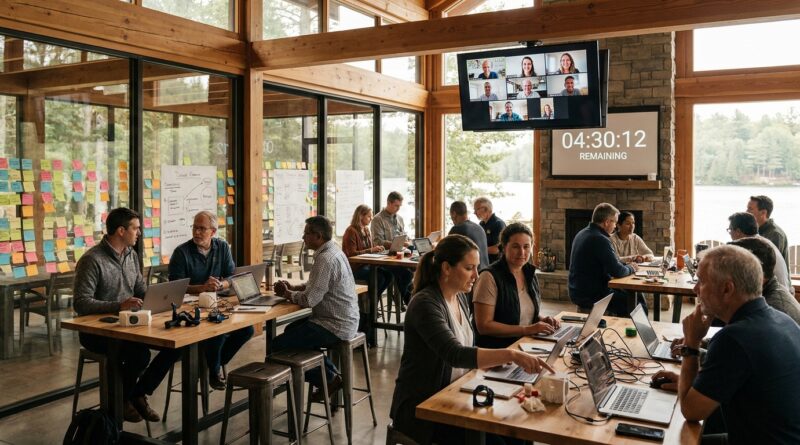
From Offsite To Micro-Mission Retreat: Why 2026’s Smartest Teams Now Prototype Real Work In 48 Hours
You are not imagining it. A lot of offsites have turned into very expensive calendar theater. People fly in, sit through polished slides, do an awkward icebreaker, nod along to a fuzzy goal like “work better together,” then head home to the same bottlenecks, the same Slack threads, and the same unanswered decisions. No wonder finance is asking harder questions. No wonder employees are less excited than they used to be.
That is why smart teams are shifting to a micro-mission retreat. Instead of gathering to talk about work in general, they gather to finish one real piece of work in 48 hours. Think prototype, pilot, process fix, customer journey rewrite, sales playbook draft, or decision on a stuck product issue. If you are searching for post pandemic corporate retreat ideas with real business outcomes, this format stands out because it gives you something clear to point to on Monday morning. The retreat is no longer the reward. The retreat is the workbench.
⚡ In a Hurry? Key Takeaways
- Smart teams are replacing broad offsites with 48-hour micro-mission retreats built around one real business problem and one tangible output.
- Start by choosing a mission narrow enough to finish, like fixing one workflow, testing one customer offer, or making one cross-team decision.
- This format respects budgets and employee attention because you can measure what changed after the trip instead of hoping morale alone makes it worth it.
Why the old offsite model is wearing people out
The old model assumed that if you got everyone in the same room, good things would somehow happen. Sometimes they did. Often they did not.
The problem is not travel itself. Travel can still be worth it. The problem is vague purpose. “Alignment” is not a deliverable. “Connection” matters, but if it is the only outcome, the price tag gets hard to defend fast.
That is especially true now. Hybrid work has scattered teams. People are tired of change. Budgets are back, but they are under a microscope. Leaders need a better answer than, “It felt useful.”
This is part of a wider shift away from perk-style gatherings and toward work-centered events. You can see the same idea in From Offsite To Skills Lab Retreat: Why 2026’s Smartest Teams Now Treat Gatherings As Live-Fire Training, Not Perks. The common thread is simple. If people are going to get on a plane, the room should produce something real.
What a micro-mission retreat actually is
A micro-mission retreat is a short in-person gathering, usually 48 hours, designed around one mission that matters to the business and can realistically move forward during the event.
It is not a brainstorm with snacks
The goal is not to generate a giant list of ideas. The goal is to leave with a tested draft, a decision, a prototype, a process map, a launch plan, or a pilot ready to run.
It is not all-team therapy
Trust still matters. Team chemistry still matters. But instead of forcing connection through trust falls and canned bonding games, people build trust by solving a problem together. That usually works better because it feels natural.
It is not for everything
If the issue is huge, fuzzy, or deeply political, 48 hours will not fix it. A micro-mission works best when the problem is important, scoped, and blocked by the fact that people have been trying to solve it through scattered calls and messages.
Why 48 hours works better than a three-day slide parade
Shorter can be smarter. A 48-hour window creates healthy pressure. It forces teams to choose what matters, cut the fluff, and stop pretending every conversation needs a keynote.
It also respects attention spans. Most people can stay fully engaged for two intense days if they know the purpose is real. Stretch it too long and energy drops. Then the retreat starts feeling like a conference without the fun parts.
There is also a budget advantage. Fewer nights. Tighter agenda. Less production. More output. That makes the CFO conversation much easier.
What counts as a good micro-mission
The best mission sits in the sweet spot between “important enough to matter” and “small enough to finish.”
Good examples
These work well:
- Build and test a prototype for one customer-facing feature
- Fix one broken handoff between sales and onboarding
- Rewrite one messy approval process that slows delivery
- Create a pilot plan for entering one new vertical
- Make a final decision on a stalled product roadmap issue
- Draft and rehearse one new executive pitch or client narrative
Bad examples
These usually fail:
- Improve company culture
- Increase collaboration across all departments
- Rethink the whole business
- Fix communication
If the mission sounds good on a wall poster but not in a project tracker, it is probably too vague.
How to design a retreat that produces real business outcomes
1. Pick one mission, not five
This is where many leaders get greedy. They want strategy, team building, vision, planning, customer empathy, and innovation all in one trip. That is how you get a bloated agenda and thin results.
Choose one main mission. You can still have dinner, social time, and informal conversations. Just do not pretend they are the main reason for travel.
2. Define the output before anyone books a flight
Write down what “done for now” means. Not perfect. Done enough.
For example:
- A clickable prototype shown to five users
- A signed-off process map with named owners
- A draft playbook with first rollout date
- A decision memo with tradeoffs and next steps
If you cannot describe the output in one sentence, the mission is not ready.
3. Invite only the people needed to finish the work
Not every retreat needs the whole company. Sometimes the smartest move is to bring 8 to 15 people who actually own the issue. That keeps costs down and cuts down on performative discussion.
This is one of the biggest upgrades in post pandemic corporate retreat ideas with real business outcomes. Smaller groups often do better work.
4. Do pre-work before the retreat, not during it
Do not fly people in so they can spend half a day getting up to speed. Send the data, customer feedback, background reading, and open questions in advance. Use a simple pre-read. Ask people to come prepared with facts and options.
The in-person time should be for hard decisions, fast collaboration, testing, and building.
5. Structure the 48 hours like a sprint
A simple flow works well:
- Day 1 morning: Confirm the problem, constraints, and success measure
- Day 1 afternoon: Build, map, write, or prototype in working groups
- Day 1 late day: Review progress, cut dead ends, assign overnight fixes
- Day 2 morning: Test, refine, and pressure-test with stakeholders or users
- Day 2 afternoon: Finalize output, owners, timeline, and follow-up plan
That is very different from a retreat built around passive listening.
6. Leave space for actual human connection
This does not mean cramming in trust games. It means giving people a good meal, a walk, a relaxed evening, or small-group downtime after focused work. Shared effort tends to make social time feel easier and more genuine.
Why this format rebuilds trust better than forced fun
People do not usually trust each other more because they stacked marshmallows in a team challenge. They trust each other more when they see how the other person thinks, listens, decides, and follows through.
A micro-mission retreat creates that naturally. Product sees what sales hears from customers. Finance sees where delivery gets stuck. Operations sees why design keeps pushing back. These moments matter because they are grounded in real work.
That is the hidden value. The prototype or process fix is the visible output. The stronger cross-team respect is the bonus.
What leaders get wrong when they try this the first time
They make the mission too big
If the team leaves with “great momentum” but no output, the mission was probably oversized.
They over-schedule every minute
You need structure, not a prison timetable. Real work needs breathing room.
They invite senior people who dominate the room
Sometimes a top leader should open and close the event, not sit in every session. If power dynamics make honest work harder, adjust the format.
They skip follow-through
The retreat is not the finish line. It is the jump-start. If nobody owns the next 30 days, even a strong retreat can fade fast.
How to prove ROI without turning the retreat into homework
This is the question executives care about most. Fair enough.
You do not need a giant measurement framework. You need a few plain markers:
- What was produced during the retreat?
- What decision got unstuck?
- What timeline moved faster because people were together?
- What cost, delay, or risk was reduced?
- What happened in the 30 days after the retreat?
For example, if a team fixes an approval process that cuts project delays by two weeks, that is a real outcome. If a customer onboarding group builds a new pilot workflow and churn drops in the next quarter, that is a real outcome too.
This is why the micro-mission model is easier to defend than the classic offsite. It gives you evidence, not just memories.
Best use cases in 2026
This format fits the moment because teams are dealing with fragmentation, tighter scrutiny, and a lot less patience for vague gatherings.
Hybrid teams that rarely get quality in-person time
If people are dispersed, the time together should count.
Cross-functional work that keeps stalling online
Some decisions really do move faster when the right people are in one room.
Teams under pressure to justify travel
When every trip needs a business case, a mission-based retreat is much easier to explain.
Organizations tired of “morale events” that change nothing
People are more likely to buy into a retreat when they can see why it matters.
At a Glance: Comparison
| Feature/Aspect | Details | Verdict |
|---|---|---|
| Traditional offsite | Broad goals, lots of presentations, social activities, unclear output after travel | Harder to justify unless the team truly needs relationship repair or major planning time |
| Micro-mission retreat | 48-hour sprint around one business problem, one output, clear owners and next steps | Best option for teams that need post pandemic corporate retreat ideas with real business outcomes |
| Skills lab style gathering | In-person event focused on practicing high-value skills in realistic scenarios | Strong choice when the main goal is capability building rather than shipping one output |
Conclusion
The smartest retreat question in 2026 is not, “How do we get people together?” It is, “What real work is worth getting people together for?” That small shift changes everything. Right now, companies are under pressure to prove that every trip, meeting and offsite is worth the cost and risk. Travel budgets are coming back, but they are coming back with scrutiny, geopolitical noise and constant questions about ROI. At the same time, teams are more fragmented than ever by hybrid work and change fatigue, which means superficial bonding activities land flat and sometimes even make things worse. A micro-mission retreat gives leaders a cleaner answer. It justifies the spend by producing a tangible win, and it rebuilds trust by letting people do meaningful work together in person. For Corporate Event’s community, this is one of the most useful shifts to start using now because it fits tight budgets, respects attention spans, and makes it very clear whether your retreat actually moved the needle on something that matters.