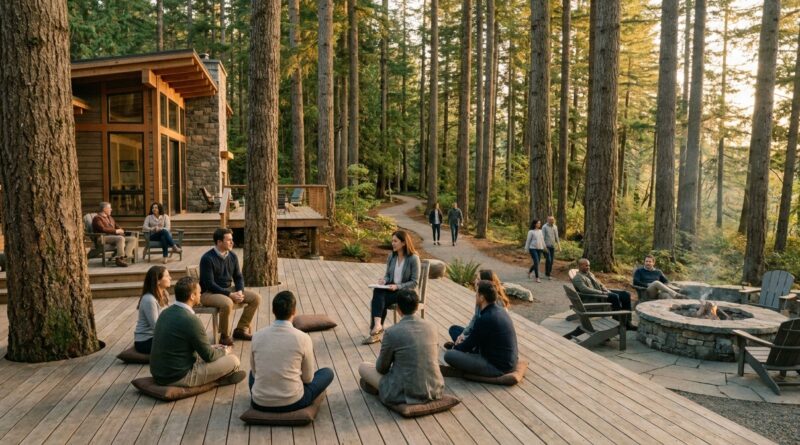
From Offsite To Burnout-Safe Retreat: Why 2026’s Smartest Teams Now Design ‘Nervous System Aware’ Gatherings
Your team is exhausted, and they know when a retreat is really just two days of meetings in nicer clothes. That is the core problem. A lot of 2026 retreat plans still cram in keynotes, workshops, team-building games, late dinners, and maybe a meditation app at 7 a.m. as if that fixes anything. It does not. If people are already running on fumes, a packed agenda can feel less like support and more like a fresh demand. That is why the smartest companies are moving toward the burnout safe corporate retreat. The goal is not to lower ambition. It is to stop treating human energy like an unlimited battery. A nervous system aware gathering is built around how people actually recover, focus, connect, and make decisions. Done right, it can still produce strategy, alignment, and momentum. It just does so without quietly pushing your best people one step closer to checking out.
⚡ In a Hurry? Key Takeaways
- A burnout safe corporate retreat cuts overload first, then builds the agenda around focus, rest, and honest connection.
- Start with fewer sessions, longer breaks, optional social time, and clear quiet spaces instead of back-to-back programming.
- This is not being soft. It protects morale, reduces stress spillover, and makes the retreat more useful for real work.
What “nervous system aware” actually means
This phrase can sound a little buzzwordy, so let’s make it plain.
A nervous system aware retreat is designed around one basic truth. People do not think well, collaborate well, or absorb information well when they are stressed, overstimulated, sleep-deprived, or socially maxed out.
Traditional offsites often ignore that. They treat every hour as available space to fill. Breakfast panel. Team workshop. Breakout session. Activity. Dinner. Drinks. Repeat.
On paper, it looks productive. In real life, people leave foggy, drained, and weirdly behind on work.
A better model asks different questions:
- How much input can people realistically handle in a day?
- Where can they recover without feeling rude?
- Which sessions truly need live group time?
- How do we help introverts, caregivers, neurodivergent staff, and burned-out managers feel safe enough to participate?
Why the old retreat model is suddenly failing harder
For years, companies could get away with an offsite that was basically a mini-conference. Employees might grumble, but they showed up and got through it.
That is much harder now.
Stress is not sitting on the sidelines anymore. It is driving attendance, mood, trust, and retention. When workers are already carrying mental overload, even “fun” can feel like another task if it is mandatory and tightly scheduled.
That is why burnout is no longer a side note in retreat planning. It is often the main reason the retreat matters at all.
Leaders still need teams aligned. They still need strategy work done. They still want people to reconnect. But if the event itself becomes another energy drain, the whole thing backfires.
The big shift: from content-heavy to capacity-aware
The smartest retreat planners in 2026 are not asking, “How much can we fit in?”
They are asking, “What can people actually carry home and use?”
That changes almost everything.
Old model
Maximize agenda density. Keep energy high. Fill dead time. Add one wellness activity. Hope for the best.
New model
Protect cognitive bandwidth. Reduce transitions. Create breathing room. Give people choice. Plan for recovery as part of the work, not a reward after the work.
This same shift is showing up in how companies think about growth and connection too. For example, From Offsite To Micro-Mentorship Retreat: Why 2026’s Smartest Teams Now Pair Every Employee With A 48‑Hour Growth Partner points to a similar idea. The retreat works better when people have structured, human-scale connection instead of just more group programming.
What a burnout safe corporate retreat looks like in practice
You do not need to turn the event into a silent spa weekend. You do need to stop confusing exhaustion with engagement.
1. Fewer sessions, more intention
Cut the agenda by 20 to 30 percent before you add anything else.
Yes, really.
Most retreat schedules are overbuilt because every department wants time. The result is a greatest-hits album of everyone’s priorities and nobody’s attention span.
Pick the three outcomes that matter most. Maybe that is strategic alignment, cross-team trust, and next-quarter planning. Build around those.
2. Quiet time is part of the design
If the only choices are “join the group” or “hide in your room and feel antisocial,” people will push themselves too far.
Create clear quiet options:
- a no-talk lounge
- walk-and-think time on the agenda
- phone-free decompression blocks
- permission to skip optional evening events
When rest is visible and normal, people use it sooner. That prevents the crash later.
3. Stop making every meal a performance
Not every breakfast needs a speaker. Not every dinner needs table prompts. Not every happy hour needs a team challenge.
Meals can be simple. Sometimes the kindest thing you can do is let people eat in peace.
4. Build choice into social energy
Some employees recharge by talking late into the night. Others are done after one group session.
Offer parallel options:
- group dinner or solo dinner stipend
- guided hike or free hour
- fireside chat or quiet reading room
Choice is not fragmentation. It is respect.
5. Cut unnecessary sensory overload
Loud music, constant lights, packed rooms, nonstop icebreakers, and endless group photos can wear people down fast.
Simple fixes help:
- smaller room setups
- clear signage
- lower audio levels
- seating with space
- fewer forced interactions
These details seem small until you are the person trying to stay regulated through a long day.
How to plan one without losing business value
This is where some leaders get nervous. They hear “more rest” and assume “less output.”
Usually the opposite is true.
A calmer schedule gives you better attention during the sessions that matter. People ask sharper questions. Discussions get more honest. Decisions stick.
Use this simple planning formula
Outcome first. Load second. Format third.
That means:
- Decide the outcome you need.
- Check the mental and social load required.
- Choose the lightest format that can still get the job done.
Example:
If your goal is team trust, you may not need a two-hour panel plus breakout grids. You may need paired reflection, a slower group conversation, and time for follow-up walks.
If your goal is strategy, you may not need six presentations. You may need pre-read documents sent earlier, then one focused workshop on decisions.
Questions leaders should ask before approving the agenda
Try this quick filter.
- Would this session still be here if everyone were already tired?
- Can any part of this be done asynchronously before the retreat?
- Where, exactly, do people recover between high-focus blocks?
- Are we rewarding extroversion and stamina more than thoughtfulness?
- Is this event asking people to perform wellness instead of experience it?
If those questions make the schedule look shaky, that is useful information.
What employees notice immediately
People can tell the difference between “we care about burnout” and “we added a breathwork session between presentations.”
They notice when:
- the first session does not start at dawn
- they are not trapped in a ballroom all day
- optional really means optional
- senior leaders model boundaries too
- there is space to think, not just react
Trust grows in those moments. Not from the slogan on the welcome slide.
A sample nervous system aware retreat structure
Here is a simple two-day model.
Day 1
- Late morning arrival
- Unstructured lunch and check-in
- One high-value strategy session
- Long break or walk time
- Small-group discussion
- Free time before dinner
- Optional evening social activity
Day 2
- Slow start, no early mandatory event
- Paired reflection or mentoring conversation
- One decision-focused workshop
- Lunch
- Action planning with clear next steps
- Early close
Notice what is missing. There is no cram-it-all-in panic. No marathon of presentations. No fake urgency.
At a Glance: Comparison
| Feature/Aspect | Details | Verdict |
|---|---|---|
| Agenda density | Traditional offsites pack most hours with sessions. Nervous system aware retreats leave room for focus and recovery. | Less is usually more useful. |
| Team connection | Forced networking drains people. Better results come from smaller, more intentional conversations and optional social formats. | Quality beats quantity. |
| Business outcomes | When people are less overloaded, they retain more, contribute better ideas, and leave with clearer decisions. | Better output with less hidden cost. |
One last thing leaders often miss
If your retreat is meant to repair morale, the event itself becomes the message.
If employees leave feeling managed, crowded, and wrung out, they will remember that more than the keynote or the venue. But if they leave feeling clear-headed, included, and respected, they will remember that too.
That is the point of a burnout safe corporate retreat. It is not a luxury extra. It is a smarter operating model for teams that need both performance and staying power.
Conclusion
Burnout and stress are now major reasons people need retreats in the first place, not a nice side benefit if time allows. Corporate life has finally caught up to that fact. Leaders are being asked to bring people together at the exact moment many employees feel mentally maxed out. A nervous system aware retreat offers a practical middle path. You can still have ambitious goals, real planning, and stronger team connection. You just stop building the event in a way that quietly drains trust, morale, and energy. When a retreat protects people’s capacity instead of chewing through it, the work gets better, and the people do too.