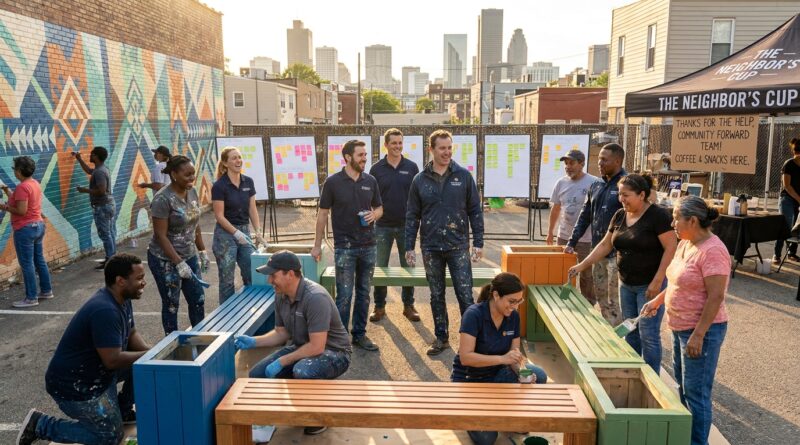
From Offsite To Neighborhood-Impact Retreat: Why 2026’s Smartest Teams Now Trade Swag Bags For Real Local Change
People are not tired of meeting in person. They are tired of pretending the usual company offsite is worth the cost. A nice view, a stack of slide decks, a branded water bottle, then everyone flies home wondering what exactly changed. That frustration is getting louder. Travel budgets are tighter. Carbon questions are harder to dodge. Employees are more skeptical about anything that looks like a perk dressed up as strategy. So a smarter model is taking hold in 2026. Instead of asking only what the retreat does for the team, companies are asking what it does for the place hosting them. That shift is why the post pandemic corporate retreat community impact idea is moving from “interesting” to “necessary.” A neighborhood-impact retreat still gives teams time to connect, plan, and reset. The difference is simple. It also leaves behind something useful, visible, and requested by local people, not just another pile of swag and good intentions.
⚡ In a Hurry? Key Takeaways
- A neighborhood-impact retreat turns a company offsite into both team time and a real local contribution.
- Start by asking community partners what they actually need, then build retreat activities around those requests.
- This approach gives leaders a clearer way to justify travel spending, while avoiding the “corporate volunteering photo op” trap.
Why the old offsite formula is wearing thin
For years, the offsite was sold as a cure-all. Need better teamwork? Fly everyone somewhere sunny. Need strategic clarity? Book a ballroom and hand out lanyards. Need morale? Add cocktails and a sunset dinner.
That formula now feels thin. Not because teams dislike travel, but because they want a reason for it. If the company is paying for flights, hotels, meals, and time away from family, people want to see a return that goes beyond “we had some good conversations.”
Leadership feels this pressure too. Finance wants a clean explanation of value. HR wants genuine culture gains. ESG teams want fewer empty claims. Comms teams know that glossy photos alone do not impress anyone anymore.
The result is a basic but important question. If we are entering someone else’s city or neighborhood for our retreat, what are we leaving behind that matters?
What a neighborhood-impact retreat actually is
Think of it as an offsite with a second audience. Your team still comes together for planning, relationship building, and focused work. But part of the retreat is built around a real need identified by local groups, schools, nonprofits, small businesses, or civic organizations.
That need could be skills-based, financial, physical, or operational. Maybe your product team helps a local nonprofit improve an intake process. Maybe your marketing team builds a campaign toolkit for a neighborhood business association. Maybe your company funds and installs practical infrastructure, like updated tech for a community center or supplies for a youth program.
The key is that the community did not get whatever your team happened to feel like offering. They got what they asked for.
Why this shift is happening now
1. Travel has to earn its keep
Post-pandemic spending habits changed. Even healthy companies are watching travel more closely. “Because we always do an annual retreat” is not enough anymore.
A retreat with visible local benefit is easier to defend. It serves internal goals and creates something tangible outside the company walls.
2. Employees can spot empty gestures
Most people have been through performative volunteering before. Matching T-shirts. Group photo. One afternoon of low-skill labor. Little long-term value.
That kind of thing often feels worse than doing nothing, because everyone knows it is mostly for optics.
A real neighborhood-impact retreat works differently. It starts with listening, not branding.
3. Carbon scrutiny is not going away
If teams are flying, someone will ask if the trip was necessary. That is fair. A retreat that combines strategic work with a concrete local contribution gives the company a more honest answer than “we needed a change of scenery.”
4. People want meaning, not just perks
Resort extras are pleasant. They are not memorable in the deeper sense. Helping a local partner solve a real problem alongside your coworkers often is.
That creates the kind of shared experience teams actually talk about months later.
How to avoid the common mistake
The biggest risk is turning community impact into a side activity. You know the format. Morning keynote. Afternoon volunteering. Dinner. Done.
That is not a neighborhood-impact retreat. That is a regular offsite with a charitable add-on.
The better model is to build local impact into the design of the retreat itself. If your team is gathering to solve problems, make some of that energy useful to the host community too. If your team has specific skills, use them where they are welcome. If your budget has room for extras, direct some of it toward needs that last longer than branded gift bags.
This is one reason the broader idea in From Offsite To Impact-Retreat: Why 2026’s Smartest Teams Now Build Social Good Into Every Company Gathering is gaining traction. The event is no longer judged only by what attendees felt in the room. It is also judged by what remains after they leave.
What “real local change” can look like
Skills-based help
This is often the highest-value option. Your finance team can help a nonprofit tighten budgeting. Your designers can improve signage or donor materials. Your IT staff can help with cybersecurity basics, device setup, or workflow cleanup.
These projects are often more useful than one-time manual labor because they match what your people are already good at.
Micro-infrastructure
Not every retreat has to build something huge. Sometimes a small, practical improvement matters more. Better Wi-Fi equipment for a community center. Refreshed computers for a youth lab. A new booking system for a shared neighborhood space.
Useful beats flashy every time.
Capacity funding
Some local partners do not need volunteers. They need money for staff time, equipment, or program delivery. That may sound less exciting on a retreat agenda, but it is often the most respectful choice.
If your team wants to show up and help, pay for the part that actually creates the impact.
Longer partnerships
The best retreats are not random acts of goodwill. They can start a 6- or 12-month relationship with a neighborhood partner, with follow-up support after the team flies home.
How to plan one without making it awkward
Start with local partners, not internal brainstorming
This is the part many companies skip. They decide what kind of service project sounds good, then go hunting for a community group to fit it.
Flip that around. Ask local organizations what would genuinely help. Ask what they do not want too. That second question can save you from wasting everyone’s time.
Pick one problem you can actually help solve
Do not try to transform a whole neighborhood over a two-day retreat. That is how good intentions turn into vague promises.
Choose one focused need. Make it specific. “Support local education” is too broad. “Fund and install 20 laptops for an after-school coding lab and train staff on setup” is much better.
Use the right people for the right work
If your employees are software engineers, do not force them into painting fences just because it photographs well. Match skills to needs where possible.
And if a task requires licensed tradespeople, safeguarding training, or long-term operational support, do not improvise. Bring in professionals.
Build time for context
People should understand the neighborhood they are entering. A short briefing from local leaders matters. It helps employees avoid the “we came here to save the day” mindset, which nobody enjoys.
The goal is partnership, not performance.
Measure what stayed behind
Most retreat surveys ask whether people enjoyed the sessions or felt more connected. Fine. Keep those questions.
But add a second scoreboard. What was funded? What was built? What process improved? Who will maintain it? What did the partner say was useful?
If you cannot answer those questions, the impact piece probably was not designed well enough.
What leaders get out of this model
Culture leaders get a stronger story than “we brought everyone together.” HR gets a more meaningful employee experience. ESG gets place-specific impact instead of generic claims. Comms gets something credible to share. Finance gets a clearer business case for travel.
That last point matters. In a budget review, “our retreat improved cross-team alignment” can sound fuzzy. “Our retreat improved cross-team alignment and delivered a requested technology upgrade for a local community center” sounds much more concrete.
It is not magic. It is just easier to explain because more than one group benefited.
What employees get that swag bags never delivered
People remember when their work skills mattered outside their normal job. They remember when a trip felt grounded in something real. They remember when the company acted like a guest in a place, not just a buyer of hotel rooms.
That creates a different kind of pride. Not forced cheerfulness. Real pride.
It also helps people connect across teams. Working together on something practical can cut through hierarchy faster than another icebreaker ever will.
Red flags to watch for
Photo-first planning
If the retreat plan seems designed mainly to produce social media content, stop and rethink it.
No local voice in the agenda
If community partners are not shaping the work, the work is probably off target.
One-off promises with no maintenance plan
Donating equipment is easy. Supporting setup, training, and upkeep is harder. The harder part is often what makes it useful.
Calling charity “impact” without proof
Be careful with language. If the contribution was modest, say so. Honest and specific beats grand and fuzzy.
At a Glance: Comparison
| Feature/Aspect | Details | Verdict |
|---|---|---|
| Traditional offsite | Focuses on internal meetings, bonding, and perks, with little visible benefit to the host location. | Harder to justify in a cost-conscious, skeptical environment. |
| Neighborhood-impact retreat | Combines strategy and team connection with a community project or partnership shaped by local needs. | Stronger value for employees, leadership, and local partners. |
| Measurement of success | Looks at both employee outcomes and what tangible support, funding, or infrastructure remained in the neighborhood. | Best way to make post pandemic corporate retreat community impact credible. |
Conclusion
The smartest retreat question in 2026 is no longer “Where should we take the team?” It is “What should still be better here after we leave?” That is a healthier standard for everyone. Leadership teams are under pressure to justify every dollar of travel, and employees increasingly expect visible, place-specific impact, not just internal benefit. A neighborhood-impact retreat turns the offsite from a private perk into a shared win. Local partners get skills, funding, or infrastructure they actually asked for. Your people get a stronger sense of meaning, cross-team connection, and reputational pride than they ever got from another resort cocktail hour. In a time of retreat skepticism and cost-cutting, that is not just a nice idea. It is a practical way for culture, comms, ESG, and HR leaders to keep in-person gatherings on the calendar by proving that team building can also mean community building.