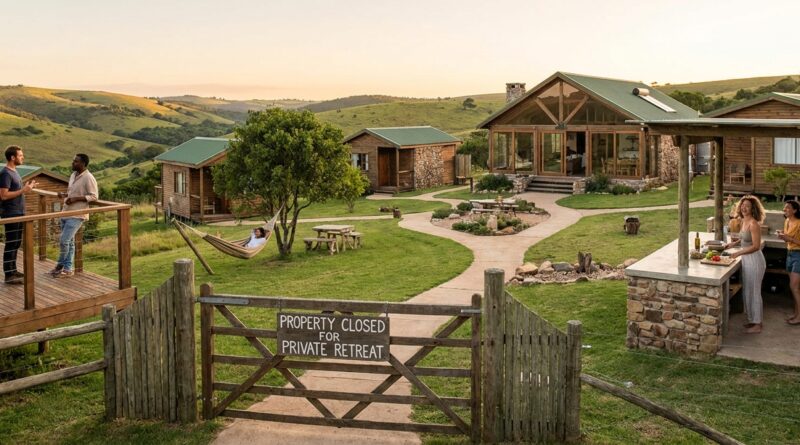
From Offsite To Buyout Retreat: Why 2026’s Smartest Teams Now Book Entire Properties For Psychological Safety
If your team groans when the retreat invite hits the calendar, that reaction is telling you something. People are tired of the same hotel ballroom, the same forced icebreakers, and the same feeling that every lunch, workshop, and happy hour is somehow being quietly graded. That low-level tension matters more than most leaders think. If people feel watched, they do not open up. They perform. That is a big reason the corporate retreat full property buyout trend is taking off for 2026. Smart teams are renting entire boutique hotels, lodges, villas, and eco-retreats, not because it looks fancy on LinkedIn, but because privacy changes behavior. When a group has the whole place, the retreat can feel less like a conference and more like a temporary shared base. That makes it easier to create quiet time, honest conversations, and the kind of trust hybrid teams often struggle to rebuild.
⚡ In a Hurry? Key Takeaways
- Full-property buyouts are growing because private spaces help teams feel safer, calmer, and more willing to connect honestly.
- Keep the group small, plan fewer sessions, and build in quiet zones and unstructured time if you want the retreat to work.
- Privacy alone is not enough. The value comes from using that privacy to reduce social pressure, not just to upgrade the scenery.
Why teams are moving away from big resort offsites
The old model was simple. Book a large hotel. Reserve a ballroom. Add slides, buffets, branded swag, and one mildly awkward team-building activity. For a while, that passed as culture-building.
It does not land the same way now.
Post-pandemic work changed how people think about shared space. Many employees got used to controlling their environment. They could mute, step away, recharge, or avoid the social drain of being “on” all day. Drop that same person into a crowded convention hotel with thin walls, nonstop networking, and a schedule packed from breakfast to drinks, and it can feel less like a reward and more like a stress test.
That is where the corporate retreat full property buyout trend makes sense. It answers a very modern problem. Teams do not just need to gather. They need to feel safe enough to be real when they gather.
What a full-property buyout actually changes
Buying out an entire property means your team is not sharing the space with wedding guests, other companies, random tourists, or a conference happening two doors down. That sounds like a luxury perk. In practice, it changes the emotional tone of the event.
People stop feeling observed
In a public resort, people often stay guarded. They worry about how they sound in a breakout area. They wonder who is nearby. They keep their work face on. In a private property, that pressure drops. The team can spread out, talk naturally, and worry less about being overheard.
Introverts get room to breathe
This matters more than retreat planners sometimes admit. Not everyone recharges by joining the loudest dinner table. A buyout makes it easier to set up quiet corners, walking paths, reading rooms, and optional downtime without making those choices feel antisocial.
The schedule can loosen up
When the whole property is yours, you are not forced into rigid venue slots. Breakfast can run long. A conversation by the fire pit can keep going. A manager can take a one-on-one walk without hunting for an empty lobby corner. That flexibility often leads to better conversations than the official agenda.
Psychological safety is the real product
Leaders sometimes hear “full property buyout” and think branding, exclusivity, or status. Those things may be part of the pitch from venues, but they are not the reason this trend works.
The real benefit is psychological safety.
That phrase gets thrown around a lot, but the plain-English version is simple. People need to feel that they can speak honestly, ask awkward questions, admit uncertainty, or opt out of overstimulation without being punished socially or professionally.
A private property can support that. It cannot create it on its own.
If your retreat is still packed with mandatory bonding, executive monologues, and late-night drinking as an unofficial attendance test, a buyout will not save it. You will just have a nicer backdrop for the same mistakes.
How to use a buyout well instead of just spending more money
This is where many teams get it wrong. They upgrade the venue and keep the same exhausting format. If you want the privacy to actually help, build the retreat around human energy, not around filling every hour.
1. Cap the group size
Bigger is not better here. A smaller group is easier to host well and easier for people to navigate socially. If the team is very large, consider separate retreats by function, region, or leadership layer instead of one giant event that tries to do everything.
2. Protect unstructured time
This is the piece many executives resist. They want proof of value, so they stack the agenda. But trust often grows in the gaps. Coffee on a terrace. A walk after lunch. Two coworkers finally having the conversation they never get to have on Zoom. Leave room for that.
3. Create quiet zones on purpose
Do not assume people will just find somewhere to decompress. Name the quiet spaces. Tell people it is fine to use them. A library, garden, small lounge, or no-laptop room can do more for the emotional tone than another breakout session.
4. Make activities optional where possible
Nothing kills retreat goodwill faster than compulsory fun. If you offer yoga, hiking, cooking, journaling, or a group excursion, frame it as a menu, not a loyalty test. Adults can tell when “optional” does not really mean optional.
5. Brief managers before the trip
If leaders hover, monitor, or dominate every conversation, the venue will not matter. Managers should know the goal is to lower pressure. That means fewer surprise callouts, less public praise theater, and no reading too much into who skips karaoke.
Why this trend fits 2026 so well
Several travel and workplace trends are colliding at once.
First, wellness travel is no longer a niche idea. People expect rest, better food, outdoor access, and room to recover. Second, boutique and eco-retreat properties are multiplying, and many are now openly marketing corporate buyout packages. Third, there is a growing backlash against performative company culture. Employees can spot the difference between genuine care and expensive optics.
That is why private buyouts are getting attention. They feel more human-sized. More thoughtful. More in tune with how people actually want to gather now.
There is also a close cousin to this idea worth noting. If you like the smaller, more personal feel of full-property retreats, you may also like From Offsite To Caretaker Retreat: Why 2026’s Smartest Teams Share A House With Their Hosts, which looks at a similar shift away from generic venues and toward places that feel lived in and grounded.
Common mistakes that ruin even a beautiful buyout
A great location can still produce a disappointing retreat. Here are the traps to watch for.
Turning privacy into isolation
If the property is too remote, too difficult to reach, or too lacking in creature comforts, people may arrive stressed and leave exhausted. Private does not have to mean punishing.
Scheduling every minute
If there is no breathing room, the whole point is lost. Your team does not need a more scenic calendar attack.
Confusing exclusivity with inclusion
A property may look impressive but still exclude people through room layouts, accessibility limits, food issues, or awkward sleeping arrangements. Psychological safety starts with basic comfort and dignity.
Using the retreat to force vulnerability
You cannot demand openness on cue. Asking people to share personal stories in a group before trust exists often backfires. Give them space. Let connection build naturally.
What to ask venues before you book
If you are considering this approach, ask very practical questions.
- Can the property be fully bought out, and what areas are truly private?
- How many guests can it host comfortably, not just technically?
- Are there indoor and outdoor quiet spaces?
- Can meals be flexible, or are they tied to fixed service windows?
- What accessibility support is available?
- Is there enough room for people to be alone without hiding in their bedrooms?
- Can the staff support a low-pressure schedule rather than a conference-style timetable?
The best venue for this trend is not the flashiest one. It is the one that supports calm, choice, and privacy.
At a Glance: Comparison
| Feature/Aspect | Details | Verdict |
|---|---|---|
| Privacy | Full-property buyouts remove outside guests and give teams shared space without feeling on display. | Best for honest conversation and lower social pressure. |
| Schedule design | Private venues allow looser agendas, optional activities, and more unstructured time than hotel conference formats. | A major win, if leaders resist over-planning. |
| Team wellbeing | Quiet zones, smaller groups, and calmer surroundings help introverts and burned-out staff recover instead of perform. | Stronger long-term value than flashy entertainment. |
Conclusion
The appeal of a full-property buyout is not just that it feels nicer. It is that it gives leaders a practical way to fix what many retreats get wrong. Full-property buyouts sit right where several trends meet: wellness-focused travel, the rise of eco and boutique retreats, and a very understandable backlash against crowded offsites that feel more like surveillance than support. If your team is tired, hybrid, and drifting, this is a concrete brief you can actually use. Keep the group small. Buy out the property. Build the schedule around quiet zones and open time so people can relax, talk, and think. Done well, this kind of retreat can create the one thing no branded notebook or cocktail hour ever really bought you: trust. And that is what helps people come back to work feeling more connected, not just more traveled.