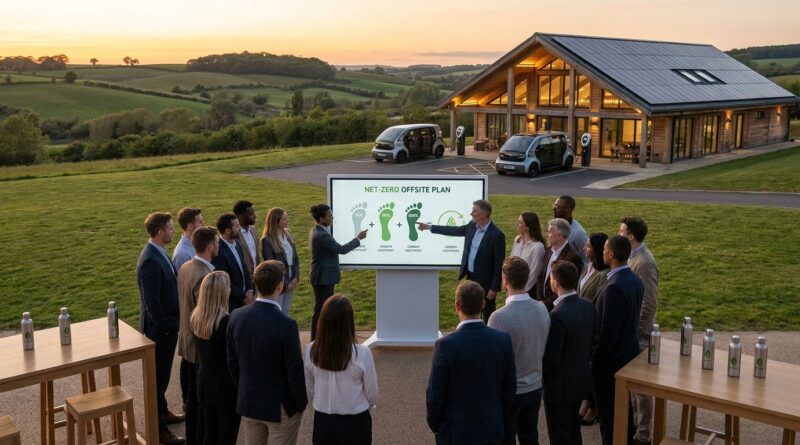
From Offsite To Carbon-Conscious Retreat: Why 2026’s Smartest Teams Turn Travel Into A Climate Strategy, Not A Guilty Secret
Your finance team wants face time. Your employees want proof that “team building” is not code for unnecessary flights, hotel swag, and photos that make the company look clueless about climate reality. That tension is real, and frankly, a little exhausting. Plenty of leaders feel stuck in the middle. They know in-person time still matters for trust, planning, and culture. But they also know people are watching how the company spends money, burns fuel, and talks about values. The good news is this is not an all-or-nothing choice. The smartest teams in 2026 are treating travel like a business decision with climate rules attached. That means fewer vanity extras, better venue choices, clearer reporting, and retreat formats built around purpose, not habit. If you are looking for sustainable corporate retreat ideas 2026 can actually support, start here. You do not need a perfect retreat. You need one you can defend, measure, and feel good about hosting.
⚡ In a Hurry? Key Takeaways
- Smart retreats in 2026 are not about avoiding travel completely. They are about making every trip earn its emissions, cost, and time.
- Start with a simple rule: cut unnecessary flights, choose lower-impact venues, and track carbon, waste, and culture outcomes in the same report.
- A climate-conscious retreat protects both your brand and your budget, especially when executives need clear proof that in-person time was worth it.
Why the old offsite playbook feels shaky now
For years, the default formula was simple. Fly everyone somewhere nice. Book a hotel ballroom. Print the badges. Add branded water bottles. Call it culture.
That formula now comes with baggage, and not just the checked kind. Employees notice the contradiction when a company talks about sustainability and then flies a hundred people across the country for two days of slide decks. CFOs notice it too. They want the business value spelled out. HR wants inclusion. Marketing wants optics handled carefully. Procurement wants numbers.
So the retreat is no longer just an event. It is a test. Can your company bring people together in person without acting like climate concerns are somebody else’s problem?
What a carbon-conscious retreat actually looks like
A carbon-conscious retreat is not a guilt trip with bad coffee and no fun. It is a retreat designed on purpose.
It starts by asking a basic question. Why does this need to happen in person? If the answer is weak, people can tell. If the answer is strong, then build the event around those goals and strip out the habits that add emissions without adding value.
Start with the business case, not the destination
Before anyone looks at resorts or room blocks, write down the reason for gathering. For example:
- Annual strategy reset that needs live decision-making
- Cross-functional trust building after a reorg
- Leadership alignment before a major launch
- Onboarding and bonding for a remote-heavy team
If you cannot describe the retreat’s purpose in one or two plain sentences, stop there. You are planning travel before you are planning outcomes.
Choose location by travel math
The greenest venue loses some of its shine if most attendees need long-haul flights to reach it. In many cases, the biggest carbon choice is not the hotel’s soap bottles. It is how people get there.
For sustainable corporate retreat ideas 2026 planners can use right away, one of the smartest moves is picking a destination reachable by rail, coach, or short direct flights for most attendees. A less glamorous city with better transport links often beats a dreamy remote resort that requires multiple flight legs and car transfers.
Go lighter on extras
People rarely bond because of custom lanyards. They bond because they had useful conversations, solved real problems, and got enough unstructured time to connect.
Cut the stuff that creates waste without creating memory:
- Plastic badge holders if digital check-in works
- Single-use signage when reusable systems are available
- Large swag bags that get left behind
- Overbuilt catering setups with too much food waste
Keep what people actually value. Good meals. Clear schedules. Comfortable rooms. Reliable Wi-Fi. Thoughtful sessions. Time to talk.
The easiest framework for planning a greener retreat
If your team is overwhelmed, use a simple four-part filter: reduce, replace, report, repeat.
1. Reduce
Cut the biggest sources of impact first. Usually that means travel distance, number of attendees, event length, and waste-heavy production.
Ask:
- Do all attendees need to be there in person?
- Can we reduce one travel day?
- Can regional clusters meet locally first, then send a smaller group?
- Can we use one venue for sleeping, meeting, and meals to avoid shuttles?
2. Replace
Swap high-impact choices for lower-impact ones where it makes sense.
- Replace short flights with rail when practical
- Replace imported menus with seasonal local food
- Replace disposable decor with reusable materials
- Replace paper packets with a mobile agenda
3. Report
This is where many teams fall short. They make greener choices but do not document them well enough to satisfy leadership.
Create one post-event summary with three categories:
- Business outcomes, such as decisions made, projects aligned, retention signals, and survey scores
- Financial outcomes, such as spend per attendee and savings from reduced extras
- Environmental outcomes, such as estimated travel emissions, waste reduction, percentage of reusable materials, and local sourcing
Do not make it fancy. Make it readable.
4. Repeat
What worked should become policy, not a one-time heroic effort by one planner. Build a retreat playbook your team can use next year.
Three retreat models that work especially well in 2026
Regional hub retreat
Instead of flying everyone to one faraway spot, create two or three regional gatherings linked by a short shared virtual session. Teams still get face time, but the travel footprint drops.
This model also helps employees with caregiving or visa limits. It is often more inclusive, not just more sustainable.
Train-first retreat
If your team is concentrated in a corridor with strong rail service, build the event around train access. Pick a venue near the station. Offer simple booking support. Make arrival easy.
This sounds small, but small friction points matter. If rail feels confusing and flights feel automatic, people will default to flights.
Micro-retreat circuit
Some companies are stepping away from one giant annual trip and moving to smaller local or regional touchpoints through the year. That can lower travel intensity while improving continuity. If that idea fits your team, this piece on From Offsite To Micro-Retreat Circuit: Why 2026’s Smartest Teams Trade One Big Trip For A Year Of Local Touchpoints is worth a look.
It is a smart reminder that culture does not always need one huge moment. Sometimes it needs a better rhythm.
How to talk about climate without sounding performative
This is where companies get nervous. They do not want to preach. They also do not want silence to be mistaken for indifference.
The sweet spot is simple honesty.
Tell attendees what choices were made and why. For example:
- We chose this location because most attendees could reach it directly
- We used digital materials and reusable signage to reduce waste
- We selected a venue with clear energy and food sourcing policies
- We are tracking travel emissions and sharing the results internally
Notice the tone. Calm. Specific. No self-congratulation. No vague promises about saving the planet with compostable coffee cups.
What your CFO actually wants to see
Most CFOs are not asking for perfection. They are asking whether the trip was necessary, well-managed, and worth the money.
So give them a clean before-and-after view.
Before the event
- Purpose of the retreat
- Who needs to attend in person and why
- Why this location was chosen
- Expected cost and key cost controls
- Expected environmental choices and measurement plan
After the event
- Attendance and participation quality
- Top outcomes achieved
- Actual spend versus budget
- Emissions estimate and waste notes
- What to improve next time
That turns a retreat from “trust us, it was great” into a real management tool.
Questions to ask venues and travel partners
Hospitality providers are getting much better at offering greener options. But you still need to ask real questions, not just read glossy sustainability pages.
Ask venues:
- Can you share your waste diversion and energy practices in plain terms?
- Do you offer reusable event materials and digital signage?
- How much of the menu can be locally sourced and seasonal?
- Can you provide data we can include in post-event reporting?
- How easy is it to reach your property by public transport or rail?
Ask travel partners:
- Can you help compare rail and air options by route?
- Can we see emissions estimates before booking?
- Can travelers choose lower-impact itineraries easily?
- Can you support group reporting after the event?
If a supplier talks in circles, move on. You want facts you can use.
Small choices that employees notice right away
People may not read your sustainability memo. They will absolutely notice whether the retreat feels thoughtful.
- Name badges made from recyclable or reusable materials
- Water refill stations instead of endless plastic bottles
- Menus with sensible portions and clear food donation plans
- Welcome gifts that are edible, useful, or optional
- Schedules that avoid pointless shuttle loops across a city
None of these choices alone changes everything. Together, they tell employees the company paid attention.
What not to do
A few mistakes show up again and again.
Do not hide the trip’s impact
If employees are already climate-conscious, pretending the retreat has no footprint is a fast way to lose trust.
Do not offset your way out of bad planning
Offsets may have a place, but they should come after reduction, not instead of it. People can tell when a company uses them like a receipt for excess.
Do not make sustainability the enemy of comfort
Cutting waste is smart. Making the event inconvenient is not. If attendees are cold, hungry, confused, or stranded, they will not remember your reusable signage. They will remember a badly run retreat.
At a Glance: Comparison
| Feature/Aspect | Details | Verdict |
|---|---|---|
| Location strategy | Pick the site based on how most attendees can get there with the least travel impact, not just the prettiest brochure photos. | High impact decision. Usually the first place to start. |
| Event materials and swag | Use digital agendas, reusable signage, and fewer giveaway items that often become waste. | Easy win. Saves money and reduces visible waste. |
| Measurement and reporting | Track retreat goals, cost, emissions estimates, and attendee feedback in one simple summary. | Essential if leadership wants proof the trip was both strategic and responsible. |
Conclusion
The smartest retreat plans in 2026 are not trying to pretend travel is harmless, and they are not pretending virtual can do every job. They are doing the harder, smarter thing. They are treating in-person time as precious, limited, and worth planning carefully. That matters right now because meetings and events budgets are coming back, but every line item gets more scrutiny. Leaders have to justify travel as strategically essential and socially responsible. Meanwhile, hotels, venues, and travel providers are offering more green options than ever, but many internal teams still struggle to connect those options to clear metrics or culture goals. If you can do that well, this stops being an awkward internal debate and becomes a strength. You are not just booking a retreat. You are showing your company can gather in person, build real culture, and still take its climate commitments seriously.