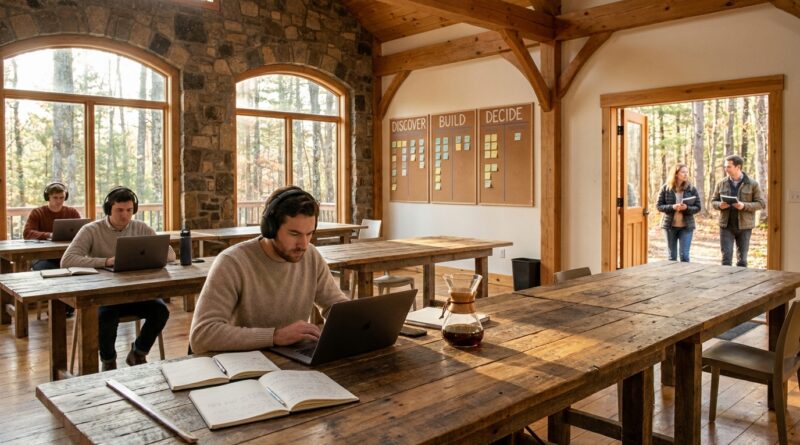
From Offsite To Deep-Work Retreat: Why 2026’s Smartest Teams Are Using Offsites To Actually Get Work Done
Most teams do not hate offsites because they dislike their coworkers. They hate them because too many retreats steal a week of real work, pile on forced fun, and send everyone home to a terrifying inbox. Leaders feel that pressure too. If every budget line now needs a defense, it is hard to explain why the company paid for flights, hotel rooms, and team dinners only to create more backlog and stress. That is why a new model is starting to win in 2026: the deep work corporate retreat idea. Instead of treating the trip like a pep rally, smart teams treat it like protected focus time. Fewer slides. Fewer icebreakers. Fewer “quick syncs.” More quiet blocks, clear project goals, and carefully chosen collaboration sessions that actually move work forward. The result is simple. People come back energized because they finished something important, not because they survived another trust fall with decent catering.
⚡ In a Hurry? Key Takeaways
- A deep-work retreat turns an offsite into a focused production week, not a calendar-wrecking social event.
- Start with two or three high-value outcomes, then build quiet work blocks and only a few essential group sessions around them.
- This model is easier to justify to finance, kinder to employees, and far less likely to create burnout when everyone gets back.
Why the old offsite formula is wearing people out
The old playbook is easy to recognize. Travel day. Welcome mixer. Icebreakers. Big vision keynote. Breakout sessions that should have been emails. Team dinner. Activity day. More breakout sessions. Then everyone returns to Slack, email, and missed deadlines.
It looks busy. It can even look healthy on social media. But for many teams, it is the opposite of helpful.
Hybrid work already has people bouncing between home, office, chat, video calls, and documents all day long. Add travel and a packed retreat schedule, and you have built the least focused week of the quarter. No wonder people quietly groan when the invite lands.
The deeper problem is that many retreats are trying to solve the wrong thing. They assume the main issue is low morale or weak culture. Sometimes that is true. But often the bigger issue is fragmentation. People cannot think. They cannot finish. They cannot get long stretches of uninterrupted work. A retreat that protects focus can do more for morale than another round of forced bonding ever will.
What a deep-work retreat actually is
A deep-work retreat is not anti-social. It is just more honest about what tired teams need.
The goal is to gather people in one place so they can do the kind of work that is hard to do in normal office life. Think strategy drafts, product planning, messy problem solving, writing, design reviews, roadmap decisions, technical architecture, or cross-functional work that usually gets chopped into 17 meetings.
In plain English, it is an offsite where the main event is progress.
What changes in practice
A standard retreat often fills every hour to prove the trip was “worth it.” A deep-work retreat does almost the opposite. It leaves room. It protects quiet. It cuts the fluff.
That usually means:
- Large blocks of uninterrupted solo or pair work
- A short list of business goals for the week
- Small, useful group sessions instead of all-hands marathons
- Social time that is optional or low-pressure
- Very clear rules about when not to interrupt people
This is also why some companies are rethinking the whole point of gathering. For some teams, focused work is the answer. For others, community service or shared mission may make more sense. If your team wants a more purpose-driven version, From Offsite To Civic-Impact Retreat: Why 2026’s Boldest Teams Trade Trust Falls For Real-World Change is a useful companion idea.
Why this works better in 2026
The workplace changed. Retreat design did not keep up.
People now spend much of their week reacting. Meetings multiply. Office days clump into the middle of the week. Messages never stop. Even high performers can go days without a real stretch of thinking time.
So when a team finally gets everyone together, the smartest move is not to create even more interruptions. It is to create conditions most people no longer get by default.
It gives employees something rare
Focus has become a perk.
That sounds dramatic, but it is true. A retreat that says, “You have three protected hours this morning to finish the thing that has been stuck for six weeks,” feels like relief. It respects people’s time and their actual workload.
It gives leaders a better return
Executives do not just need happy people. They need outcomes they can point to.
A deep-work retreat is easier to defend because it produces visible deliverables. A draft strategy. A product decision. A content backlog. A solved process problem. A real plan with owners and dates. That is a cleaner story for the CFO than “we improved vibes.”
It avoids the retreat hangover
The worst offsites create a rebound effect. Everyone comes back behind, stressed, and resentful. The best deep-work retreats reduce backlog instead of increasing it. That alone changes how people feel about the next one.
How to plan a deep work corporate retreat idea that people will not dread
1. Pick outcomes, not themes
Do not start with a slogan. Start with two or three things the team truly needs to finish, unblock, or decide.
Good examples include:
- Finalize next quarter’s roadmap
- Write the first draft of a new messaging framework
- Fix one painful cross-team workflow
- Make a decision on a delayed product question
If the outcome is vague, the retreat will drift. If the outcome is specific, the schedule gets easier to build.
2. Design around energy, not optics
Most people do their best thinking at certain times of day. Use that.
Morning is often best for solo focus or hard problem solving. Midday can handle small group sessions. Evenings can be lighter. You do not need to entertain people every minute. In fact, please do not.
A good rhythm might look like this:
- 9:00 to 11:30, quiet work block
- 11:30 to 12:30, team lunch
- 1:00 to 2:30, decision meeting or workshop
- 3:00 to 5:00, implementation or writing block
- Optional dinner or walk, not mandatory bonding theater
3. Set “do not disturb” rules before arrival
This part matters more than people expect. If everyone still treats the retreat like a normal workday with travel attached, the focus disappears.
Set simple rules:
- No internal meetings outside the published agenda
- Slack only for urgent issues during quiet blocks
- No expectation of instant replies
- External meetings kept to an absolute minimum
Deep work does not happen just because the venue has nice chairs and a mountain view. It happens because interruptions are reduced on purpose.
4. Give people the right mix of solitude and contact
Not everyone works best in the same way. Some need silence. Some need a quick partner check-in. Some need a whiteboard and a problem to wrestle with.
Build for all three. Quiet rooms. Small huddle spaces. A clear place for collaborative work. The retreat should feel flexible, not rigid.
5. Keep social time human, not performative
People do want connection. They just do not always want a compulsory game night after a ten-hour day of travel and workshops.
Better options are simple. Shared dinner. A walk. Coffee chats. An early finish one evening. Give adults room to act like adults.
What to cut if you want this to succeed
Here is the blunt part. Some common retreat habits need to go.
Cut the endless presentations
If people can read it before the trip, send it before the trip. Do not fly everyone in just to project a deck onto a wall.
Cut generic team-building blocks
If an activity does not support trust, clarity, or useful collaboration, it is filler. People can spot filler from across the parking lot.
Cut oversized group sessions
Big rooms are often good for announcements and bad for decisions. Smaller groups do better work.
Cut the overpacked schedule
If every hour is booked, nobody has time to think, process, or finish. You are not planning a cruise itinerary. You are creating space for important work.
How to explain this model to finance and skeptical leadership
If you want buy-in, speak in terms that matter to the business.
A deep-work retreat can be framed as a concentrated execution week. You are not paying for “time away.” You are buying temporary protection from the constant interruptions that slow progress the rest of the quarter.
That means the pitch should include:
- The exact outcomes expected
- Which projects move faster because of the retreat
- What normal meetings will be canceled or reduced
- How success will be measured within 30 days
This is where the deep work corporate retreat idea becomes powerful. It is not a soft, fuzzy event concept. It is a practical answer to fragmented work.
Signs your team needs a deep-work retreat, not a culture week
- People say they are busy all day but struggle to finish meaningful work
- Cross-functional decisions drag on for weeks
- Your retreat budget is under scrutiny
- Employees complain about meeting overload
- Past offsites created more backlog than momentum
If that list feels familiar, your team is not broken. It is overloaded. That is a design problem, not a morale flaw.
One simple template to try
Day 1: Arrive and align
Travel. Short kickoff. Confirm goals, rules, and outputs. Early finish.
Day 2: Focus and decision-making
Long morning work block. Afternoon workshop on one major issue. Optional dinner.
Day 3: Build and refine
Protected work time. Small-group reviews. Document decisions while they are fresh.
Day 4: Finish and assign owners
Wrap drafts. Confirm next steps. Assign dates and responsibility. Leave with a usable plan.
Notice what is missing. No costume theme. No fake game show host energy. No “surprise fun” at 9 p.m.
At a Glance: Comparison
| Feature/Aspect | Details | Verdict |
|---|---|---|
| Traditional offsite | Packed agenda, lots of presentations, heavy social programming, little time to produce real work | Good for announcements, weak for focus |
| Deep-work retreat | Protected focus blocks, small decision sessions, clear deliverables, lighter social pressure | Best choice for teams that need progress and relief from meeting overload |
| Outcome measurement | Track finished drafts, decisions made, blockers removed, and follow-through within 30 days | Makes budget conversations much easier |
Conclusion
The smartest retreat trend right now is not bigger entertainment budgets or shinier team-building tricks. It is honesty. People are tired of events that pretend to help while quietly wrecking their week. Both executives and employees are hitting a wall with performative wellness weeks and hyper-social retreats that look good on LinkedIn but blow up everyone’s calendar. A Deep-Work Retreat model offers something much more useful. It cuts meeting overload, gives leaders a story finance can support, and fits the messy reality of hybrid work, constant context switching, and crowded midweek office schedules. Most of all, it respects the fact that finishing meaningful work is often the most energizing thing a team can do together. Turn the offsite into the most focused week of the quarter, and suddenly the trip stops feeling like an interruption. It starts feeling like a smart advantage.