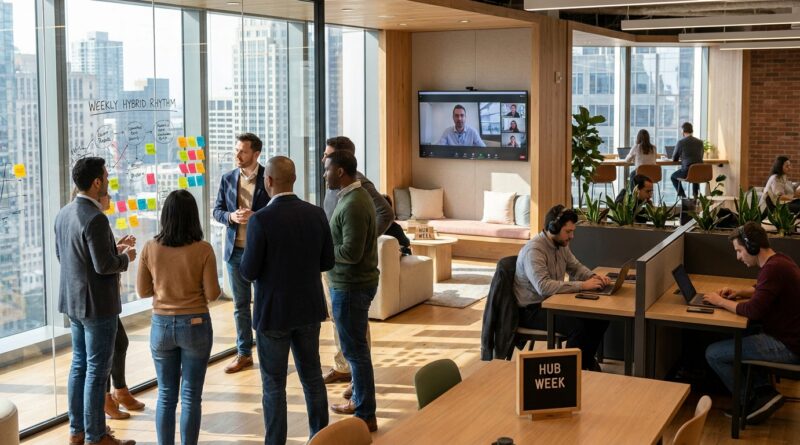
From Offsite To Hybrid-Hub Retreat: Why 2026’s Smartest Teams Now Design Gatherings Around Midweek In-Office Days
If your team’s hybrid schedule feels silly, you are not imagining it. People commute in on different days, sit through the same video calls they could have taken from home, then lose a full day of real work just getting there and back. It is expensive, tiring, and weirdly lonely for something meant to build connection. That is why many companies are changing course. Instead of treating every office day like a mini offsite, they are building around a simpler rhythm. Midweek becomes the shared in-person window. Tuesday through Thursday is when collaboration happens. Monday and Friday are protected for focused work, planning, catch-up, and quieter tasks. Then, instead of spreading culture and strategy across dozens of random meetings, teams use one monthly or quarterly “hub week” as the main event. It is a smarter answer to the big 2026 question behind so many hybrid work corporate retreat ideas 2026 searches: how do we make time together actually worth it?
⚡ In a Hurry? Key Takeaways
- The best hybrid gatherings in 2026 are built around shared Tuesday to Thursday office time, not random all-hands travel days.
- Use one monthly or quarterly “hub week” for strategy, onboarding, relationship-building, and decisions that truly need people together.
- This model can cut wasted commutes, reduce burnout, and make office space easier to justify because each in-person day has a clear job.
Why the old offsite model is starting to break
Classic offsites were designed for a different world. Back then, most people worked in the same place most of the time. A retreat was a change of pace. Now, for many teams, every gathering already feels like a travel puzzle.
The problem is not just distance. It is timing. If some people come in Monday, others Wednesday, and a few only show up for quarterly events, the office stops being a shared space and turns into a lottery. You might make the trip in, only to spend six hours on Zoom with coworkers sitting in other homes, cities, or time zones.
That is why smart leaders are moving from “let’s get everyone together somehow” to “let’s design around when people actually show up.” In many companies, that means midweek.
What a hybrid-hub retreat actually is
A hybrid-hub retreat is not a traditional offsite and not just a busy office week either. Think of it as a planned gathering that uses your normal hybrid pattern as the foundation.
The simple version
Tuesday through Thursday become your reliable in-person collaboration window. Then once a month or once a quarter, you turn one of those weeks into a hub week. That is when you stack the work that benefits most from face-to-face time.
This usually includes:
- Strategy sessions
- Cross-team planning
- Onboarding
- Manager 1:1s
- Customer or partner visits
- Culture events that do not feel forced
Everything else gets pulled out. Fewer status meetings. Fewer random “while we are all here” sessions. More intentional blocks for actual work and real conversation.
Why midweek works better than fighting the calendar
Most teams already know this, even if they have not said it out loud. Monday is a reset day. Friday is a wrap-up day. People are traveling, doing school pickups, handling admin, or trying to get deep work done before the weekend.
Tuesday through Thursday are the overlap days. That is when energy is highest and attendance is best. So instead of nagging people about five-day presence or creating guilt around empty desks, stronger teams are building systems around reality.
It respects attention
Heads-down work needs long, uninterrupted stretches. Those are easier to protect at home or on quieter days. Brainstorming, trust-building, tricky decisions, and onboarding are better in person. When you separate those modes on purpose, both get better.
It makes office days feel useful
People are much more willing to commute when the day has a point. If they know Tuesday is for planning, Wednesday is for workshops, and Thursday is for team decisions and lunch, the trip feels worthwhile.
It cuts the “Zoom from a different building” problem
This is the one employees complain about constantly. Nobody wants to travel just to put on a headset in a conference room. A hybrid-hub model forces leaders to ask a basic question before putting something on the calendar: does this need shared physical space or not?
How the smartest teams are designing hub weeks in 2026
The best examples are surprisingly boring in the best way. They are not trying to turn every gathering into a huge production. They are making small, practical choices that reduce friction.
1. They pick one cadence and stick to it
Monthly works for fast-moving teams. Quarterly works for teams that travel more or have wider geographic spread. What matters is consistency. People should be able to plan childcare, travel, project work, and personal life around it.
2. They theme each hub week
Not every hub week should try to do everything. One might focus on quarterly planning. Another on onboarding and training. Another on innovation or customer feedback.
This keeps the week from turning into a messy catch-all.
3. They protect quiet time inside the gathering
This sounds backwards, but it matters. If every in-person day is stuffed wall to wall with meetings, people leave inspired and buried. Build in two-hour blocks for follow-up work, documentation, and private thinking.
4. They use the office like a studio, not a storage unit
Teams are rethinking space too. Fewer assigned desks. More project rooms, whiteboard areas, training zones, and casual seating where people can talk without booking a formal room for every interaction.
What leaders get out of this model
There are three big wins here.
Clearer return on office space
If your office is full on Tuesday through Thursday and quiet on Monday and Friday, that is not failure. That is useful information. You can design, lease, and staff around actual behavior instead of wishful thinking.
Less burnout
People get fewer pointless commutes and fewer fragmented days. They also stop feeling like they have to be “always available” across every channel, every day, from every location.
More trust
Trust grows when the rules make sense. Employees notice when leaders stop performing attendance theater and start protecting time with care.
What employees get out of it
This is not just a management fix.
Employees get more predictable weeks. Better chances to actually see coworkers. Less resentment about showing up for no reason. More focused days at home. Better onboarding for new hires. And, maybe most important, a stronger sense that in-person time is being used for humans, not just calendars.
Common mistakes to avoid
Even a good hybrid-hub retreat idea can go wrong if the schedule is sloppy.
Turning hub week into meeting overload
If every hour is booked, people cannot absorb anything. Leave breathing room.
Trying to force five days of attendance through the back door
If you say the model is about intentional presence but keep adding extra mandatory office days, people will see right through it.
Ignoring remote participants during non-hub weeks
The whole point is to create a rhythm, not a two-class system. Outside hub weeks, documentation and async communication still need to be strong.
Confusing culture with entertainment
People do not need a constant stream of branded fun. They need useful conversations, context, and time with the people they depend on.
That is one reason some companies are also experimenting with more hands-on gathering formats. If you are curious where this is heading next, From Offsite To Creative-Residency Retreat: Why 2026’s Smartest Teams Now Make Art Instead Of Slide Decks shows how some teams are replacing passive presentations with shared creative work that feels more memorable and less corporate.
A practical template you can copy
If you want to test this without rewriting your whole company policy, start small.
Sample monthly hub week
- Tuesday: Team planning, project reviews, lunch together
- Wednesday: Cross-functional workshops, onboarding, customer insight sessions
- Thursday: Decision-making meetings, manager 1:1s, social wrap-up
Then keep Monday and Friday light. Use them for prep, travel if needed, and focused work.
Questions to ask before scheduling anything in person
- Does this work better face to face?
- Who really needs to be there?
- What decision or outcome should happen by the end?
- What can be handled async before or after?
At a Glance: Comparison
| Feature/Aspect | Details | Verdict |
|---|---|---|
| Random office attendance | People commute on different days, collaboration is hit or miss, and many meetings still happen on Zoom. | Low value and frustrating |
| Midweek hybrid rhythm | Tuesday to Thursday become shared in-person days, while Monday and Friday are saved for focused work. | Best day-to-day balance |
| Monthly or quarterly hub week | Strategy, onboarding, culture, and cross-team work are grouped into one intentional gathering window. | Strongest long-term model for hybrid teams |
Conclusion
Leaders do not need more calendar tricks. They need a rhythm people can actually live with. That is why the hybrid-hub retreat model is catching on. It accepts that midweek is when most people will show up, then builds around that truth instead of fighting it. The result is simpler and better. Tuesday through Thursday become useful. Monday and Friday stay open for real focus. One monthly or quarterly hub week becomes the anchor for strategy, onboarding, and culture, instead of scattering that energy across dozens of shallow meetings. If you are looking at hybrid work corporate retreat ideas 2026, this is the shift worth paying attention to. It helps justify office space, protects people from burnout, and starts rebuilding trust one well-designed week at a time.