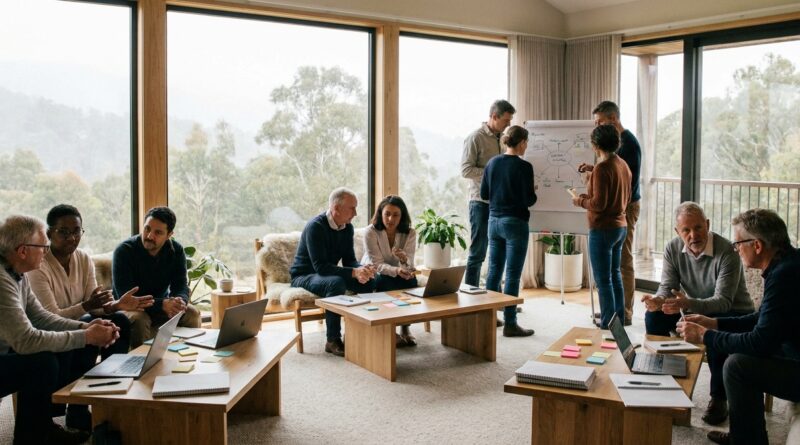
From Offsite To Skill-Build Retreat: Why 2026’s Smartest Teams Now Turn Retreats Into Learning Sprints
Your team is not wrong to groan when someone says “retreat.” Too often, it means bad icebreakers, polite networking, and a stack of slides nobody remembers by Monday. That frustration is getting sharper in 2026 because work is changing fast. AI tools are showing up everywhere. Job boundaries are shifting. People are expected to learn on the fly while still hitting their numbers. So leaders are starting to ask a better question. If we are already flying everyone to the same place, why are we wasting the best focus time of the year? The smarter move is turning the retreat into a corporate retreat learning sprint. That means a short, structured burst of hands-on learning tied to real work, real tools, and real skill gaps. It gives people something more useful than “team bonding.” It gives them confidence, practice, and a clearer sense that the company is helping them keep up, not just asking them to.
⚡ In a Hurry? Key Takeaways
- A corporate retreat learning sprint turns retreat time into focused, practical skill-building instead of generic team activities.
- Pick one to three skills tied to current work, then build hands-on sessions where teams practice with real projects and tools.
- This approach helps justify retreat costs because people leave with useful capabilities, not just photos and a few name tags.
Why the old retreat format is starting to feel wasteful
Most teams do not hate being together. They hate the feeling that the trip did not matter.
That is the real problem.
People are busy, stretched, and a little tired of “special events” that create more catch-up work when they get home. If the retreat is just presentations in a nicer room, the company has paid premium prices for the same low-energy meeting people could have ignored on Zoom.
Meanwhile, the need for learning has shot up. Teams are being asked to use new software, work with AI, adapt to changing customer expectations, and take on tasks that did not exist a year ago. Training budgets, though, are often flat or shrinking.
That is why the retreat is being rethought. It may be the only time all year when people are away from daily interruptions long enough to actually learn.
What a corporate retreat learning sprint really means
Think of it like this. Not a conference. Not a classroom. Not a forced-fun getaway.
A learning sprint is a short, intense block of practical development. Usually one to three days. It is built around skills your team needs now, not “nice to have someday” topics.
What it includes
A good sprint usually has a few simple ingredients:
- A narrow focus, such as AI prompting for customer support, faster data analysis, better project handoffs, or smarter use of internal tools
- Hands-on work instead of passive listening
- Small group problem-solving
- Time to test new methods on real team challenges
- A plan for using those skills back at work the next week
That last part matters a lot. If nothing changes once people get home, it was just a nicer version of training theater.
Why this works better than standard offsites
Retreats already have something most training programs do not. Attention.
People have stepped away from Slack, random meetings, and everyday firefighting. They are in the same room. They can ask follow-up questions. They can compare notes. They can watch how other departments think.
Used well, that is gold.
It is also why many teams are pairing learning sprints with actual day-to-day processes. If that sounds familiar, it is because the same shift is happening in retreat design more broadly. A good example is From Offsite To AI-Assisted Retreat: Why 2026’s Smartest Teams Now Bring Their Actual Workflows To The Gathering, which gets at the same core idea. Stop treating the event like a break from work, and start using it to improve the work itself.
How to design a retreat that actually builds skills
1. Start with one painful problem, not a giant theme
Do not begin with a fuzzy goal like “innovation” or “future readiness.” That sounds good, but it is too broad to be useful.
Start with a real pain point. For example:
- Managers do not know how to use AI safely in everyday tasks
- The sales and marketing teams use different tools and waste time
- Project updates are messy and slow
- Customer support staff need faster ways to find answers
If the retreat helps solve one of these, people will feel the value right away.
2. Keep the curriculum tight
One of the biggest mistakes is trying to cram in too much. You do not need twelve sessions and six guest speakers.
You need one to three skill tracks that matter now.
For instance, a product team might spend a day on AI-assisted research, a half day on better decision documentation, and a final block on cross-team planning. That is enough. More than that, and people start mentally checking out.
3. Make every session hands-on
This is where many retreats still stumble. Leaders say they want learning, then book long presentations.
People do not build confidence by watching slides. They build it by trying something, getting stuck, asking for help, and trying again.
That could mean:
- Writing prompts in live AI workshops
- Rebuilding an actual team workflow
- Practicing difficult client conversations
- Reviewing a broken process and fixing it together
If everyone leaves with files, templates, or new process drafts they can use, you are on the right track.
4. Mix departments on purpose
One hidden benefit of learning sprints is that people see how work connects across the company.
The support team hears what sales promises. Marketing sees where operations gets jammed. Product understands what finance needs for approvals.
This kind of shared learning can do more for collaboration than another trust-building exercise ever will.
5. Build in quiet work time
This one surprises people, but it matters.
Do not schedule every minute. Learning takes breathing room. Give people time to test a tool, reflect on what they learned, or sketch out how they will use it back on the job.
A retreat packed wall-to-wall with activity feels productive. It often is not.
What leaders should stop doing
If you want a retreat learning sprint to work, a few habits need to go.
Stop treating learning like the side dish
If the skill-building block is wedged between a welcome cocktail hour and a two-hour leadership update, people can tell it was not the point.
Make learning the main event.
Stop using generic speakers who do not know your team
A polished outside speaker can be fun. But if they are talking in broad slogans, your team will forget most of it before checkout.
It is often better to use a smart facilitator who can work with your actual goals, tools, and problems.
Stop pretending bonding and learning are opposites
They are not. People often connect better when they are solving something real together.
A shared challenge builds trust faster than forced personal sharing in a conference room.
What employees get out of it
This is not just a budget story for leadership. It is also better for the team.
When a retreat is built as a learning sprint, employees come home with proof that the trip mattered. They may have learned a tool that saves them hours. They may better understand how another department works. They may feel less anxious about all the change landing on their desk.
That emotional piece should not be ignored.
A lot of workers still carry post-pandemic fatigue. Many feel they are always behind, always adapting, always catching up. A good retreat can reduce that stress by giving people protected time to build skills with support around them.
How to defend the budget in a tough year
This may be the most practical reason the corporate retreat learning sprint idea is catching on.
Retreats are expensive. Travel, lodging, venue costs, food, facilitation. It adds up fast.
But leaders have a much easier time defending that spend when the retreat clearly does three things:
- Builds capabilities the company needs this year
- Improves cross-team ways of working
- Gives people a real reason to gather in person
That is a better story than “we wanted face time.”
It also helps if you measure outcomes. Not in a fancy way. Just track practical results. Did teams adopt the new process? Are people using the tools introduced at the retreat? Did certain tasks get faster? Did confidence go up in post-event surveys?
Those simple checks help prove the event was more than a morale trip.
At a Glance: Comparison
| Feature/Aspect | Details | Verdict |
|---|---|---|
| Traditional retreat | Often heavy on presentations, light on practical follow-through, and only loosely tied to daily work | Easy to plan, hard to justify |
| Corporate retreat learning sprint | Focused skill-building around real tools, team challenges, and immediate workplace needs | Best fit for 2026 pressure and budget reality |
| Team value after the event | Traditional events create memories. Learning sprints create habits, templates, and better ways of working | Learning sprint wins on lasting impact |
Conclusion
The smartest teams are not giving up on retreats. They are finally asking more from them. That makes sense right now. Employees are under pressure, worried about keeping up with change, and still not fully past the fatigue of the last few years. At the same time, many companies are trimming formal training while still hanging on to the annual gathering. That makes the retreat too valuable to waste on filler. Reframed as a corporate retreat learning sprint, it becomes protected time for real development, a more exciting reason to meet in person, and a solid answer when finance asks what the company got for the spend. In plain English, it turns a nice trip into something useful. And for 2026, useful is what people need most.