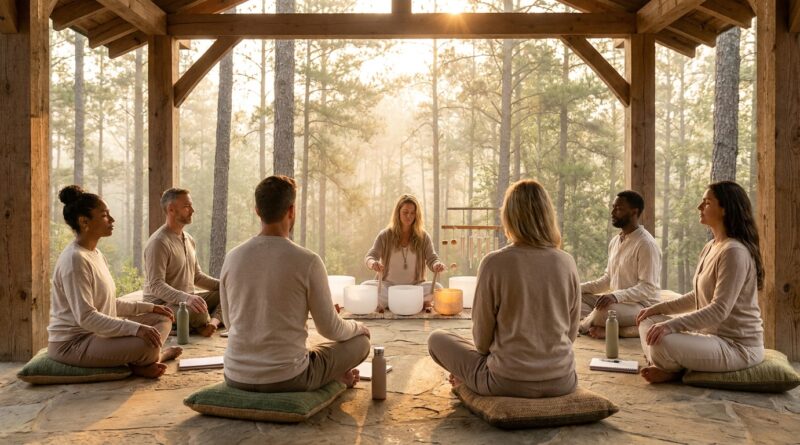
From Offsite To Nervous-System Retreat: Why 2026’s Smartest Teams Now Design ‘Deep Reset’ Gatherings
Your team is not resisting the retreat because they are lazy or cynical. They are resisting it because many of them are already running on fumes. Hybrid work blurred the edges of the day. Notifications turned every spare minute into a tiny interruption. And quiet burnout made a lot of smart, capable people look “fine” right up until they were not. So when a company announces another offsite packed with back-to-back sessions, forced fun and drinks that somehow count as bonding, the reaction is often dread, not excitement. That is why the post pandemic corporate retreat nervous system reset is becoming such a useful idea. The smartest teams in 2026 are planning gatherings that lower the temperature first. They build in rest, choice, calm and space to think. The goal is not to entertain exhausted people. It is to help them feel human again, so better conversations and better work can actually happen.
⚡ In a Hurry? Key Takeaways
- A great retreat in 2026 feels less like a mini conference and more like a structured reset for tired brains and overloaded nervous systems.
- Start by cutting the schedule in half, adding quiet time, and giving people real choices around travel, sessions and social energy.
- This is not just a wellness perk. Regulated teams usually make better decisions, connect more honestly and bring the benefits back to work for longer.
Why the old offsite model is starting to fail
For years, companies treated retreats like a live event problem. Fill the agenda. Book the keynote. Add a team dinner. Maybe throw in an icebreaker nobody asked for.
That model made more sense when people were not already carrying around a low hum of digital stress all day. Now they are. A retreat that piles on more stimulation can feel like being asked to sprint during a recovery day.
That is the core shift. The retreat is no longer just about getting everyone in one place. It is about what state people are in when they arrive, and what state they are in when they leave.
What a “nervous system reset” retreat actually means
This does not mean your company suddenly turns into a silent spa. It means you design the gathering around human energy, not just logistics.
A nervous system reset retreat tries to reduce overload so people can think clearly, listen better and interact without feeling constantly “on.” In plain English, it respects the fact that stressed brains are bad at trust, creativity and nuance.
What it usually includes
Think of these as the building blocks:
- Shorter meeting blocks
- Longer gaps between sessions
- Quiet mornings or optional starts
- Low-pressure movement like walks, stretching or light outdoor time
- Phone-light spaces or notification breaks
- Meals that are not rushed and social events that are optional
- Clear expectations, so nobody has to guess how “on” they need to be
None of that is flashy. That is the point. Calm is not flashy. It is effective.
Why this works better after the pandemic
Post pandemic work changed people’s baseline. Many workers now move between home, office, travel and video calls without a real reset in between. Even good things can feel like demands when the calendar is already crowded.
Wellness tourism and corporate wellness have quietly met in the middle here. Both have landed on the same idea. Recovery is not a reward after the real work. Recovery is what makes the real work possible.
When a retreat starts from that assumption, the tone changes fast. People stop bracing for a performance. They start showing up as themselves.
Signs your current retreat format is making things worse
If you are not sure whether your current setup is helping or hurting, look for these clues:
- People arrive late, frazzled and immediately check email
- The agenda starts early after a long travel day
- Every hour is scheduled
- “Optional” social time feels mandatory
- The loudest people dominate, while everyone else goes quiet
- Good ideas only surface in side conversations, not in the official sessions
- By day two, the group looks polite but depleted
That last one matters. A retreat can look successful on paper and still leave people more drained than before.
How to design a structured reset instead of a packed agenda
1. Protect arrival day
The retreat begins before the first session. If travel is stressful, your event starts with stress.
That is one reason more companies are rethinking how people get there. If this is on your radar, From Offsite To Flexible-Route Retreat: Why 2026’s Smartest Teams Now Let People Choose Their Own Travel Adventure is worth a read. Giving people more choice around travel can lower friction before the retreat even starts.
Good rule. Do not ask people to travel hard and then perform immediately.
2. Cut your content by 30 to 50 percent
Most retreat agendas are too full because planners worry that empty space will feel wasted. It will not. Empty space is where digestion happens. It is where people process the hard conversation, take the walk that unlocks a new idea, or have the honest chat that never happens in a breakout room.
If you are debating between one more slide deck and an unscheduled hour, pick the hour.
3. Build for different energy types
Not everyone resets the same way. Some people need conversation. Others need ten quiet minutes without being watched.
Offer parallel options when you can. A guided walk or solo free time. Group dinner or open evening. Workshop table or reflection prompt. Choice lowers pressure, and lower pressure often improves participation.
4. Stop mistaking stimulation for engagement
Loud music, late nights and nonstop activities can create a temporary buzz. That is not the same thing as real connection.
Teams often bond better through lower-intensity experiences. Shared breakfast. A thoughtful discussion with no rush. A walk outside. A session where people are allowed to pause before answering.
The goal is not to keep energy high every minute. The goal is to keep people present.
5. Make rest visible, not secret
If people think they need to sneak away to recharge, your retreat still has a cultural problem.
Say it out loud. Let people know downtime is part of the design, not a sign of weak commitment. When leaders model that, everyone relaxes.
What leaders often get wrong
The biggest mistake is assuming that if people are physically together, connection will happen on its own. It will not, especially if everyone is tired.
The second mistake is confusing vulnerability with oversharing on command. Nobody wants to answer a deep personal prompt five minutes after dragging a suitcase into the hotel.
The third mistake is using the retreat to cram in every issue the company has avoided for six months. Strategy, conflict repair, culture building, roadmap alignment, hiring discussion, product review and celebration cannot all be the main event.
Pick fewer goals. Do them better.
What a better retreat day can look like
Here is a simple example:
Morning
- Slow breakfast window
- Optional walk or quiet time
- One high-value working session, 90 minutes max
Midday
- Long lunch
- No required content during the first half hour after lunch
- Small group discussion or workshop with clear purpose
Afternoon
- Break
- One decision-making session
- Wrap with reflection, not another presentation
Evening
- Optional social activity
- No guilt for people who head to bed early
Notice what is missing. There is no frantic race from room to room. No mandatory “fun” squeezed into every gap. No assumption that the best use of together time is more content.
How to know if your reset retreat worked
Do not just ask if people had fun. Ask better questions.
- Did people feel calmer by the second day than the first?
- Did quieter team members contribute more than usual?
- Were decisions clearer and easier to make?
- Did people keep talking about one or two meaningful moments weeks later?
- Did the retreat create fewer action items, but better ones?
That last point surprises people. Better retreats do not always produce more output. They often produce better judgment.
At a Glance: Comparison
| Feature/Aspect | Details | Verdict |
|---|---|---|
| Traditional offsite | Packed schedule, heavy content, forced social energy, little recovery time | Often looks productive but can leave people more drained |
| Deep reset retreat | Fewer sessions, calmer pacing, built-in breaks, optional social time, more autonomy | Better for trust, clearer thinking and honest conversation |
| Best use case | Teams dealing with hybrid fatigue, change, burnout risk or decision overload | Strong fit for 2026 planning and post pandemic team culture |
Conclusion
The smartest retreat question in 2026 is no longer, “How do we fit more in?” It is, “What kind of state do we want people in when the important conversations happen?” Post pandemic, wellness tourism and corporate wellness trends have quietly converged on one big idea: teams do their best thinking when their nervous systems are regulated, not revved. By treating your retreat as a structured reset instead of a mini conference, you get fewer eye-rolls and more real connection, better decisions in the room and a longer tail of performance after everyone is back at their laptop.