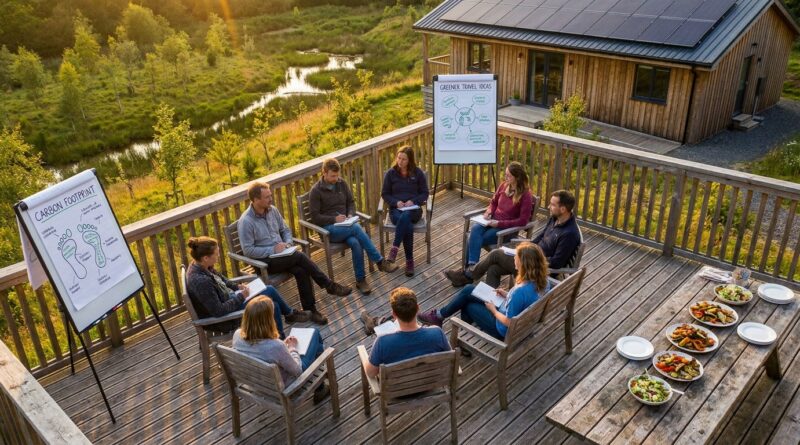
From Offsite To Climate-Positive Retreat: Why 2026’s Smartest Teams Now Turn Gatherings Into Regeneration Labs
Planning a team retreat used to be simple. Pick a nice place, book flights, add branded hoodies, squeeze in one feel-good volunteer hour, and call it culture. That formula is now wearing thin. Employees can spot token sustainability from a mile away, finance teams are tired of paying premium prices for fuzzy results, and HR knows one bad “green” claim can backfire fast. If you are feeling squeezed between wanting a retreat people will love and needing one you can defend on cost, carbon and credibility, you are not alone. The good news is that a climate positive corporate retreat does not have to mean grim lectures, awkward tree-planting photos or a spreadsheet nightmare. The best 2026 retreats treat the gathering itself as a regeneration lab. People still connect, recharge and do real work. They just leave behind something better than exhausted budgets and airport receipts.
⚡ In a Hurry? Key Takeaways
- A climate positive corporate retreat works best when you cut emissions first, then build measurable local benefit into the event itself.
- Start with location, transport and food choices. Those three decisions do most of the heavy lifting on cost and carbon.
- Avoid greenwashing by setting clear metrics before the trip and reporting what you improved, what you could not avoid, and what still needs work.
Why the old retreat playbook suddenly feels wrong
The classic offsite was built for a different mood. Bigger travel. More swag. More spectacle. That is harder to justify now.
Teams are asking sharper questions. Why fly everyone long-haul for two days of workshops? Why hand out gifts that end up in drawers? Why call something “sustainable” because lunch used paper straws?
This is why the idea of a climate positive corporate retreat is taking off. It shifts the goal from “less bad” to “actively useful.” Not perfect. Useful. That means the retreat is designed to reduce its footprint and create visible environmental or community value at the host destination.
It can also make the event better. A retreat with a shared mission often feels more memorable than another generic hotel agenda.
What “climate-positive” should mean in plain English
Let’s keep this simple. A climate positive corporate retreat should do three things.
1. Cut emissions at the source
Start with fewer flights, shorter distances, cooler seasons, shared ground transport, lower-waste catering, and venues with credible energy and water practices.
2. Create measurable local value
Support projects that improve the destination in a real way. That could be habitat restoration, coastal repair, soil recovery, urban greening, or funding local clean-energy work. The key word is measurable.
3. Prove it without hype
If you cannot explain the plan in a one-page summary, it is probably too vague. Teams need a baseline, a target, and a simple post-event report.
This is also where destination choice matters. Some companies are moving away from heat-stressed, high-consumption resort formats and looking at cooler, lower-impact locations instead. That lines up with the trend covered in From Offsite To Cool‑Climate Retreat: Why 2026’s Smartest Teams Now Chase ‘Business Cool‑cations’, where comfort, energy use and practical planning start to work together.
The smart model: Turn the retreat into a regeneration lab
“Regeneration lab” sounds lofty, but the setup can be very practical. Think of it as a retreat where every major choice is tested against one question. Does this improve the place, the people and the purpose of the trip?
Choose a site that reduces travel pain
Pick a destination that most attendees can reach with one short flight, rail, coach or a mix of those. Do not underestimate the goodwill this creates. Less travel friction means people arrive in a better mood and lose less time in transit.
Use the agenda to connect work with impact
Do not bolt on a random volunteer hour at the end. Tie the impact work to the meeting themes. If your company talks about resilience, innovation or long-term thinking, build sessions around those ideas and then connect them to the local project.
For example, a product team retreat could include a workshop on systems thinking in the morning and a guided habitat restoration activity in the afternoon. Not as a gimmick. As a hands-on example of maintenance, feedback loops and long-term outcomes.
Work with local experts, not generic “CSR packages”
This part matters a lot. The old model often involved an event supplier offering a pre-packed charity add-on. It looked neat. It rarely changed much.
A better route is to work with a local nonprofit, conservation group, community cooperative or land manager that already has an active project, clear needs and a way to track progress over time.
How to build a climate positive corporate retreat without blowing the budget
This is where many teams get nervous. They assume “climate-positive” means more cost. Sometimes it does. Often it means shifting spend.
Move money out of low-value habits
Some of the easiest savings come from things people barely care about.
- Cut heavy swag packs and replace them with one useful item or none at all.
- Reduce long-haul flights by choosing a nearer destination.
- Skip oversized staging, printed materials and throwaway decor.
- Choose fewer, better meals with local sourcing.
That freed-up budget can fund better transport coordination, stronger local partnerships, and post-retreat measurement.
Focus on the big-ticket carbon drivers first
If your team is arguing about compostable coffee cups while booking hundreds of air miles, priorities are off. In most retreats, transport, accommodation and food are the biggest factors. Start there.
Set a “budget per outcome,” not just a “budget per head”
This helps when finance asks hard questions. Instead of saying, “The retreat costs X per person,” say, “For X per person, we get team planning, retention value, lower travel emissions than last year, and a funded local restoration outcome with reporting.”
That is a much stronger business case.
A practical planning checklist
Here is a simple framework that keeps things sane.
Before booking
- Set one retreat purpose for the business and one for impact.
- Pick a destination within the shortest realistic travel radius.
- Ask venues for energy, water, waste and food sourcing data.
- Check whether the destination has credible local partners.
- Decide what metrics you will report before anyone travels.
During planning
- Use shared transfers instead of scattered taxis.
- Design menus around seasonal, lower-impact food.
- Replace disposable signage and merch with digital or reusable options.
- Build one meaningful impact block into the main agenda, not the leftovers.
- Brief employees honestly. Say what the retreat is trying to do and what it is not.
After the retreat
- Share actual numbers, not marketing slogans.
- Report attendance, travel mode mix, waste reduction, and local project results.
- Capture employee feedback on both the retreat and the impact work.
- Use the lessons to improve the next event.
How to avoid greenwashing
This is the trap everyone wants to avoid, and rightly so.
Do not claim “net zero” casually
If the trip involved air travel, be very careful with broad claims. People are much more trusting when you say, “We reduced what we could, measured what remained, and funded specific local regeneration work with named partners.”
Do not invent impact math
If someone cannot explain where the numbers came from, leave them out. Estimated is fine if it is labeled estimated. Vague is not fine.
Do not make the community a backdrop
The host location is not a stage set for corporate bonding. Ask what local people and local organizations actually need. Then fit the retreat around that reality.
What employees actually like about these retreats
Leaders sometimes worry that a climate positive corporate retreat will feel preachy or less fun. In practice, the opposite can happen.
People usually enjoy retreats more when they feel grounded and real. A walk-and-talk session through a restoration site can be more memorable than a windowless breakout room. A local meal with people who know the place can beat another standard banquet. A team challenge tied to a real-world outcome often creates better stories than trust falls ever did.
The point is not to turn everyone into field scientists. It is to give the retreat some weight. A reason to remember it.
What a good retreat brief looks like
If you are assigning this to events, HR or an agency, the brief should be blunt.
- Limit long-haul travel unless there is a strong reason.
- Prefer locations with cooler seasonal comfort, lower energy strain and easy group transport.
- Require venue data on energy, waste and food sourcing.
- No default swag.
- At least one local partner with a defined project and measurable outcomes.
- Post-event report due within 30 days.
That one page can save a lot of confusion later.
At a Glance: Comparison
| Feature/Aspect | Details | Verdict |
|---|---|---|
| Traditional offsite | Longer travel, more swag, generic CSR add-on, weak reporting on impact | Feels dated and harder to defend |
| Low-impact retreat | Cuts waste and emissions through venue, food and transport choices | A strong baseline and often budget-friendly |
| Climate positive corporate retreat | Reduces footprint first, then adds measured local regeneration with credible partners and clear reporting | Best fit for teams that want impact, trust and a better story |
Conclusion
A climate positive corporate retreat is not about making everyone feel guilty for traveling. It is about being smarter with a trip you were probably going to take anyway. When done well, it proves leadership is paying attention to what employees care about, gives the team a shared mission that goes beyond slides and icebreakers, and turns retreat spending into something people can actually point to with pride. That matters now because climate-conscious retreats are no longer a nice extra. They are becoming a business expectation. The good news is you do not need a perfect blueprint. You need a clear one. Cut what creates the most emissions, choose places and partners carefully, measure what happened, and be honest about the results. Do that, and your next retreat can feel good, do good, and still be worth every penny.