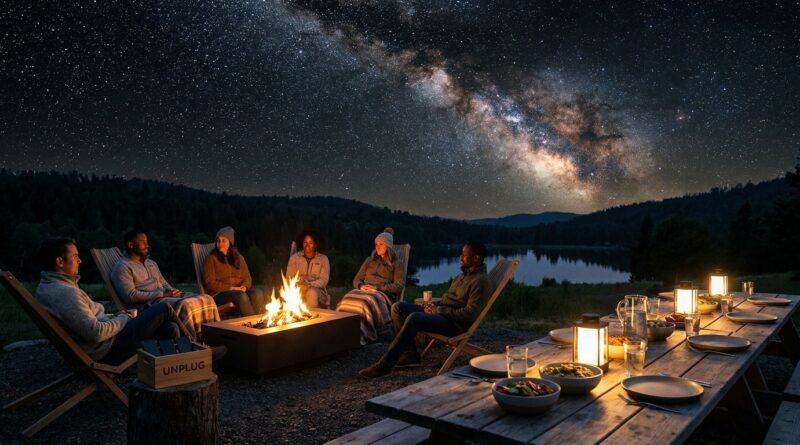
From Offsite To Dark-Sky Retreat: Why 2026’s Smartest Teams Now Use The Night To Fix Daytime Burnout
You book the nice hotel. You plan the breakout sessions. You add yoga at sunrise, cocktails at sunset, maybe a keynote with a big inspiring deck. Then everyone gets home and looks even more wrung out. If that sounds familiar, you are not doing anything “wrong.” You are just running a retreat format that often copies the same pressure people were already trying to escape, only with better scenery. That is why dark sky corporate retreats are getting real attention for 2026. They cut one of the biggest sources of overload after sunset, which is bright light, packed schedules, screens, noise, and the quiet social pressure to keep performing. Instead, teams get darkness, slower evenings, better sleep cues, and something most adults rarely get anymore, a shared feeling of awe. For burned-out teams, that is not a fluffy add-on. It is often the point.
⚡ In a Hurry? Key Takeaways
- Dark sky corporate retreats work because they reduce nighttime stimulation instead of cramming in more wellness content.
- Start with one pilot retreat and redesign the hours after dinner: dim lights, no mandatory screens, guided stargazing, quiet social time, and strong sleep support.
- This is practical, not precious. Done well, it can improve rest, lower stress, and give teams a shared reset without forcing people into awkward bonding exercises.
Why the classic offsite keeps missing the real problem
Most teams are not short on information. They are short on recovery.
That is the part many retreat plans still miss. Leaders see low energy and think, “We need a better agenda.” But the nervous system does not care how beautiful the conference room is. If people spend all day in sessions, all evening networking, and all night under bright lights while checking messages, they do not come back restored. They come back depleted with a tote bag.
Dark sky corporate retreats are a response to that exact problem. They focus less on stuffing the day with content and more on protecting the evening from overload. It is a simple design choice, but it changes the whole feel of a retreat.
What a dark-sky retreat actually is
A dark-sky retreat is usually held at or near a destination with very low light pollution. Think rural resorts, desert lodges, mountain properties, observatories, or nature-based venues that can offer genuinely dark evenings.
But the location is only half the idea. The real shift is program design.
It means the night is part of the retreat, not dead time
Instead of treating post-dinner hours as an afterthought, you plan them on purpose. Not with more slides. Not with louder parties. With darkness, quiet, and low-stimulation activities that help people settle down.
That can include:
- guided stargazing
- fireside conversations
- phone-free walks
- low-light dinners outdoors
- telescopes with an astronomy host
- simple reflection time
- optional quiet zones for early sleep
The goal is not to turn employees into amateur astronomers. The goal is to help them stop buzzing.
Why this lands so well in 2026
Teams are still dealing with a strange mix of problems. Work is flexible, but it is also constant. People can log in from anywhere, which too often means they feel they must log in from everywhere. Hybrid schedules have blurred the line between work time and down time. Screens have eaten into almost every quiet moment.
So when companies say they want a retreat that supports wellbeing, people are understandably skeptical. They have heard the language before. What they have not always seen is a format that actually changes behavior.
Dark sky corporate retreats do that because they are concrete. They ask one very useful question. What happens after sunset?
If the answer is “more noise, more light, more alcohol, more performance,” you are probably building a retreat that feels exciting in the moment and draining the next day.
If the answer is “slower, dimmer, quieter, simpler,” you are much closer to a real reset.
The science part, explained like a normal person
You do not need to become a sleep researcher to understand the appeal here.
Bright evenings keep the body on alert
Artificial light at night, especially from overhead lighting and screens, can delay the body’s natural wind-down signals. If your retreat keeps people under bright lights until late, do not be surprised when sleep quality drops.
Packed schedules keep stress chemistry humming
Even fun activities can feel like work when every minute is accounted for. People need unscripted time to decompress. That is often where the actual recovery happens.
Awe has a real effect
Looking up at a clear, star-filled sky can sound soft or sentimental on paper. In person, it often stops people in their tracks. That matters. Shared moments of awe can make people feel less mentally crowded, more connected, and more present.
And unlike another trust fall or panel discussion, it does not ask anyone to perform.
What makes dark sky corporate retreats different from generic wellness retreats
This is where planners can get excited. Dark-sky programming is specific. It is not vague “wellness.” It gives you a design choice you can brief to a venue right away.
The focus is environmental, not preachy
You are not telling tired employees to meditate harder. You are changing the setting so calm is easier.
It is shared, but not forced
People can experience the same quiet sky together without being pushed into uncomfortable oversharing.
It supports sleep instead of stealing from it
A lot of retreats quietly sabotage rest. Late dinners, loud bars, bright hallways, sunrise sessions, and “just one more drink” are not exactly a recipe for recovery. A dark-sky format does the opposite.
If your team is already interested in body-based recovery, you could pair this approach with ideas from From Offsite To Gut-Health Retreat: Why 2026’s Smartest Teams Now Put Microbiomes On The Agenda. The common thread is simple. Stop treating burnout like a motivation problem when it is often a system problem.
How to plan one without making it weird
This is the part event teams care about most. Good news. You do not need to build a full moon ceremony or hand everyone a linen journal and call it transformation.
1. Pick the right venue, not just a pretty one
Ask direct questions:
- How low is the light pollution?
- Can exterior lighting be dimmed or zoned?
- Are there outdoor spaces where guests can safely gather at night?
- Is there a backup weather plan?
- Can the venue support quiet hours in guest areas?
A luxury resort with floodlit pathways and loud entertainment every night may be a bad fit, even if the daytime views are gorgeous.
2. Protect the after-dinner window
This is the big one. If you do nothing else, do this.
Do not schedule the most stimulating events at 9 p.m. Keep evenings simple. One well-run stargazing session can do more for the group than three late-night social options fighting for attention.
3. Make participation easy and low-pressure
Not everyone wants to hike in the dark or sit cross-legged under a blanket. Offer options. A telescope station, a quiet fire pit, a short astronomy talk, warm drinks, and an early-to-bed path all work.
4. Brief leadership to model the tone
If senior leaders vanish into a private whiskey room while everyone else is told to unplug, the message falls apart. Leaders need to show that slowing down is allowed.
5. Keep the day lighter too
A dark-sky retreat cannot fix a punishing daytime agenda. If people sit in back-to-back strategy sessions for ten hours, the stars are not a magic trick. Trim the content. Choose fewer priorities. Leave breathing room.
A simple sample format
Here is what a pilot version could look like for a 30-person leadership team.
Day 1
- Afternoon arrival and early check-in
- Short opening session with one or two clear goals
- Outdoor dinner before full darkness
- Guided stargazing or night-sky walk
- Optional fireside conversation, no amplified music
- Quiet hours and low-light pathways
Day 2
- Later breakfast, not a punishing sunrise start
- Focused work block with actual decision-making
- Long break in the afternoon
- Early evening nature time
- Second dark-sky session or free quiet time
Notice what is missing. Constant stimulation.
Common mistakes to avoid
Turning it into another productivity hack
If every calm moment is framed as a way to squeeze more output from people, they will feel it. The point is to care for human beings first.
Over-programming the night
The sky does not need help from a 14-point itinerary.
Ignoring basic comfort
Dark and quiet is lovely. Cold, confusing, and badly signposted is not. Make sure there are blankets, warm drinks, accessible paths, seating, and clear guidance.
Forgetting inclusivity and safety
Some guests have mobility needs, anxiety around darkness, or different comfort levels outdoors. Build alternatives. Good retreat design gives choice without stigma.
How to sell the idea internally
If you need buy-in from finance, HR, or a skeptical executive, skip the mystical language. Talk about outcomes they understand.
- better sleep support during the retreat
- less evening overstimulation
- clear differentiation from standard offsites
- stronger informal connection across teams
- a pilotable format with measurable feedback
You can also frame it as a practical answer to retreat fatigue. Employees have seen enough generic wellness branding. A dark-sky concept feels fresh because it changes the structure, not just the marketing copy.
What to measure after the retreat
If you want this to become more than a nice idea, measure it.
Ask simple questions
- Did people sleep better than at typical offsites?
- Did they feel less socially drained?
- Did the evening format help them relax?
- Would they want the same structure again?
- Did they leave with clearer thinking and steadier energy?
You are not trying to prove that stars solve burnout on their own. You are trying to see whether a calmer retreat design works better than the old playbook.
At a Glance: Comparison
| Feature/Aspect | Details | Verdict |
|---|---|---|
| Evening schedule | Classic offsites often add drinks, entertainment, and networking late into the night. Dark-sky retreats keep evenings dim, quiet, and intentionally low-stimulation. | Better for recovery and sleep. |
| Team bonding | Traditional formats may rely on forced activities. Dark-sky formats create shared moments through stargazing, fireside time, and unhurried conversation. | Feels more natural for many groups. |
| Ease of pilot | You do not need a full retreat redesign. One venue choice and a protected post-sunset plan can test the idea quickly. | High-impact and practical to try. |
Conclusion
The smartest thing about dark sky corporate retreats is that they do not ask burned-out people to try harder at relaxing. They change the conditions instead. In a work world that is always on, permanently hybrid, and full of screens, that matters more than another glossy agenda. If your usual retreat leaves people more tired than when they arrived, this is a simple place to start. Rethink the hours after sunset. Give people darkness, quiet, better sleep cues, and a shared sense of awe. You can brief a venue on that tomorrow. You can test it with one team. And you can finally offer a retreat that feels different in the way people actually need.