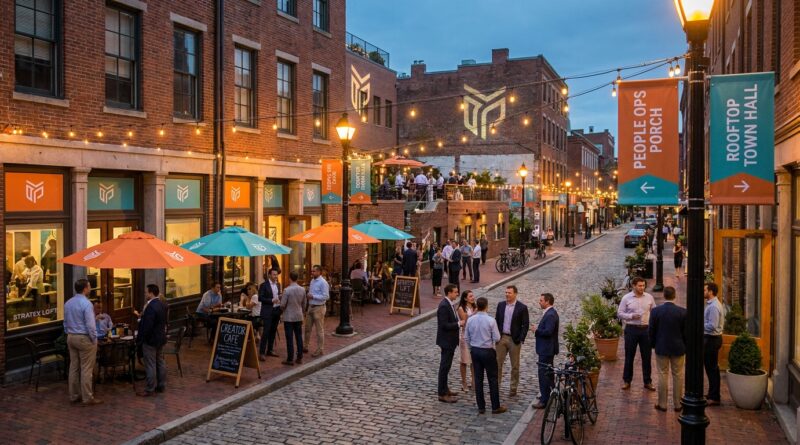
From Offsite To Micro‑Neighborhood Retreat: Why 2026’s Smartest Teams Now Take Over One City Block Instead Of One Hotel Ballroom
You can feel when a retreat has been assembled from a tired template. Same airport transfer. Same lobby bar. Same ballroom with black pipe-and-drape trying its best to look exciting. Your team notices it too, even if they are polite about it. After the pandemic, people got a lot more sensitive to forced togetherness and a lot less impressed by generic “experience packages.” They want a reason to travel that feels human, local, and worth the time away from home.
That is why one of the smartest post pandemic corporate retreat ideas 2026 has produced is the micro-neighborhood retreat. Instead of trapping everyone inside one resort, you take over a walkable patch of a city for two or three days. Breakfast at a café. Strategy in a small theater or studio. Team dinners in local restaurants. Coffee chats in courtyards and bookstores. Done right, it feels less like attending an event and more like briefly belonging to a place. Better still, it can be easier on the budget and far more effective at getting people to actually meet.
⚡ In a Hurry? Key Takeaways
- A micro-neighborhood retreat swaps one big hotel venue for several nearby local spaces, giving teams a more memorable and more grounded experience.
- Start by choosing a walkable district with hotels, food, meeting spaces, and evening options all within 10 to 15 minutes on foot.
- This format can cut waste, reduce production bloat, and create stronger cross-team mixing if logistics, signage, and timing are kept simple.
Why the hotel ballroom retreat is losing its grip
For years, the classic offsite formula made sense. One property. One contract. One AV package. One point of contact. It was neat and familiar.
It is also wearing people out.
Employees now expect more than a few breakout rooms and a buffet lunch. Finance teams want proof that the spend led to something real. Leadership wants culture, collaboration, and momentum. The old model often gives you cost, sameness, and a handful of photos for Slack.
The micro-neighborhood model works because it fixes a very basic problem. People connect better when the setting feels alive. Movement matters. Choice matters. A sense of place matters. If your team spends two days walking the same carpeted hallway, they are not exactly going to come back inspired.
What a micro-neighborhood retreat actually is
Think of it as a temporary company village.
You pick a compact area, usually a few blocks in a city or small town district, and spread the retreat across multiple nearby venues. The goal is not to make things complicated. It is to make them feel natural.
The basic setup
A good micro-neighborhood retreat usually includes:
- One anchor hotel, or two nearby hotels, for most guest rooms
- One main gathering space for all-hands sessions
- Several smaller rooms for workshops and team breakouts
- Casual food and coffee spots people can walk to
- One or two evening venues that feel local, not staged
The point is proximity. If people need buses every 20 minutes, you lose the magic. If they can step outside, walk five minutes, and bump into a colleague from another team on the way to lunch, you are onto something.
Why this is one of the best post pandemic corporate retreat ideas 2026 planners can use
Hybrid work changed the value of being together. The office is no longer where everyone naturally overlaps. For many teams, in-person time is now rare, expensive, and loaded with expectations.
That means retreats need to do more than deliver presentations. They need to create what remote work struggles to create by itself. Serendipity. Shared memory. Informal trust.
A neighborhood retreat is surprisingly good at this because it creates repeated small collisions. People walk together. They grab coffee. They discover a bookstore or bakery between sessions. They talk on the sidewalk after dinner instead of disappearing into elevators.
That kind of contact may sound minor, but it is often where the useful stuff happens.
How to choose the right neighborhood
This is where many planners either make the event brilliant or quietly sabotage it.
Look for walkability first
Do not start with the prettiest district. Start with the easiest one to move through on foot.
Your ideal neighborhood has:
- Safe, well-lit streets
- Short walking distances between venues
- Plenty of food options
- Weather backup options nearby
- Clear landmarks so nobody gets lost
If guests need maps that look like treasure hunts, the area is too spread out.
Make sure it has different kinds of spaces
You need contrast. A theater or gallery for your kickoff. A restaurant with private dining for leadership dinners. A studio or loft for workshops. A patio or café for slower moments.
Using local spaces is part of the appeal. It also helps avoid the expensive trap of building a fake atmosphere inside one bland room.
Check the noise and flow
A district can be charming and still be wrong for your retreat. Visit it at the same time of day your event would happen. Is traffic loud? Are sidewalks clogged? Does the area get rowdy at night? Can 150 people realistically move around without creating a mess?
Little details become big headaches when repeated over three days.
How to choreograph movement so people actually meet
This is the part most people underestimate. The neighborhood is the stage, but movement is the script.
Give every walk a purpose
Do not move people around just because you can. Shift venues when the change helps the energy.
For example:
- Morning strategy session in one shared space
- Midday breakouts split across two or three nearby rooms
- Lunch in rotating small groups at different local spots
- Late afternoon open time with optional guided meetups
- Evening dinner that recombines teams
That pattern creates variety without chaos.
Mix people on purpose
If everyone stays with their own department, you have not built a retreat. You have built travel.
Use small-group prompts, assigned lunch pairings, neighborhood scavenger tasks, or rotating workshop tables. Keep it light. Nobody wants corporate speed dating. But a little structure helps people cross the usual lines.
Protect breathing room
Not every minute needs a session. In fact, overscheduling is one of the fastest ways to ruin a retreat.
If your team is exhausted, read From Offsite To Nervous-System Reset Retreat: Why 2026’s Smartest Teams Now Trade Agendas For Actual Recovery. It makes a strong case for giving people actual downtime instead of filling every gap with “engagement.” That same thinking works beautifully in a neighborhood format. People need room to wander, talk, and reset.
How to keep costs and logistics sane
This is where planners get nervous. More venues sounds like more complexity. Sometimes it is. But not always.
Use one anchor contract strategy
Keep sleeping rooms concentrated in one main hotel if possible. That gives you a clear home base for arrivals, guest support, and last-minute changes. Then add nearby venues for programming.
You are not replacing structure. You are keeping structure where it matters and adding texture where it helps.
Work with existing setups
A local cinema already has seating. A restaurant already has ambiance. A coworking space already has decent Wi-Fi and breakout furniture. Use places that come with their own function built in.
This cuts decor costs and reduces setup time.
Keep AV modest
Not every room needs a giant screen and full stage lighting. Most breakout sessions are better with a clean monitor, strong audio, and one person who knows how the input cable works.
Spend where people notice. Sound quality. Signage. Good food. Reliable transport for arrivals and departures. Not six uplights in a converted warehouse.
Build a weather backup from day one
If part of the retreat depends on patios, courtyards, or walking routes, have Plan B locked before guests arrive. Rain turns charming into stressful very quickly.
Good planners do not hope the forecast behaves. They route around it.
What guests remember, and what they do not
People rarely remember your slide templates. They do remember the feeling of the event.
They remember:
- The café where they had an honest conversation with a teammate
- The local dinner that did not feel corporate
- The short walks that gave their brains a break
- The sense that the company made an effort to choose a place with personality
They do not remember whether breakout room C had chair covers.
That is the hidden strength of this model. It feels thoughtful without needing to feel extravagant.
Common mistakes to avoid
Trying to “own” too large an area
One city block is a metaphor for tight concentration, not a dare. If your venues are scattered across a district, people will spend the retreat navigating instead of connecting.
Choosing trendy over practical
A cool neighborhood that lacks enough restrooms, seating, or indoor options will punish you later.
Ignoring accessibility
Walkable for some is not walkable for all. Check curb cuts, elevator access, step-free routes, hearing support, and comfortable seating options. If the retreat only works for the fittest attendees, it is not well planned.
Forgetting the local community
You are borrowing a neighborhood, not invading it. Respect noise limits. Spread business among local operators. Be clear with guests about behavior. A retreat should feel welcome, not disruptive.
A simple planning framework
If you want a clean way to start, use this four-part filter:
1. Sleep
Where are people staying, and how easy is it to get them checked in and supported?
2. Gather
Where does the full group come together for shared moments?
3. Split
Where can smaller groups work, talk, and move without bottlenecks?
4. Drift
Where can people casually spend time between official moments?
If a neighborhood handles all four within a short walk, it is a serious contender.
At a Glance: Comparison
| Feature/Aspect | Details | Verdict |
|---|---|---|
| Traditional hotel retreat | Simple contracting and logistics, but often repetitive, isolated, and low on local character. | Easy to run, harder to make memorable. |
| Micro-neighborhood retreat | Uses several nearby venues in a walkable area to create variety, better mixing, and a stronger sense of place. | Best choice for teams that want culture payoff without bloated production. |
| Large destination resort experience | Can feel premium, but travel, staging, and add-on costs rise fast, and the setting may still feel generic. | Works for big budgets, less ideal for teams seeking freshness and efficiency. |
Conclusion
Planners are getting squeezed from every direction right now. Employees want something fresher than another hotel package. Finance leaders want every travel dollar to make sense. Executives still want a visible culture return from getting people in the same place. That is exactly why the micro-neighborhood retreat is catching on. It keeps travel and production lean by concentrating everything inside a walkable radius. It uses real local venues instead of expensive event theater. And it gives your team a retreat that feels like a small city curated just for them, not a beige conference with nicer snacks. In a work world where hybrid schedules have made true overlap rare, turning one neighborhood into your company’s temporary home base for a couple of days can create the kind of bump-into-you energy remote teams have been missing. Pick the area carefully, keep the movement simple, respect the local place, and you can give people that wonderful reaction every planner wants to hear. Wait, did we just take over this whole block?