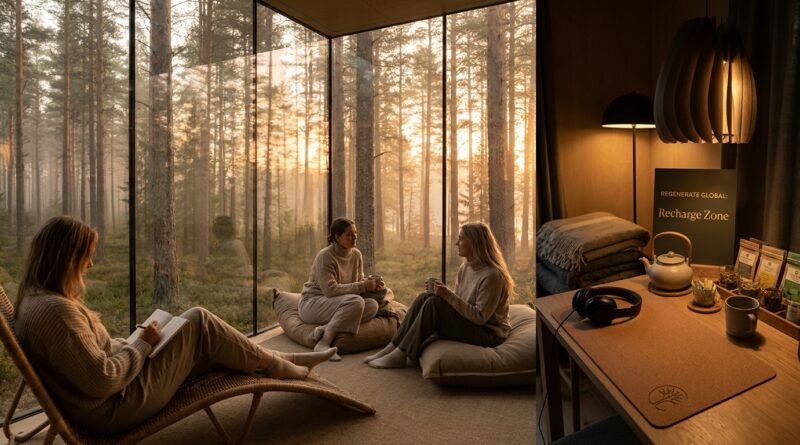
From Offsite To Nervous‑System Retreat: Why 2026’s Smartest Teams Now Design For Burnout Recovery, Not Just Team Bonding
Your team is not being difficult. They are tired. Really tired. That matters, because the old offsite formula, packed agenda, back-to-back workshops, late dinners, and one awkward trust exercise too many, now lands very differently than it did a few years ago. People are showing up with post-pandemic stress still sitting in their bodies, hybrid work fatigue in full swing, and calendars that never seem to switch off. So when a retreat feels like a mini conference in nicer scenery, it does not restore anyone. It just moves the exhaustion to a different zip code. The smartest teams in 2026 are finally admitting this. They are designing retreats for burnout recovery first, and team bonding second. That shift is not soft or indulgent. It is practical. If people leave calmer, clearer, and less fried than when they arrived, the retreat has done its job. If they leave needing a recovery day from the recovery event, something went wrong.
⚡ In a Hurry? Key Takeaways
- Teams planning a post pandemic corporate retreat wellness burnout recovery program should treat the retreat as a reset for depleted people, not just a bonding exercise.
- Start with shorter sessions, built-in quiet time, optional activities, and recovery-friendly spaces instead of filling every hour.
- This is not about being lazy or lowering standards. It is about protecting energy, improving focus, and making the budget actually pay off after people go home.
Why the old offsite model is failing
For years, corporate retreats followed a simple script. Fly everyone in. Pack the schedule. Add keynote talks, strategy sessions, breakout groups, dinners, and maybe a ropes course. On paper, it looks productive.
In real life, many employees dread it.
That dread is the clue. It tells you the event is solving the wrong problem. Teams do still need connection. They still need alignment. But many people now need regulation before they can meaningfully connect with anyone.
When a nervous system is already overloaded, more stimulation is not energizing. It is draining. Loud music, cramped schedules, constant social contact, and pressure to perform “team spirit” can leave people feeling worse, not better.
What a nervous-system retreat actually means
This is not about turning your company retreat into a silent spa weekend. It is about designing an environment where people can downshift enough to think clearly, talk honestly, and return to work with more capacity than they had before.
A nervous-system-safe retreat usually has a few core traits.
Less content, better timing
Instead of six hours of presentations, think shorter blocks with real pauses between them. Twenty to forty-five minute sessions often work better than marathon workshops. People can only absorb so much before their brains stop cooperating.
Quiet is built into the plan
Quiet should not be treated like empty space that needs to be filled. It is part of the event design. That can mean solo walks, phone-free breaks, optional journaling time, or simply a two-hour stretch with nothing scheduled.
Choice replaces pressure
Not everyone restores in the same way. Some people want a group hike. Others want to sit alone with tea and stare at trees. A good retreat allows both. Optional programming often gets better engagement than forced fun ever did.
Psychological safety is not a buzzword
If you want honest discussion, people need to feel safe enough to speak without being punished, embarrassed, or pushed too far. That means skilled facilitators, clear boundaries, and no surprise vulnerability ambushes disguised as “sharing exercises.”
Why this shift is happening now
The demand is not coming out of nowhere. Across wellness travel, glamping, and leadership retreat planning, the same pattern keeps showing up. People want rest that feels real. They want experiences that help them recover, not just perform wellness for a weekend.
That is why the best retreat planners are paying closer attention to sleep, sensory load, food quality, movement, and emotional safety. It is the same broader trend behind niche retreat formats too. For example, some teams are even exploring health-driven programming such as From Offsite To Gut-Health Retreat: Why 2026’s Smartest Teams Now Put Microbiomes On The Agenda, which reflects a bigger shift away from generic bonding and toward recovery that people can actually feel.
How to plan a retreat that helps burnout recovery
You do not need a luxury wellness resort or a giant budget. You do need discipline. Most bad retreats are not bad because of the venue. They are bad because every empty minute gets stuffed with activity.
1. Cut the agenda by at least a third
This is the hardest step for many leaders. It also tends to be the most useful. If the schedule looks “efficient,” it is probably too full. Leave breathing room.
A good test is simple. If a delayed flight, an emotional conversation, or a long lunch would wreck the whole event, the plan is too tight.
2. Design for arrival energy, not ideal energy
Do not assume people arrive fresh and excited. Assume they arrive overstimulated, behind on work, and slightly guarded. Your first half-day should help them settle, not perform.
That might mean a gentle welcome, a short orientation, a calm meal, and one useful session. Not three workshops and a mandatory icebreaker at 8 p.m.
3. Create recovery spaces
This can be surprisingly simple. A quiet room with soft lighting. Outdoor seating away from the main group. A no-phone nook. A place where nobody is expected to network.
These spaces matter because some people need to step out for ten minutes so they can come back fully present. Without that option, they often stay physically present but mentally disappear.
4. Make some social time optional
One of the biggest mistakes at retreats is assuming every dinner, drink, and late-night activity must be mandatory for culture reasons. It does not.
When people can opt out without social penalty, they often trust the event more. Ironically, that trust makes them more willing to join in when they actually have the energy.
5. Choose facilitators who know how to read a room
A strong facilitator can tell when a group is overloaded, defensive, checked out, or ready to go deeper. A weak one plows ahead because the slide deck says so.
If your retreat includes reflection, conflict repair, or emotionally sensitive topics, use people trained in psychological safety. This is one area where winging it can do real damage.
6. Think about food, sleep, and sensory load
These are not side issues. They are part of the operating system.
If the food is heavy, the nights are late, the rooms are noisy, and the day starts at 7 a.m., your agenda is fighting biology. Recovery-friendly retreats tend to offer steady meals, decent sleep windows, natural light, movement, and fewer sensory overload moments.
What employees actually want from an offsite now
Most employees are not asking for luxury. They are asking for respect for their bandwidth.
They want fewer fake choices. Fewer performative bonding moments. Fewer days away that create more catch-up work than clarity.
They want a retreat that understands modern fatigue. That means the event should answer one quiet question people carry with them: “Will this leave me better than it found me?”
If the answer is yes, people stop seeing the retreat as a calendar hijack. They start seeing it as useful.
How leaders can defend the budget
This matters because many HR leaders, chiefs of staff, and culture teams are under pressure to prove that retreats are worth the money.
The old pitch was morale and collaboration. Those still matter, but they can sound vague in a tight budget cycle.
The stronger argument now is this. A well-designed retreat supports recovery, focus, retention, and healthier team dynamics. It can reduce the hidden cost of burnout, disengagement, and presenteeism. It can also improve the quality of strategy work, because regulated people think more clearly than exhausted people.
That is a much better story than “we booked a nice place and hoped for chemistry.”
At a Glance: Comparison
| Feature/Aspect | Details | Verdict |
|---|---|---|
| Traditional offsite schedule | Packed sessions, mandatory socializing, little downtime, high stimulation from morning to night. | Often drains already exhausted teams. |
| Nervous-system retreat design | Shorter content blocks, decompression time, optional activities, quiet spaces, and safety-aware facilitation. | Better fit for burnout recovery and real connection. |
| Business value | Supports focus, honesty, retention, and post-retreat energy instead of just generating photos and buzz. | Easier to justify to leadership when tied to wellness and performance outcomes. |
Conclusion
The big lesson here is simple. People cannot bond well when they are running on fumes. Across wellness travel, glamping and retreat data, one pattern keeps popping up right now: demand for deeply restorative, nervous-system safe experiences is exploding, fueled by post-pandemic stress, remote work fatigue and a sharper focus on mental health. Yet most corporate retreats are still built like mini conferences, even as employees openly complain that they would rather have a day off than another offsite that hijacks their calendar and ignores how depleted they feel. A nervous-system retreat offers a more grounded answer. It reframes the retreat as a designed intervention for burnout, not a perk, and uses practical choices like shorter content blocks, structured decompression time, quiet recovery spaces and facilitators trained in psychological safety. That gives HR, chiefs of staff and culture leaders a clearer wellness and performance story to stand behind, while employees get something rarer and more valuable: an offsite that respects their bandwidth and still feels useful a week later.