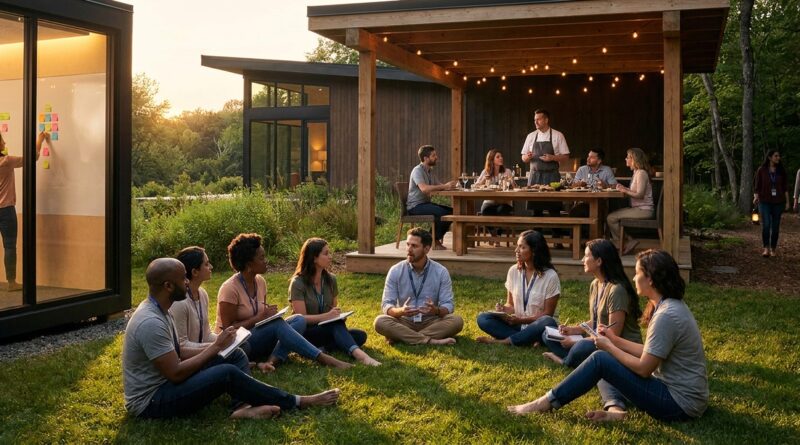
From Offsite To Micro‑Experience Retreat: Why 2026’s Smartest Teams Now Design Dozens Of Tiny Moments, Not One Big Agenda
Most retreat plans still look like they were copied from 2016. One big keynote. One forced bonding exercise. One dinner that runs too long. Then everyone heads home with a tote bag, a few blurry photos, and not much else. You can see why people are tired of it. Time away from home costs more now. Attention spans are thinner. Hybrid teams are already worn out from too many big, generic meetings that ask a lot and give back very little.
That is why the smartest planners are moving toward post pandemic corporate retreat micro experiences. Instead of betting the whole trip on one packed agenda, they design dozens of small moments with a clear job to do. A 20 minute fireside chat before breakfast. A quiet reset room between sessions. A two person walking meeting with a prompt card. A local tasting tied to company values. Tiny moments are easier to remember, easier to personalize, and far more likely to matter on Monday morning. The retreat stops being a block of programming and starts feeling like a series of useful, human experiences.
⚡ In a Hurry? Key Takeaways
- Teams remember small, well-timed moments better than one oversized retreat agenda.
- Start by replacing 3 to 5 long sessions with short, purpose-built micro experiences for connection, rest, and decision-making.
- This approach cuts burnout, respects different work styles, and gives HR and event teams clearer proof that the trip was worth the money.
Why the old offsite formula is wearing out
The classic offsite was built for a different time. People traveled more easily. Work stayed mostly in the office. And teams had more patience for all-day sessions in dim hotel ballrooms.
That is not the world most companies live in now.
Post-pandemic work changed what people need from time together. Some employees want face time because they feel disconnected. Others feel drained before the trip even starts because travel adds stress to an already full life. Parents, caregivers, introverts, new hires, and remote staff all arrive with different energy levels. A single agenda cannot serve all of them well.
That is the real shift. The retreat is no longer just a place to deliver information. It is a place to create specific moments that help people trust each other, solve one hard problem, recharge, and leave with a story they can actually remember.
What a micro-experience retreat really is
A micro-experience is a small, intentional moment designed for one outcome.
Not ten outcomes. One.
Maybe it helps people meet across departments. Maybe it gives anxious attendees a soft landing. Maybe it helps managers hear what staff are not saying in formal meetings. Maybe it creates delight. Maybe it gives the team one shared memory that feels fresh instead of canned.
Think in moments, not blocks
A traditional planner might say, “We need a 90 minute culture session.”
A smarter planner asks, “What are the moments inside that session?”
- The first five minutes where people decide if this will be worth their time
- The prompt that gets two strangers talking honestly
- The pause that keeps the room from feeling overloaded
- The closing question that turns a nice chat into a real commitment
That is the difference. You are not selling one big session. You are building a sequence of smaller experiences that do distinct jobs.
Why 2026 teams prefer dozens of tiny moments
1. Attention is fragmented
People are used to moving between chat, calls, email, and home life all day. Whether we like it or not, long monologues often lose the room. Shorter experiences, with a clear purpose, fit how people process information now.
2. Personalization matters more
One employee wants high-energy group work. Another wants quiet reflection before speaking. Another only opens up in one-on-one conversation. Micro experiences let you offer different formats without making the retreat feel messy.
3. The trip has to justify the time away
When someone leaves family, pets, routines, and real work behind, the retreat has to feel worth it. Tiny, memorable moments make that easier. People may forget slide 43. They will remember the sunrise walk where they finally solved a team issue with their manager.
4. Small moments create better stories
Employer branding is not built from vague claims like “we value culture.” It is built from moments people describe to others. The handwritten welcome note. The local guide who tied the city to the company mission. The silent reflection room that made the trip humane. Those details travel well in recruiting and internal comms.
What these micro experiences look like in real life
They do not have to be expensive. They do have to be intentional.
Arrival moments
- A calm check-in with choice of fast lane or guided welcome
- Room drops tailored to travel style, such as sleep kits, snack packs, or neighborhood maps
- A 15 minute “land and exhale” lounge with tea, soft music, and no networking pressure
Connection moments
- Prompt cards at breakfast tables
- Short pair walks instead of forced icebreakers
- Cross-team “show me what you actually do” demos in 10 minute rounds
Reset moments
- Device-free quiet corners
- Optional stretching or breathwork between strategy sessions
- A protected hour with no content at all
Meaning moments
- A founder Q&A in a smaller room instead of a distant stage talk
- A local maker, chef, or artist connecting place to company values
- A team exercise where each group defines one behavior they will stop, start, and keep
Memory moments
- A closing ritual where people write one note to their future team
- A photo booth is fine, but a better move is a story booth where people record one insight from the trip
- A post-retreat digital recap built around moments, not just slides
How to design 12 to 20 micro experiences without making the retreat chaotic
This is where some teams get nervous. They hear “many small moments” and imagine a schedule that feels scattered. It should be the opposite. More thoughtful. More controlled.
Start with four retreat jobs
Pick the main jobs your retreat needs to do. For example:
- Reconnect the team
- Make one strategic decision
- Reduce burnout
- Create stories worth sharing after the trip
Now every micro experience must support one of those jobs. If it does not, cut it.
Use a simple mix
A good retreat usually needs a mix of:
- High energy moments
- Quiet moments
- Structured moments
- Free choice moments
- Group moments
- One-on-one moments
If your agenda is all one type, people fade out.
Keep each moment easy to explain
If attendees cannot understand why something is happening in one sentence, it probably needs work.
Good example: “This 20 minute walk pairs you with someone from another team to trade one thing your department needs and one thing it can offer.”
That is clear. Useful. Human.
Build around energy, not just time
Most retreat schedules are organized by the clock. Better schedules are organized by energy. Ask what the group will feel at 8:30 a.m., 2:15 p.m., and after dinner. Then design moments that fit those realities.
This is also where sensory design matters. If you want to go deeper on that side of planning, From Offsite To Multi-Sensory Retreat: Why 2026’s Smartest Teams Now Design Gatherings Around Space, Sound And Light is worth a read. Space, sound, and lighting shape whether a moment feels restorative or draining.
What retreat owners and venues should change right now
If you run a venue, hotel, or retreat property, this trend matters to you too.
Clients are getting less excited by the phrase “three-day package.” They want flexibility. They want modular options. They want proof that your setting can support different styles of interaction, not just a conference room and buffet line.
Sell modules, not just nights
Instead of pitching a retreat as rooms plus meeting space, pitch a menu of moments:
- Arrival decompression setup
- Garden one-on-one routes with prompt signage
- Evening reflection fire circle
- Local host-led tasting with a business storytelling angle
- Quiet workspace pods for attendees who need a reset
That changes the conversation. You stop looking like a generic venue and start looking like a partner in culture design.
Give planners language they can reuse internally
HR leaders often need to justify retreat spending to finance and leadership. Help them. Name your experiences by business outcome, not just by hospitality feature.
- Not “welcome basket”
- Better: “arrival recovery kit for travel fatigue and faster engagement”
- Not “nature walk”
- Better: “paired reflection route for cross-functional trust building”
That language makes the value easier to defend.
How HR leaders can test this without rebuilding the whole retreat
You do not need to throw out your entire offsite model in one go.
Try a 20 percent rule
Keep 80 percent of your existing structure if you must. Then redesign 20 percent of the agenda as micro experiences.
Replace:
- One 60 minute panel with three 15 minute fireside chats
- One giant networking hour with table prompts and pair rotations
- One packed afternoon with a reset block and two optional tracks
Measure the right things
Do not just ask, “Did you like the retreat?”
Ask:
- Which three moments do you still remember a week later?
- Where did you have the most useful conversation?
- When did you feel most included?
- What felt unnecessary?
- What changed in how you see your team?
That will tell you far more than a generic satisfaction score.
The big mistake to avoid
Micro experiences are not random little add-ons. They are not swag with a better label. They are not a TikTok-style retreat with constant novelty.
The goal is not “more stuff.” The goal is better design.
Each moment should have a reason to exist. If you pack in too many gimmicks, people will feel manipulated. If you choose moments carefully, they will feel seen.
At a Glance: Comparison
| Feature/Aspect | Details | Verdict |
|---|---|---|
| Traditional offsite agenda | Built around a few long sessions, one keynote, and broad team-building activities with limited personalization. | Still workable for some groups, but often feels heavy and forgettable. |
| Micro-experience retreat | Uses 12 to 20 short, intentional moments for connection, rest, strategy, and memory-making across different work styles. | Best fit for post-pandemic teams that need flexibility, clarity, and stronger engagement. |
| Venue and planner value | Modular experiences give HR leaders clearer ROI stories and help venues stand out from generic hotel packages. | High value, especially for boutique properties and culture-focused facilitators. |
Conclusion
The shift to post pandemic corporate retreat micro experiences is really a shift toward respect. Respect for people’s time, energy, attention, and different ways of showing up. That is why this matters right now for the Corporate Event community. It turns fuzzy trends like hybrid work fatigue, micro-stays, and experience-led travel into something practical you can act on this quarter. Instead of cramming more into a retreat, you design better moments inside it. That helps reduce burnout, makes the trip feel more personal, and gives HR, recruiting, and internal comms better stories to tell afterward. For venues and facilitators, it is also a smarter way to stand apart. You are not just selling a retreat. You are selling 12 to 20 precise culture moments that people can still point to months later and say, “that changed something for us.”