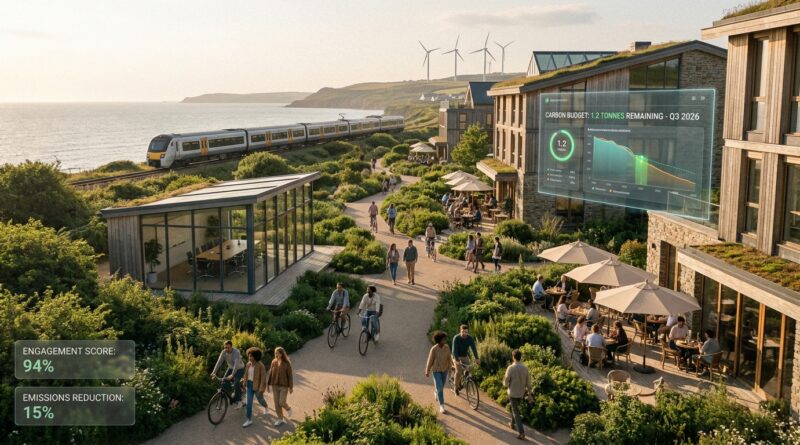
From Offsite To Carbon-Budget Retreat: Why 2026’s Smartest Teams Now Design Gatherings Around Emissions, Not Just Expenses
You got the green light for a team retreat, and then the real headache started. Flights are pricier than anyone budgeted for. Hotels still think it is peak season forever. Finance wants a smaller number. Sustainability wants fewer air miles. Your CEO wants something memorable, not limp sandwiches in a business park meeting room. If that sounds familiar, you are looking at one of the biggest post pandemic sustainable corporate retreat trends 2026 has brought into focus. Smart teams are no longer planning gatherings by asking, “What can we afford?” and then adding a few green extras. They are starting with two budgets at once. Money and carbon. That shift changes everything, from where you meet to how long you stay, who travels, what gets served, and whether the event survives approval at all. The good news is this does not have to make your retreat dull. In many cases, it forces better choices, not worse ones.
⚡ In a Hurry? Key Takeaways
- Teams in 2026 are protecting retreats by setting a carbon budget alongside the cash budget from day one.
- Start by cutting long-haul flights, choosing rail-friendly locations, and designing fewer but more meaningful in-person days.
- This approach helps keep finance, sustainability, and leadership aligned while making ESG reporting much easier.
Why carbon is now part of the retreat brief
For years, retreat planning was mostly a money question. Could you afford the venue, the travel, the food, and maybe one impressive group activity? That model is breaking down.
Now many companies have emissions targets, supplier standards, and reporting duties that turn travel into a board-level issue. Business travel bounced back after the pandemic, but so did scrutiny. A retreat can be good for culture and still look bad on a spreadsheet if it racks up a big emissions total.
That is why the smartest planners are treating carbon as a hard limit, not a nice idea. If the retreat can stay within both the spend cap and the emissions cap, it moves forward. If not, it gets redesigned before it gets killed.
What a carbon-budget retreat actually means
It sounds more complicated than it is. A carbon-budget retreat means you set a maximum emissions allowance for the event the same way you set a maximum spend.
Think of it like this
You may decide the retreat can cost up to $120,000 and produce no more than, say, 18 tonnes of CO2e. That gives you a planning box. Every decision goes inside it.
Flights, trains, hotel nights, catering, local transport, room setup, printed materials, and even swag all count. Some matter much more than others. Air travel is usually the giant one. Branded notebooks are not.
The big shift
Old style planning picked the dream location first. New style planning starts with attendee geography. Where do people live? Who can come by train? Who would need a short flight? Is there a place that cuts total travel by 30 or 40 percent before you even negotiate with a venue?
That is not less creative. It is just smarter.
Why this trend is growing so fast in 2026
Three things are colliding at once.
1. Travel is still expensive
Post-pandemic pricing has stayed stubborn in many markets. Group airfare, hotel blocks, and event services all rose faster than many annual planning models expected. Retreats that looked normal in 2019 can look extravagant in 2026.
2. Emissions reporting is getting more real
Even companies that are not legally required to report every detail are feeling pressure from clients, investors, and staff. A retreat is visible. People ask questions. “Why did 80 people fly across the continent for two days?” is harder to answer than it used to be.
3. Employees still want face time
This is the part some executives miss. People are not rejecting in-person gatherings. They are rejecting lazy ones. If a team is going to travel, they want a reason. Better connection. Better planning. Better energy. Not a replay of Zoom in a hotel ballroom.
Start with the emissions math, not the mood board
If you want to keep a retreat alive, do the rough carbon math early. Very early.
A simple planning order that works
First, map where attendees are coming from.
Second, estimate travel emissions by mode. Air, rail, coach, car.
Third, compare three location options, not one.
Fourth, test shorter stays with denser agendas.
Fifth, build the experience layer once you know what room you have left in both budgets.
This stops a common disaster. People fall in love with a venue, then discover the travel footprint is so high that the retreat becomes politically impossible inside the company.
The biggest carbon cuts usually come from five choices
1. Pick the location by attendee center of gravity
Do not ask, “What is the coolest destination?” Ask, “What location minimizes total travel impact for this specific group?”
If 70 percent of your team is within a four-hour rail trip of one city, that city deserves serious attention. It may not feel glamorous at first. But a great local venue, strong design, and thoughtful programming can create far more impact than a beach resort reached by three connecting flights.
2. Replace some flights with rail
If you are planning in Europe or in rail-friendly parts of Asia, this can change the whole budget. Rail is often easier on both emissions and stress. Less airport time. Fewer baggage dramas. More reliable arrival windows for groups.
In North America, rail is less universal, but regional coach and direct ground transport can still beat short-haul flights for nearby teams.
3. Go fewer times, but do it better
One strong annual retreat can beat three smaller scattered meetups. That sounds obvious, but many companies drift into extra travel because no one owns the full picture.
If your people are already traveling for sales kickoffs, leadership summits, or onboarding, combine objectives where possible.
4. Stay longer, not just bigger
This sounds backward, but a slightly longer retreat can make more sense if it replaces multiple other trips. Two and a half well-designed days may create enough value to cancel later travel.
5. Cut waste that does not add meaning
Printed packs, unnecessary merch, heavy decor installs, single-use signage, and overbuilt catering rarely make the retreat memorable. People remember the conversations, the pace, the food quality, and whether the whole thing felt worth leaving home for.
How to keep the “wow” without the guilt
This is the part CEOs worry about. If we cut flights and flashy extras, won’t the retreat feel cheap?
Not if you design the right things.
Spend on high-memory moments
A private dinner in a striking local space. A brilliant moderator. A hands-on workshop with a local maker. An early-morning nature session that actually wakes people up. A chef-led meal using regional ingredients. Those often land better than expensive generic entertainment.
And if wellness is part of your brief, there is room to connect these trends. Teams looking at food, energy, and recovery may also like From Offsite To Gut-Health Retreat: Why 2026’s Smartest Teams Now Put Microbiomes On The Agenda, which shows how planners are rethinking what “healthy retreat” really means.
Use place, not spectacle
The best low-carbon retreats tend to feel rooted. They use local guides, local food, walkable neighborhoods, and venues with character. That creates a sense of occasion without shipping in half a warehouse.
Make attendance more intentional
Not every session needs every person in the room. If a retreat has one flagship in-person core and a few satellite or remote touchpoints, that is not failure. It is design. The trick is to be honest about who truly benefits from traveling.
A practical way to pitch this internally
If you need approval, do not frame sustainability as sacrifice. Frame it as risk control and smarter planning.
What finance wants to hear
We reduced exposure to volatile airfare and hotel rates.
We compared three location models.
We are spending on moments that improve retention, planning quality, and cross-team trust.
What sustainability wants to hear
We set a carbon cap at the start.
We selected the destination based on travel footprint.
We prioritized rail and direct routes where possible.
We can report the event footprint clearly.
What the CEO wants to hear
This will still feel special.
People will actually remember it.
It supports culture without creating a headline-sized contradiction with our public goals.
A sample framework for planning a carbon-budget retreat
Step 1: Set two hard budgets
One for money. One for carbon. Get both approved upfront.
Step 2: Build a travel-first model
Estimate emissions and cost by attendee location before choosing a venue.
Step 3: Score locations on four factors
Total travel footprint. Total travel cost. Venue quality. Experience potential.
Step 4: Design the agenda around the trip being worth it
If people travel, make sure there are live-only moments. Strategy work, trust-building sessions, collaborative design, and meaningful social time.
Step 5: Track and report afterward
Capture the final spend and estimated emissions. This turns your next approval cycle from opinion into evidence.
Common mistakes that make “sustainable” retreats fail
Buying offsets and calling it done
Offsets may have a role, but they should come after reduction, not instead of it. If the retreat requires huge long-haul travel and then gets “fixed” with offsets, many staff and stakeholders will see right through it.
Choosing a green venue that nobody can reach efficiently
A hotel with a great sustainability badge does not automatically create a lower-impact event if everyone has to take two flights to get there.
Cutting cost in ways people actually feel
Bad food, bad beds, painful transport, and overstuffed agendas create false savings. People remember the friction and wonder why they came. Cut emissions and waste first. Do not cut the human basics.
Forgetting the story
If you made deliberate choices, say so. Staff often appreciate knowing why the company picked a rail-accessible city, local catering, or reusable event materials. A retreat feels more coherent when people understand the thinking behind it.
At a Glance: Comparison
| Feature/Aspect | Details | Verdict |
|---|---|---|
| Location strategy | Destination chosen by attendee travel footprint, not just prestige or weather | Best starting point for cutting both cost and emissions |
| Travel mode | Rail, coach, and direct regional options replace as many short-haul flights as possible | Usually the biggest practical carbon win |
| Experience design | Spend shifts from flashy extras to memorable local food, strong facilitation, and meaningful in-person moments | Keeps the retreat special without looking wasteful |
Conclusion
The retreat is not dead. It just has a new set of rules. In the middle of post-pandemic travel inflation and tighter emissions scrutiny, the safest way to protect in-person gatherings is to plan them around two limits at once. Dollars and carbon. That is what makes this one of the most important post pandemic sustainable corporate retreat trends 2026 has pushed into the spotlight. Event leads now have to defend the footprint as well as the spend, and that can feel exhausting. But it is also a chance to build better retreats. More focused. More honest. More memorable. If you budget carbon alongside cash from the start, you give your event a much better chance of surviving internal review, fitting into ESG reporting, and proving that a climate-credible retreat does not have to be boring. In many cases, it ends up being sharper, calmer, and far more worth the trip.