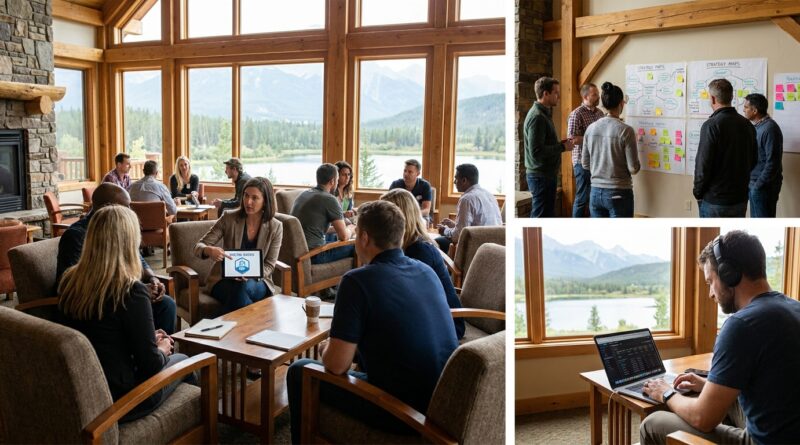
From Offsite To Skill-Stamped Retreat: Why 2026’s Smartest Teams Now Bring Home A New Certification, Not Just A T‑Shirt
You can feel the problem as soon as the retreat photos hit Slack. Everyone looks happy. The venue was gorgeous. The dinners were great. Then Monday arrives, the CFO asks what the company actually got for the six-figure spend, and the room goes quiet. That is the real headache with many offsites right now. They create a nice memory, but not a clean business case. Employees feel it too. They do not just want another branded hoodie and a group selfie. They want something that helps their career, especially now that expectations around AI, hybrid management, and resilience keep climbing. That is why one of the biggest post pandemic corporate retreat trends is the move toward upskilling and micro credentials. The smartest teams in 2026 are not replacing connection with coursework. They are mixing both. The retreat still builds trust, but it also sends people home with a skill stamp, a badge, or a certification they can actually use.
⚡ In a Hurry? Key Takeaways
- A skill-stamped retreat gives companies something old-style offsites often cannot, measurable learning outcomes tied to real business goals.
- Start with one or two micro credentials in areas like AI literacy, hybrid leadership, or workplace well-being instead of trying to certify everyone in everything.
- This approach adds value for both finance and staff. Leaders get a clearer ROI story, and employees get a portable career win that lasts longer than the trip.
Why the classic offsite is getting harder to defend
For years, the usual formula was simple. Fly everyone somewhere nice. Book a keynote. Add team-building activities, dinners, and maybe a wellness session. Hope people return more connected than before.
Sometimes that still works. But budgets are tighter now. Teams are more distributed. Executives are under pressure to show direct value for every big spend. If your retreat costs as much as a small department’s annual software budget, “morale” on its own may not cut it.
That does not mean culture is unimportant. It means culture has to carry a receipt.
What a skill-stamped retreat actually looks like
Think of it as an offsite with a built-in outcome. Not just inspiration. Not just bonding. A real learning result that can be assessed, documented, and recognized.
That recognition might be a micro credential, a digital badge, a short certification, or a verified completion from a training partner. The key is that employees leave with proof they learned something specific.
Common topics that fit this model
The strongest retreat certifications are not random. They connect to pain points the business already has.
- AI literacy for non-technical teams
- Prompt writing and safe AI use
- Hybrid leadership for new managers
- Cross-functional decision-making
- Mental health first response or well-being practices
- Cybersecurity awareness for distributed teams
- Inclusive communication and meeting design
Notice what these have in common. They are practical. They matter now. And they are broad enough to benefit a mixed group.
Why micro credentials fit this moment
Full certifications can be expensive, time-consuming, and too narrow for a retreat setting. Micro credentials are different. They are smaller, faster, and easier to stack over time. That makes them a natural fit for an offsite that lasts two or three days.
For employers, micro credentials are easier to map to business needs. For employees, they feel real because they can be added to a LinkedIn profile, internal talent system, or performance review.
This is a big reason post pandemic corporate retreat trends are shifting in this direction. Companies still want the human side of being together in one place. They just also want a better answer to the question, “What changed because we did this?”
The real business case, explained in plain English
If you are pitching this idea internally, keep it simple. A skill-stamped retreat works because it turns a soft benefit into a mixed benefit. You still get the trust-building and relationship repair that happen when people spend real time together. But you also get a visible, trackable asset.
What the CFO sees
The finance team sees less “perk” and more “capability building.” That matters. If a retreat helps 80 managers complete a hybrid leadership credential, you can tie that to manager quality, retention, engagement, and even fewer communication failures across teams.
What HR sees
HR gets a stronger development story. Instead of saying the company values learning, it can point to a program employees completed and carried home with them.
What employees see
Employees see that the company is investing in them, not just entertaining them. That is a different signal. It says, “We want you to grow here, and we are willing to back that up.”
How to design one without making it feel like school on a beach
This is where many companies get nervous. They hear “certification” and picture people trapped in a ballroom doing quizzes while a beautiful coastline sits outside.
Do not do that.
A skill-stamped retreat works best when learning is woven into the experience, not dropped on top of it like a punishment.
Use a 60/40 split
A good rule of thumb is 60 percent shared experiences and 40 percent structured learning. That keeps the retreat feeling like a retreat while still producing a clear result.
Make the content applied, not abstract
If the topic is AI literacy, do not just teach concepts. Have teams build prompts for their real jobs, review risks, and create a simple playbook they can use next week.
If the topic is hybrid leadership, use role-play, case studies, and live problem-solving based on actual management issues inside the company.
Assess lightly but honestly
The credential should mean something. That does not require a brutal exam. It can be a short assessment, peer-reviewed team project, facilitator sign-off, or practical demonstration. The point is that people earn it.
End with something visible
Issue a digital badge, certificate, or internal credential right away. Give employees a way to share it and managers a way to record it in skills systems.
What to avoid
There are a few traps here.
Do not pick a topic just because it sounds trendy
If your retreat theme is AI but nobody in the company has clear use cases, the program will feel forced. Start with the problem, not the buzzword.
Do not overload the agenda
Trying to fit three credentials into one retreat is how you end up with tired people who remember none of it.
Do not fake the measurement
People can tell when a “certification” is really just attendance with nicer graphics. If it is skill-stamped, there should be some evidence of skill.
How to measure success after everyone gets home
This is where the model earns its keep. You are no longer stuck with vague feedback like “people loved it.”
Instead, track a few concrete measures:
- Completion rate for the credential
- Employee confidence before and after the retreat
- Manager-reported behavior change after 30 and 90 days
- Use of the new skill in live projects
- Retention or internal mobility among attendees
- Follow-on participation in related learning programs
You do not need a giant analytics operation. Even a simple before-and-after framework gives leaders more than they usually have after a traditional offsite.
Why this matters even more in hybrid work
Remote and hybrid teams often struggle with two things at once. They need stronger connection, and they need faster skill growth. Old retreat models usually focused on the first problem. Online training libraries focus on the second. A skill-stamped retreat can cover both.
That is the appeal. You are not asking people to choose between culture and capability. You are saying the company should be mature enough to build both at the same time.
At a Glance: Comparison
| Feature/Aspect | Details | Verdict |
|---|---|---|
| Traditional offsite | Strong on bonding and morale, weak on proof of business impact once the trip is over. | Still useful, but harder to justify on its own in a tighter budget climate. |
| Skill-stamped retreat | Combines in-person connection with structured learning, assessment, and a micro credential or certification. | Best fit for teams that need culture gains and a clear ROI story. |
| Fully online training | Efficient and cheaper, but often low on engagement, shared memory, and relationship building. | Good for ongoing learning, but not a full replacement for in-person team development. |
Conclusion
The old retreat promise was simple. Get people together and hope good things follow. In 2026, that is no longer enough for many companies. Post-pandemic, budgets are tight and patience for performative offsites is thin, yet the pressure to upskill around AI, hybrid leadership and well-being keeps rising. A skill-stamped retreat gives you a better answer. It turns travel from a nice extra into a visible talent asset. Leaders get a cleaner ROI story. Employees get a career boost they can actually show. And your culture gets something more concrete than a slide in the HR deck. If you are going to bring people together, make the time count twice. Once for connection, and once for growth.