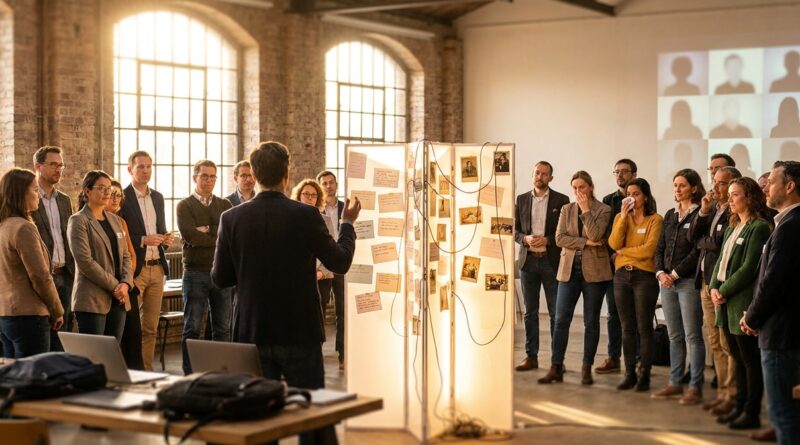
From Offsite To Presence-First Retreat: Why 2026’s Smartest Teams Now Design Gatherings Around One Unmissable Moment In The Room
You can feel it when a retreat is not really a retreat. People fly in, sit in a hotel ballroom, half-listen to slide decks they could have watched at home, then sneak looks at Slack under the table. It is expensive. It is tiring. And it leaves leaders wondering why all that effort still felt flat. That frustration is real, especially now, when hybrid work is normal and every travel dollar has to earn its keep.
The smartest teams in 2026 are fixing that by changing the question. Instead of asking, “How do we fill two days?” they ask, “What is the one unmissable moment that must happen live?” That shift is what turns an ordinary offsite into a presence-first retreat. It cuts the filler, protects attention, and gives people a reason to be fully in the room. If the answer is strong enough, phones go down, side chats stop, and the gathering starts to feel worth the trip.
⚡ In a Hurry? Key Takeaways
- A post pandemic corporate retreat works best when it is built around one live moment that cannot be copied in Zoom or a recording.
- Trim status updates and generic presentations. Save in-person time for decision-making, trust-building, and shared experiences that need real human presence.
- This approach respects hybrid engagement and protects your budget, because you spend money on moments people will actually remember.
Why the old offsite formula is wearing out
For years, many retreats followed the same script. A keynote. Department updates. Breakouts. Dinner. Maybe a team-building activity that felt a little forced. That used to pass as enough.
Now it does not.
Employees know the difference between work that needs to happen live and work that is just being moved into a nicer room. If the agenda feels like a long meeting with better snacks, attention disappears fast. People mentally drift. Some physically stay, but emotionally leave.
That is the core problem with hybrid engagement right now. Teams want flexibility, but leaders also feel the relationship gap growing. They are both right. People do not want more mandatory face time for its own sake. They do want moments that create trust, clarity, and a sense that they are part of something real.
What a presence-first retreat actually means
A presence-first retreat starts with one simple rule. If a session would work almost as well on video, it should probably not be the centerpiece of your in-person gathering.
The goal is not to cram more content into the schedule. It is to design around one unmissable live moment, then build everything else to support it.
That “unmissable moment” could be:
A hard strategic choice the leadership team needs to make with live debate in the room.
A customer story or product reveal where emotional reaction matters.
A cross-functional workshop that only works when people sketch, argue, build, and react together.
A repair conversation after a rough season, where trust depends on tone, body language, and honesty.
This is also why some companies are moving closer to what I wrote about in From Offsite To Repair-The-Office Retreat: Why 2026’s Smartest Teams Now Use Retreats To Fix Return-To-Office Whiplash. In both cases, the retreat is not just a change of scenery. It is a tool for solving a real people problem.
How to spot filler before it drains the room
If you are planning a corporate retreat, here is a useful filter. Look at every agenda item and ask:
Could this be watched later?
If yes, make it pre-work or an async update.
Does this need live reaction?
If yes, it belongs in the room.
Will people remember this six months from now?
If not, it may not deserve precious retreat time.
This sounds obvious, but it is where most retreats go wrong. Leaders often spend heavily on the setting, then waste the schedule on content that does not need human presence.
The best design question to ask your team
Forget “How do we make it engaging?” for a minute. That is too vague to be useful.
Ask this instead:
What is the one thing that will only work live, with these exact people, in this exact place, at this exact moment in our story?
That question changes everything.
It pulls the team away from generic event planning and toward purposeful design. It also helps with post pandemic corporate retreat planning because it gives people a fair answer to the travel question. Why am I here? Because this part cannot happen any other way.
How to build a retreat around one live moment
1. Put the big moment at the center
Do not bury your most important live experience after eight hours of updates. Make it the heart of the retreat. Protect the time. Protect the energy around it.
2. Move everything possible out of the room
Pre-record updates. Send reading in advance. Use short digital briefings. Save the gathering for discussion, reaction, and connection.
3. Design for attention, not attendance
Being present is not the same as being there. Shorter sessions, clearer stakes, and stronger facilitation matter more than a packed agenda.
4. Make the moment participatory
People remember what they helped shape. If the key moment is just another presentation, you are leaving value on the table. Let people vote, debate, build, or decide.
5. Give the moment emotional weight
Memory is not built by logistics alone. Place, timing, story, and symbolism all help. The right room setup, the right host, and the right pacing can turn a meeting into something people talk about later.
Why this works better for hybrid teams
Hybrid work changed expectations. People have become much less patient with “just because” meetings. That is not laziness. It is pattern recognition.
When remote work handles routine communication perfectly well, in-person time has to do something extra. It has to create depth.
A presence-first retreat respects that reality. It does not fight flexibility. It uses it. The routine material stays remote. The meaningful work comes into the room. That is the sweet spot for hybrid engagement.
It also lowers resentment. Employees are more open to travel when they can see the purpose. Leaders get more value because people arrive expecting something specific and important, not two days of passive listening.
Common mistakes that quietly ruin the experience
Too much stage time
If executives talk at the group all day, people stop feeling included. Presence without participation is just an audience.
No clear emotional arc
Good retreats have rhythm. Tension, conversation, release, reflection. A flat agenda feels longer than it is.
Trying to make every minute “special”
If everything is framed as high-impact, nothing is. Pick your big moment and support it. Do not overproduce the whole event.
Ignoring the story your team is already living in
If morale is shaky, if return-to-office tension is still raw, or if trust between teams is thin, your retreat design has to deal with that honestly. Otherwise the event feels disconnected from real life.
What success looks like
A successful presence-first retreat does not mean every minute is magical. It means the right minute lands.
People leave saying things like:
“I get why we had to be there for that.”
“That conversation would never have happened on Zoom.”
“I finally understand where we are headed.”
“I feel closer to the team than I did before.”
That is a much better outcome than, “The hotel was nice.”
At a Glance: Comparison
| Feature/Aspect | Details | Verdict |
|---|---|---|
| Traditional offsite | Packed with updates, presentations, and long sessions that could have been sent ahead. | Easy to organize, but often low on real attention and memory value. |
| Presence-first retreat | Built around one live, high-stakes, high-connection moment that needs people in the room. | Best fit for post pandemic corporate retreat planning and stronger hybrid engagement. |
| Budget impact | Spends less on filler and more on the few touchpoints that actually justify travel. | Smarter use of money, time, and leadership energy. |
Conclusion
Right now, companies are caught in a very human tension. Employees want the freedom that hybrid work gives them. Executives want the closeness that comes from being together. A presence-first retreat is one of the few ideas that respects both. It trims the filler that remote tools already handle well, then puts your budget and focus into a few moments that truly need human presence. That is what makes the trip feel worth it. If you plan corporate events, this gives you a practical way forward. Stop asking how to make the offsite more engaging in general. Start asking what one moment can only happen live, with these people, in this place, right now. That is where the real value starts.