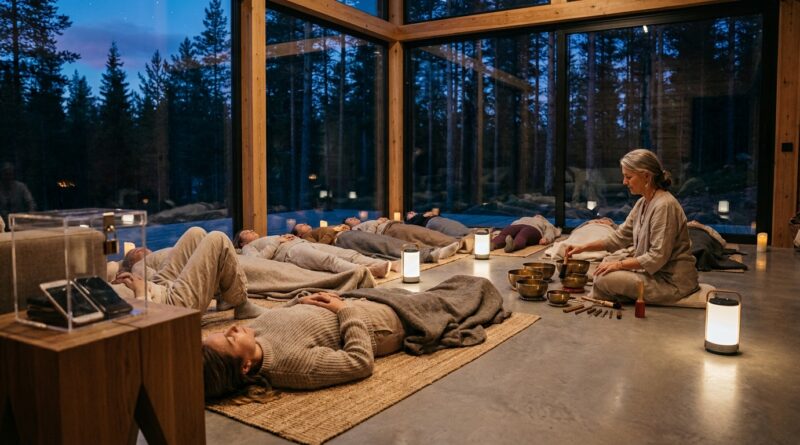
From Offsite To Nervous-System Reset Retreat: Why 2026’s Smartest Teams Now Trade Agendas For Actual Recovery
Your team is tired, and they probably are not saying the full truth out loud. They still show up on Zoom. They still answer Slack. They still sit through another “recharge” offsite with a packed agenda and forced fun by the pool. But plenty of employees are running on bad sleep, social overload, and that wired-but-exhausted feeling that never really goes away. That is why the post pandemic corporate retreat nervous system reset digital detox trend is catching on so fast in 2026. Companies are finally noticing that people do not need more keynote slides about resilience. They need an environment where their bodies can actually stand down. A real reset retreat trades nonstop programming for quiet, nature, no-phone windows, gentle movement, breathwork, and enough empty space for people to think again. It is less about productivity theater, and more about giving good people their brains back.
⚡ In a Hurry? Key Takeaways
- Smart teams are replacing jam-packed offsites with nervous-system reset retreats that focus on actual rest, not just team bonding.
- Start with simple rules like no-phone blocks, lighter agendas, quiet time, and nature-based activities before adding anything more elaborate.
- This is not about trendy wellness extras. It is about lowering burnout risk and helping people come back clear-headed, calmer, and more likely to stay.
Why the old offsite formula is starting to fail
For years, the corporate retreat recipe looked familiar. Fly everyone somewhere scenic. Book a ballroom. Build a deck. Add icebreakers, breakouts, team dinners, and maybe a motivational speaker. On paper, it sounds thoughtful.
In practice, a lot of employees experience it as work in different clothes.
The issue is not that team time is bad. It is that most offsites never let people come out of alert mode. The Wi-Fi is still on. Notifications still buzz. The schedule starts at breakfast and spills into late-night drinks. Introverts get drained. Burned-out managers smile through it. Parents worry about what they are missing at home. Nobody really exhales.
That is why more planners are moving away from “maximizing every minute” and toward recovery by design.
What a nervous-system reset retreat actually means
This phrase may sound a little clinical, but the idea is simple. A nervous-system reset retreat is built to help people feel physically safe, mentally quiet, and socially unpressured enough to rest.
Not pretend-rest. Real rest.
That usually means a few practical shifts:
- Fewer sessions and more unscheduled time
- No-phone windows or full digital detox periods
- Nature immersion, especially in low-stimulation settings
- Gentle activities like walking, stretching, meditation, or breathwork
- Optional wellness experiences such as sound baths or guided rest
- Earlier evenings and sleep-friendly planning
- Permission to be quiet without being labeled disengaged
The point is not to turn every retreat into a spa vacation. The point is to stop overloading people when they are already overloaded.
Why this trend is growing after the pandemic
Post-pandemic work habits changed people more than many companies want to admit. The office came home. Notifications spread into evenings. Video calls erased natural breaks. Return-to-office debates added stress. And even high performers got used to being “always a little on.”
That constant low-level activation takes a toll. It shows up as irritability, shallow focus, bad sleep, shorter patience, and quiet resentment. A lot of workers do not call it burnout. They just say they are tired. Or checked out. Or “fine.”
That is exactly why the post pandemic corporate retreat nervous system reset digital detox idea has landed. It matches what employees actually need. Less stimulation. Less performance. More room to settle down.
The big shift: from agenda-first to regulation-first
The smartest retreat planners in 2026 are asking a different opening question.
Not: “How much content can we fit in?”
But: “What kind of state do we want people to be in by day two?”
That one change affects everything.
Old model
Keep everyone busy so the retreat feels valuable.
New model
Create enough calm that people can listen, connect, and think clearly.
When people are frazzled, more information does not help much. They forget it. They resist it. They nod through it and then go back to old habits. But when people feel rested and safe, they are more open. Better conversations happen. Strategy work gets sharper because brains are less crowded.
What these retreats often include
You do not need crystal bowls in the forest to make this work, though some teams genuinely like that kind of thing. The most effective reset retreats usually focus on lower stimulation and better pacing.
No-phone policies, or at least no-phone zones
This is one of the biggest changes. Many teams now use partial digital detox rules. Phones are stored during meals, workshops, or certain hours. Some retreats set up emergency contact channels so people can disconnect without feeling irresponsible.
That matters because people cannot rest while half-waiting for the next ping.
Dark-sky and nature settings
Retreat venues with low light pollution, quiet trails, fresh air, and visible stars are in demand for a reason. Nature reduces stimulation without asking people to “do” anything. It helps settle the room. Even a simple outdoor walk can do more than another breakout session.
Breathwork and guided downshifting
Some employees hear “breathwork” and brace for something awkward. Keep it practical. A short guided breathing session before a strategy discussion can lower tension and improve focus. No incense required.
Sound baths and nonverbal rest
These are getting more common because they give people a way to be still without being asked to perform. For teams tired of endless talking, that can be a relief. The key is to keep it optional and well-explained.
Protected solo time
This may be the most important piece. Not everyone recovers socially. Some people need an hour alone with no objective. That is why the ideas in From Offsite To Quiet-Pod Retreat: Why 2026’s Smartest Teams Now Build Solo Recovery Time Into Every Agenda fit so well here. Quiet space is not wasted space. It is often the thing that lets the rest of the retreat work.
How to tell if your team needs this kind of retreat
You do not need a formal crisis to justify a reset retreat. Watch for patterns.
- People look flat during meetings, even when the topic matters
- Your best performers are productive but brittle
- Employees say they are “too busy” for development or connection
- Every offsite feels like a sprint in a nicer location
- Team feedback includes words like drained, overloaded, scattered, or behind
- Retention is getting harder, especially among dependable mid-level staff
If any of that sounds familiar, you may not have a motivation problem. You may have a nervous-system problem.
How to plan one without making it weird
This is where many leaders get nervous. They worry the retreat will seem too soft, too trendy, or too awkward.
It does not have to.
Start with plain language
Do not oversell the wellness angle. Tell people the goal is to reduce overload, create better thinking conditions, and give everyone more room to reset. Most employees will understand that instantly.
Make activities optional, not mandatory
Nothing kills calm faster than forced vulnerability. Offer choices. Morning walk or free time. Breathwork or quiet reading. Group reflection or solo journaling. People relax faster when they keep some control.
Protect empty space
If the schedule says downtime, defend it. Do not fill it with “bonus networking.” Do not turn it into extra meetings. Rest only works if it is real.
Train managers before the retreat
If leaders spend the whole retreat checking email or pulling people into side meetings, the signal is clear. Nobody is really off. Managers need to model the pace they want everyone else to trust.
Think about sleep as part of the program
Late dinners, alcohol-heavy evenings, and early starts can ruin the whole point. If you want clearer thinking on day two, protect sleep on night one.
What companies get wrong
The biggest mistake is treating recovery like another box to tick.
Adding one meditation session to a packed agenda is not a nervous-system reset retreat. It is a packed agenda with one meditation session.
Another common mistake is confusing luxury with rest. A beautiful resort means very little if people are still stuck in Slack, social pressure, and nonstop programming.
And then there is the branding problem. If your company calls something a wellness retreat but uses it to cram in missed QBRs, people will notice. Fast.
How to measure whether it worked
You are not just measuring whether people had fun. You are looking for signs that recovery happened.
Useful signals to track
- Post-retreat feedback about energy, clarity, and stress levels
- Whether people felt they had enough quiet and unstructured time
- Manager observations on focus and mood in the following two weeks
- Attendance and participation without pressure
- Retention and engagement trends over the next quarter
If people come back saying, “I actually slept,” “I could think,” or “I did not realize how fried I was until I stopped,” that is not fluffy feedback. That is evidence.
At a Glance: Comparison
| Feature/Aspect | Details | Verdict |
|---|---|---|
| Traditional offsite | Packed agendas, constant group activity, slide sessions, Wi-Fi always on, very little quiet time | Good for announcements, weak for recovery |
| Nervous-system reset retreat | Lighter schedule, digital detox windows, nature, rest-focused experiences, protected solo time | Best for reducing overload and restoring clarity |
| Hybrid approach | A few strategy sessions mixed with quiet blocks, optional wellness, and stronger boundaries around devices | Best starting point for companies testing the shift |
Conclusion
Burnout and mental-health fatigue are now a major reason employees start looking for the exit, yet plenty of companies are still sending teams to slide-heavy resorts where nobody’s brain ever truly powers down. That is why the nervous-system reset retreat matters. It gives people something far more useful than another talk about resilience. It gives them a felt sense of safety, quiet, and recovery. In 2026, the teams getting this right are building retreats around no-phone policies, dark-sky settings, nature, breathwork, sound baths, and protected downtime because workers are asking for time away that calms their bodies, not just their inboxes. If your people are fried, the answer is not a fancier agenda. It is a better kind of pause, one that sends them home able to sleep, think clearly, and want to stay.