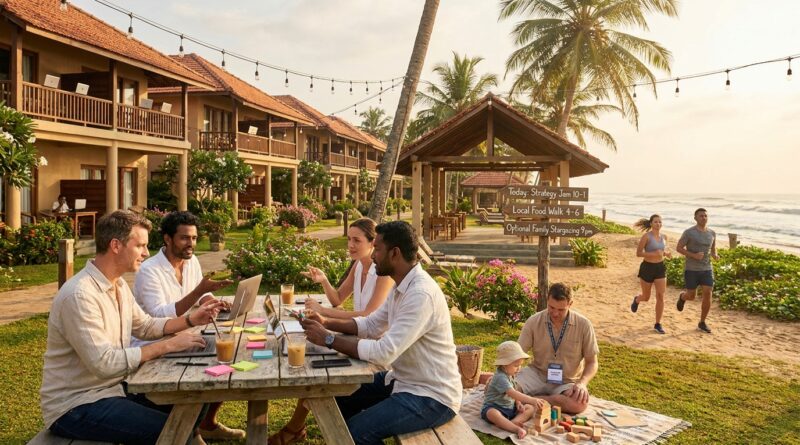
From Offsite To Bleisure Basecamp: Why 2026’s Smartest Retreats Let Teams Bring Their Lives With Them
Most people are not pushing back on team retreats because they hate their coworkers. They are pushing back because the old format asks them to disappear from real life for three days, sit through packed agendas, smile through forced fun, and come home more tired than when they left. That frustration is real. Parents feel it. Caregivers feel it. Remote workers who have built careful routines around focus, health, and family feel it too. The post pandemic corporate retreat bleisure trend is really a response to that tension. Smart companies are starting to treat the retreat less like a sealed container and more like a flexible basecamp. The work still matters. So does the human being doing it. That means shorter core programming, optional shoulder days, better recovery time, local experiences, and clearer policies on what the company pays for. When you design the trip around life instead of against it, attendance feels less like a demand and more like a benefit.
⚡ In a Hurry? Key Takeaways
- The best 2026 retreats are not nonstop offsites. They are basecamps with a focused core event and flexible personal time around it.
- Start with a two-day team agenda, then add optional arrival or departure days, local experiences, and clear expense rules.
- This approach can improve attendance, reduce burnout, and make finance and HR more comfortable because expectations are spelled out in advance.
Why the old offsite model is wearing people out
For years, the standard retreat formula was simple. Fly everyone in. Fill every hour. Add a dinner, an activity, maybe a keynote. Then send everyone home with a tote bag and hope morale improves.
That used to pass as generous. Now it often feels tone-deaf.
People rebuilt their lives after the pandemic around flexibility. They work from different cities. They stack school pickup around calendar blocks. They protect sleep, workouts, therapy appointments, and quiet hours because they learned the hard way that burnout is expensive. So when a company says, “Come away for three days,” employees are increasingly asking a fair question. “Can this fit my life?”
That is the heart of the post pandemic corporate retreat bleisure trend. It is not about turning a work trip into a vacation free-for-all. It is about respecting that employees are whole people, not just attendees wearing lanyards.
What “bleisure basecamp” actually means
A bleisure basecamp retreat has a simple idea at its center. The company gathering is the anchor, not the whole universe.
You pick a destination that works for meetings, but also supports real life. Good flight access. Reliable Wi-Fi. Walkable food options. A setting that offers downtime without a lot of planning. Then you build a strong core event, usually one to two days, and let people shape the edges around it.
The core event stays focused
This is not an excuse for sloppy planning. In fact, it requires better planning. The team time should be intentional. Strategy sessions. Small-group collaboration. Social moments with an actual point. Fewer filler presentations. Fewer marathon slide decks.
The shoulder days stay flexible
Some employees may arrive early with a partner. Some may stay an extra day alone to rest, explore, or work remotely from a pleasant setting. Some may stick to the exact company schedule and head home. All three options should feel normal.
If you want a useful framing, this piece on From Offsite To “Bleisure Basecamp”: Why 2026’s Smartest Corporate Retreats Are Built Around Long-Weekend Micro-Vacations gets at the same shift. People can tell when a retreat is just meetings in a nicer zip code.
Why companies are moving this way now
The timing is not random. Two pressures are colliding.
First, budgets are tighter. Finance teams want to know why a retreat is worth airfare, lodging, food, and lost work time.
Second, employee expectations are higher. Workers will travel, but they want the trip to feel thoughtful. If the experience is rigid, exhausting, or family-hostile, turnout drops and resentment rises.
The bleisure basecamp model helps with both.
It gives finance a cleaner story
You can justify spend when the work goals are sharp and the optional personal add-ons are clearly separated. The company funds the business purpose. Employees can extend the trip at their own cost, within defined rules.
It gives HR a safer structure
Duty of care matters. So does fairness. A well-written retreat policy can spell out what happens if someone brings a partner, extends a hotel stay, rents a car for personal use, or joins optional activities. That clarity cuts down confusion later.
It gives employees something they actually want
Not everyone wants nightlife and team-building games. Many people want a good meal, a walkable neighborhood, a quiet morning, and maybe enough breathing room to enjoy the place they flew to. That is not laziness. It is common sense.
How to design a retreat people will say yes to
1. Make the business reason obvious
If the retreat could have been a video call, people know it. Fast.
Bring the team together for things that genuinely improve in person. Hard decisions. Cross-functional trust. Annual planning. Sensitive conversations. Celebrations that mean something. Skip the sessions that exist only to fill a schedule.
2. Keep the mandatory window short
A strong retreat often has a 24- to 36-hour required block. That may sound short, but short can be good. It forces discipline. It also gives employees room to build the trip around their own needs.
Think in terms of “arrive, connect, decide, celebrate, leave.” Not “occupy every minute.”
3. Choose destinations that work like infrastructure
A pretty location is not enough. The place needs to function well.
Look for direct flights, safe transportation, medical access, strong cell coverage, dependable internet, and easy food choices for different diets. Bonus points for nearby parks, beaches, museums, or neighborhoods people can enjoy without a bus schedule.
4. Write expense rules like a human being
This is where many good retreat ideas fall apart.
Be specific. The company covers round-trip travel within the approved schedule, hotel nights tied to the core event, group meals, and official activities. If employees extend the stay, say exactly what changes. Will they pay the nightly difference? Can they keep the corporate rate? What if a partner joins the room? What if airfare is cheaper with a Saturday stay?
Spell it out in plain English. No one should need a finance translator.
5. Build in recovery time
One of the simplest upgrades is also one of the cheapest. Do not stack late-night dinners after full-day meetings and then expect 8 a.m. energy. Leave room for rest. Start a bit later. End a bit earlier. Give people one unscheduled block long enough to breathe.
Retreats are supposed to create connection, not headaches and hoarse voices.
6. Offer optional local experiences, not mandatory fun
There is a difference between “Here are three things you can choose from” and “Everyone must do a trust exercise on paddleboards.”
Offer a short menu. Food tour. Easy hike. Museum pass. Wellness class. Free time. Let adults decide.
Common mistakes leaders make with the bleisure model
Confusing flexibility with no structure
If everything is optional, the retreat loses shape. You still need a clear centerpiece and a schedule people can trust.
Making people feel judged for using the flexibility
If someone leaves right after the closing session, that should be fine. If someone stays an extra day and pays personally, that should also be fine. The culture signal matters. People notice whether “optional” really means optional.
Picking a destination that is aspirational but impractical
If the travel is brutal, the hotel is isolated, or there is nothing nearby without a car, the whole thing becomes harder than it needs to be. Convenience is not boring. It is respectful.
Forgetting managers need guidance too
Frontline leaders often become the unofficial policy interpreters. Give them talking points. Tell them how to answer questions about family travel, reimbursements, time off, and attendance expectations.
What a simple blueprint can look like
Here is a practical version many companies could use.
Day 0, optional arrival
People who want a smoother trip come in the evening before. No required programming. Maybe a casual hosted welcome table for early arrivals.
Day 1, core collaboration
Morning kickoff. Team breakouts. Strategy sessions. Shared lunch. Short afternoon workshop. Free hour before dinner. One good group meal.
Day 2, decisions and connection
Finish planning. Capture actions. Leave room for smaller conversations. End by midafternoon. Offer optional local activities or free time.
Day 3, optional departure or personal extension
People head home or extend at personal cost under pre-set rules.
Notice what is missing. No overloaded agenda. No fake urgency. No pressure to perform enthusiasm for 14 hours straight.
How to measure whether it worked
Do not just ask if people “had fun.” That is too vague.
Look at attendance rates. Look at post-event survey comments. Look at whether cross-team projects actually moved faster after the retreat. Track manager feedback. Watch whether employees used the optional flexibility and whether that affected costs in a predictable way.
The real test is simple. Did people leave more connected and more clear, without feeling like their personal life got steamrolled?
At a Glance: Comparison
| Feature/Aspect | Details | Verdict |
|---|---|---|
| Traditional offsite | Packed agenda, fixed travel window, little personal flexibility, often heavy on presentations | Works for strict training needs, but often feels draining and dated |
| Bleisure basecamp retreat | Focused core program with optional shoulder days, local experiences, and clear personal-extension rules | Best fit for hybrid teams that want connection without unnecessary disruption |
| Policy and risk management | Needs written expense, safety, and duty-of-care guidance for extensions and guests | Essential to get right so flexibility does not create confusion or unfairness |
Conclusion
The smartest retreat plans for 2026 accept a basic truth. Your employees do not want to vanish into a work bubble and reappear three days later with a notebook full of slogans. They want travel that respects how they actually live. That is why this shift matters so much right now. Budgets are tight. Expectations are high. Teams will get on the road again, but only when the trip feels worth the disruption. A bleisure-basecamp approach gives leaders a practical middle path. It helps justify the spend to finance, answers HR’s safety and fairness concerns, and gives employees something better than another windowless ballroom. Most of all, it keeps the energy of the retreat alive longer. Instead of a closed loop that ends at the airport, it becomes a launchpad for stronger culture, better conversations, and a team that feels seen as people first.