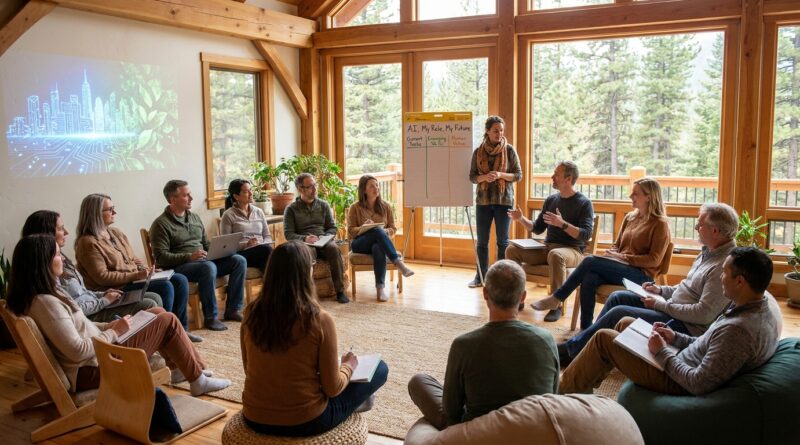
From Offsite To AI-Anxiety Retreat: Why 2026’s Smartest Teams Are Meeting The Fear Of Automation Head-On
People can feel when a company is skirting the real issue. You bring everyone to a nice venue, put “the future of work” on the agenda, and still nobody says the quiet part out loud. Are our jobs changing? Is AI here to help, or replace us? If that tension is sitting under every team meeting, a normal offsite will not fix it. It may even make things worse. That is why more leaders are planning a post pandemic corporate retreat to address ai anxiety at work, not as a gimmick, but as damage control and culture repair. The smartest teams in 2026 are not pretending everyone is excited about automation. They are making room for fear, confusion and skepticism, then giving people practical answers. Done well, this kind of retreat can calm rumors, rebuild trust and help employees see where they fit in an AI-first company without feeling talked down to.
⚡ In a Hurry? Key Takeaways
- A retreat focused on AI anxiety works best when it addresses job security, role changes and skill gaps directly, instead of hiding behind vague innovation talk.
- Build the agenda around honest Q&A, role mapping, training plans and manager-led conversations, not just keynote speakers.
- This is not soft stuff. Reducing AI-related fear can protect morale, cut attrition risk and help teams adopt new tools without panic.
Why the old offsite format is starting to fail
For years, corporate retreats followed a familiar script. A few strategy talks. A team dinner. Maybe a panel about disruption. Then everyone goes home with a tote bag and a vague sense that “big changes are coming.”
That script does not hold up well when employees are actively worried about automation.
People are already seeing AI tools show up in their workflows. They are hearing that certain tasks can now be done in seconds. They are noticing job descriptions change. Some are watching hiring slow down while productivity targets rise. You do not need a formal layoff announcement for anxiety to spread.
And once that anxiety takes hold, people fill in the blanks themselves. Usually with the worst-case version.
What an AI-anxiety retreat actually is
Think of it as a company retreat with a more honest purpose. Not “let’s get excited about AI,” but “let’s talk clearly about what AI is changing here, what it is not changing, and how we are going to support people through it.”
That matters because fear around AI is rarely just about the technology itself. It is about identity, value and stability.
It gives employees language for what they are feeling
Many workers do not walk around saying, “I have techno-overload” or “I am experiencing workforce transition stress.” They say things like:
- “I cannot keep up with all these new tools.”
- “Nobody is telling us what this means for our team.”
- “I am worried I am training the system that replaces me.”
- “I do not want to look negative, but I am scared.”
A good retreat creates a safe way to say those things without punishment, eye-rolling or fake reassurance.
It turns rumors into plans
If leaders do not explain what AI adoption means, people will build their own story. That story is often harsher than reality. A retreat gives leadership one place to answer the questions everyone is already asking in private chats.
What work is being automated? What work still needs people? Which skills matter next? What support is actually funded, not just promised?
Why this has become a post-pandemic issue too
The pandemic changed the social contract at work. Employees now expect more transparency about health, safety and wellbeing. That expectation has carried into technology change.
Before, companies could roll out a new system and expect people to adapt. Now workers are more alert to burnout, more sensitive to uncertainty and less willing to quietly absorb stress.
That is why a post pandemic corporate retreat to address ai anxiety at work makes sense. It treats AI fear as a people issue, not just an operations issue. It accepts that culture can crack long before a dashboard shows a problem.
What the smartest teams are doing differently in 2026
The best teams are not making AI the star of the retreat. They are making trust the star.
1. They say the uncomfortable part out loud
This sounds obvious, but many companies still avoid direct language. They talk about transformation, efficiency and opportunity. Fine. But if employees are worried about redundancy, those words can sound slippery.
Strong leaders say things plainly. They explain where automation may reduce tasks, where roles may shift, and where the company is committed to retraining instead of replacing.
2. They separate hype from reality
A lot of AI fear grows in the gap between headlines and everyday work. Staff hear that AI can do everything. Then they see a chatbot struggle with basic context. Both things create stress.
Use the retreat to show the real tools being tested, the actual limits, and the guardrails in place. People cope better with change when it is concrete.
3. They give managers a script
Most employee fear lands first with direct managers. Unfortunately, many managers are just as unsure as everyone else. If they leave the retreat without clear talking points, the confusion starts right up again on Monday.
Every manager should leave with answers to common questions, escalation paths, and a simple explanation of how AI affects each team.
4. They tie AI adoption to skill-building, not just cost-cutting
If every AI conversation points back to efficiency, employees hear one thing. Fewer people doing more work.
Smarter companies also talk about new responsibilities, protected learning time, internal mobility and paid training. That signals a future people can picture themselves in.
What to put on the retreat agenda
This is where many companies get stuck. They know the topic matters, but they do not know how to structure it without making the event feel heavy or chaotic.
Here is the simple version. You need honesty, structure and follow-through.
Start with a leadership reality check
Open with a direct session from senior leadership. No glossy promo video. No “AI will change everything” speech. Just clear answers:
- Why the company is using AI
- What problems it is meant to solve
- Which roles or tasks may change
- What is not changing right now
- How employee support will work
People may not love every answer. But they will respect clarity.
Use anonymous question collection
Do not rely only on open-mic bravery. People are more honest when they can submit questions anonymously. Collect them before and during the retreat. Then answer as many as possible in a live session.
This is where the real concerns show up.
Run team-level role mapping workshops
Break into smaller groups and map out work in three columns:
- Tasks AI can help with now
- Tasks that still need human judgment
- Skills the team needs to build over the next 12 months
This helps employees move from abstract fear to practical planning.
Include a “what support looks like” session
Do not assume people know where to get help. Spell it out. Training budget. Coaching. Internal job pathways. Reskilling timelines. Experiment rules. Mental health resources for change fatigue.
If support is real, show the mechanics.
Make room for emotional processing
Some leaders want to skip this because it feels messy. That is a mistake. If people feel they must stay upbeat while privately worrying about their future, trust drops fast.
You do not need a group therapy circle. But you do need facilitated conversations where people can voice concerns and feel heard.
What not to do
A retreat like this can do real good. It can also backfire if handled badly.
Do not treat fear as resistance
If employees are anxious, that does not mean they are anti-innovation. It usually means they care about doing good work and want to know where they stand.
Do not overpromise
Never say “no jobs will change” if that is not true. Employees spot fake certainty very quickly. It is better to say, “Some work will shift, and here is how we will handle that responsibly.”
Do not make it all inspirational
Inspiration has its place. So does practical detail. If the retreat is all optimism and no specifics, people will leave more cynical than when they arrived.
Do not end without next steps
The retreat should not be the only conversation. It should be the start of a more mature one. If there is no follow-up, employees will see the event as a performance.
How to know if it worked
You are not looking for everyone to walk away thrilled. That is not realistic. You are looking for signs that uncertainty has become more manageable.
Useful indicators include:
- Better quality questions from staff
- Higher trust in leadership communications
- Clearer understanding of role changes
- Higher uptake of training and internal mobility programs
- Lower rumor-driven tension across teams
If people leave saying, “I still have concerns, but at least I know what is happening and what support exists,” that is progress.
Why this matters more than another culture slogan
Companies love to say people are their biggest strength. AI anxiety is where that claim gets tested.
When workers feel left in the dark, performance suffers long before anyone quits. Focus drops. Collaboration gets weird. Managers burn out from carrying unspoken tension. Good people start browsing job boards just in case.
A well-designed retreat can interrupt that spiral. It gives everyone one shared moment to replace guessing with discussion, and panic with a plan.
At a Glance: Comparison
| Feature/Aspect | Details | Verdict |
|---|---|---|
| Traditional retreat | Broad future-of-work sessions, polished messaging, limited direct talk about job impact | Feels safer for leaders, but often leaves employee fear untouched |
| AI-anxiety retreat | Direct discussion of automation, role changes, reskilling and employee concerns | More honest and more useful when trust needs repair |
| Best practice approach | Mixes leadership clarity, anonymous Q&A, role mapping, manager support and follow-up actions | Strongest option for calming anxiety without dodging reality |
Conclusion
AI-related workforce anxiety is not a fringe issue anymore. It has quietly become one of the biggest psychosocial risks at work, often outranking the old stressors people used to talk about more openly. Employees are seeing tools tested, roles adjusted and staffing assumptions shift long before anyone explains what it means for them. That uncertainty is exhausting. A retreat that squarely addresses AI fear, skill insecurity and techno-overload gives leaders a credible way to show care, steady the culture and protect performance before anxiety turns into attrition. For teams that want company gatherings to mean something, this is one of the few formats that can mix honesty, strategy and emotional repair in the same room. If you are planning your next offsite, skip the vague panel talk. Say the hard part out loud, then help people build a path through it.