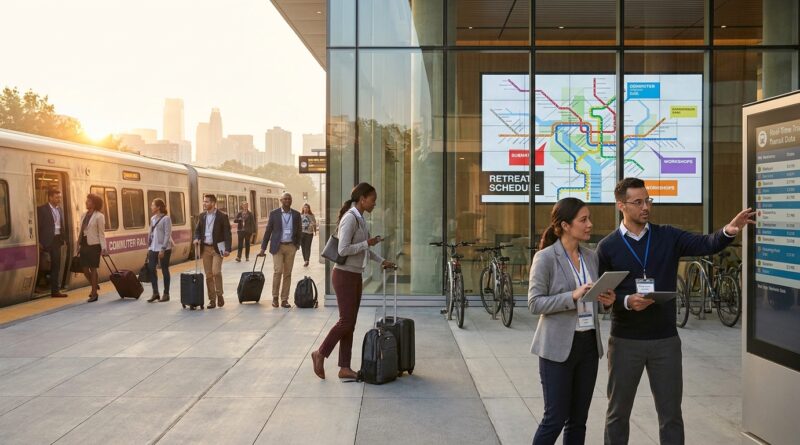
From Offsite To Commute-Smart Retreat: Why 2026’s Sharpest Teams Now Design Gatherings Around Fixed Hybrid Schedules
Your team is tired, and not because they do not like seeing each other. They are tired because hybrid work has turned every in-person event into a math problem. Which days are mandatory? Who already commuted twice this week? Is this retreat actually special, or is it just another long train ride, pricey hotel night, and a full day of meetings that could have been a video call? That is the real issue behind many 2026 planning headaches. The best teams are finally admitting it. A corporate retreat now has to fit around fixed hybrid schedules, not fight them. If you ignore that, people show up drained before the first coffee break. If you plan around it, the same gathering can feel thoughtful, useful, and worth the trip. That is why the smartest hybrid work corporate retreat ideas 2026 start with commute maps, office attendance patterns, and budget limits, then build the agenda from there.
⚡ In a Hurry? Key Takeaways
- Great 2026 retreats are built around fixed hybrid schedules, commute pain, and budget limits, not just venue availability.
- Start by choosing dates that replace a normal office day, then give people something they cannot get from another in-person meeting.
- If the retreat adds travel, cost, and fatigue without clear value, employees will treat it like a morale tax.
The old offsite playbook does not work anymore
For years, retreat planning was simple. Pick a place. Book some sessions. Add a dinner. Done.
That formula breaks in hybrid teams because people are no longer fully remote or fully office-based. Many now work on fixed in-office days. Tuesday to Thursday is often packed. Commuter trains are crowded. Childcare is arranged around those patterns. Team budgets are tighter. Patience is tighter too.
So when leadership drops a retreat on top of an already heavy office week, employees do not hear, “We are investing in culture.” They hear, “Please add one more complicated trip to your month.”
That is why the sharpest teams in 2026 are changing the question. They are not asking, “Where should we hold the retreat?” They are asking, “What in-person experience is worth interrupting a fixed hybrid rhythm for?”
Start with the commute, not the catering
This sounds obvious, but it is often missed.
A retreat should begin with a simple audit of employee travel reality. Not assumptions. Real numbers.
What to check first
Before you book anything, gather these basics:
- Which days are official in-office days by team or region
- Average one-way commute times
- How many people already travel in on peak days
- Who needs overnight stays to attend
- What the company will and will not reimburse
This is where many event plans either win trust or lose it.
If 70 percent of the team already comes in on Wednesdays, then a Wednesday retreat near the office may feel manageable. If you add a Thursday overnight on top, that same event can suddenly become expensive and annoying.
Commute-smart planning is less glamorous than venue scouting. It is also more useful.
Why fixed hybrid schedules should shape the whole event
Fixed hybrid schedules create a hidden calendar that matters more than your slide deck does.
People build their lives around those days. They choose when to do focused work at home. They batch meetings into office days. They sort out school pickups and elder care. A retreat that ignores that structure creates friction before it creates connection.
A better approach is to design gatherings that fit inside the existing pattern.
Three smart formats for 2026
1. The replacement day
Use one normal office day and upgrade it. Move the team to a nearby venue. Keep travel short. Focus on strategy, conflict resolution, planning, and social time that the office rarely supports.
2. The cluster retreat
Group teams by geography and hold smaller regional gatherings instead of one giant all-company trip. This cuts flight costs and makes attendance easier.
3. The anchor-day summit
Place the event right before or after a fixed in-office day so people are not making two separate trips in one week. If they are already coming in Tuesday, build around Tuesday.
These ideas sound modest, but they solve the real pain. They respect time.
What makes a retreat feel different from “office, but farther away”
This is the line every organizer needs to think about.
If your retreat includes the same status updates, the same department presentations, and the same awkward panel that could have been a recorded video, people will spot it instantly. They may smile through it, but they will know.
A retreat should do work that needs the room.
Good uses of in-person time
- Decision-making on messy cross-team problems
- Trust-building after a reorg or leadership change
- Customer journey mapping
- Hands-on prototyping
- Manager training with live practice
- Celebration and recognition that feels human, not scripted
One useful example of this more purposeful style is From Offsite To Sensory-Lab Retreat: Why 2026’s Smartest Teams Now Prototype The Future Office In 3 Days, which looks at how teams are using gatherings to test what the workplace should actually feel like, instead of just talking about it in circles.
The new rule: if you ask for travel, remove something else
This is one of the clearest planning rules for 2026.
If employees must travel for a retreat, take something off their plate. Do not stack the event on top of a full workload and a normal meeting calendar.
What leaders should remove
- Cancel routine status meetings that week
- Reduce non-urgent deliverables before the event
- Do not schedule the retreat during a heavy commute week plus quarter-end chaos
- Trim presentation time and give that time back as travel buffer or rest time
People can tell when a company respects the hidden cost of showing up. They can also tell when leadership acts as if attendance is free.
Budget pressure is changing retreat design too
Travel budgets are not what they were. Even when the company can pay, employees still feel the practical cost of extra days away, long journeys, and disrupted routines.
That is pushing teams toward tighter, smarter formats.
Budget-friendly retreat moves that still work
- Choose venues within 60 to 90 minutes of the biggest employee cluster
- Use one-night stays instead of two or three
- Replace keynote-heavy agendas with workshops led by internal experts
- Run one flagship annual retreat and smaller regional meetups the rest of the year
- Book around lower-cost travel windows instead of peak office demand days
This is where the best hybrid work corporate retreat ideas 2026 stand out. They are not trying to look expensive. They are trying to feel worth it.
A simple planning framework for retreat leaders
If you want a practical way to plan, use this five-part test.
1. Is the timing kind?
Does the event fit the team’s hybrid rhythm, or does it create an extra burden?
2. Is the trip short enough?
Can most people attend without turning the day into an endurance event?
3. Is the agenda room-worthy?
Would the work clearly be better in person?
4. Is something being removed?
Are you cutting meetings, travel days, or duplicate sessions elsewhere?
5. Is the outcome visible?
Will employees leave with a decision, a plan, a prototype, or a stronger connection that they can actually point to?
If the answer to two or more of these is “no,” the retreat probably needs a redesign.
How to avoid the biggest morale mistake
The biggest mistake is not choosing the wrong city. It is creating an event that feels mandatory, tiring, and vague.
People do not resent in-person time by default. They resent low-value in-person time that asks a lot and gives little back.
That is why the best retreat invitations are specific. They explain why this gathering matters, why now, what will happen there, and how the company has tried to make attendance easier.
Even small details help. Start later for same-day commuters. End early enough for return travel. Publish reimbursement rules clearly. Do not make people guess whether they need to fight for a hotel room or pay for a taxi themselves.
At a Glance: Comparison
| Feature/Aspect | Details | Verdict |
|---|---|---|
| Date selection | Built around fixed in-office days and commute patterns, rather than executive convenience alone | Best for attendance and goodwill |
| Agenda design | Focus on decisions, workshops, trust-building, and activities that truly need people together | Makes the trip feel justified |
| Travel and budget | Shorter distances, fewer nights, regional formats, and clear reimbursement rules | More realistic for 2026 budgets |
Conclusion
The retreat is not dead. It just has to grow up. The biggest post-pandemic shift is no longer whether people come back to the office, but how predictably they do it and how expensive every extra in-person day feels. Leaders who treat commutes, hybrid rules, and peak office days as design constraints instead of an afterthought will plan better gatherings. They will waste less money, ask less of people, and get more value from the time together. Done right, a retreat stops feeling like another office day in a different zip code. It becomes something rarer. A useful pause. A smart investment. A cultural win people do not quietly regret saying yes to.