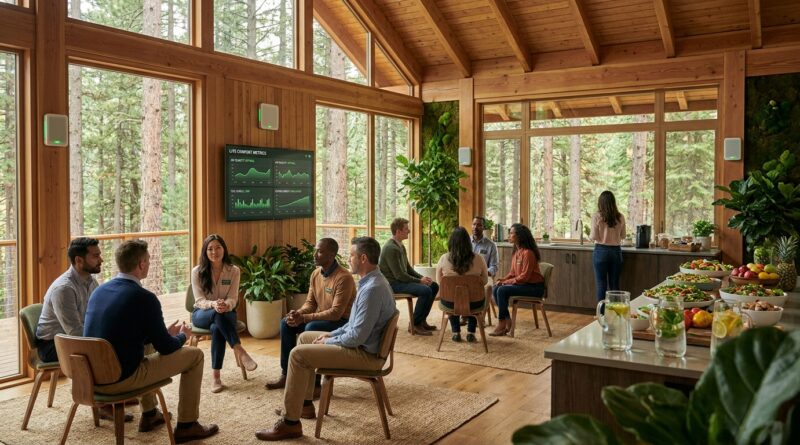
From Offsite To Immunity‑Smart Retreat: Why 2026’s Smartest Teams Now Design Gatherings Around Health Intelligence, Not Just Health Protocols
You can hear the tension in almost every retreat planning call now. Someone asks about team bonding. Someone else asks about HVAC specs. A leader wants a big, energizing reset after a rough stretch of hybrid work, but the people actually boarding the plane are doing a quieter calculation. Is this worth the risk of getting sick, missing a week, or bringing something home to family? That tension is real, and pretending it is just “an HR detail” usually makes it worse. The smartest planners in 2026 are not treating health as a checklist buried in the event packet. They are building gatherings around health intelligence from the start. That means better venue choices, smaller groups, flexible schedules, and clear opt-in norms. These post pandemic health focused corporate retreat trends are less about fear and more about trust. When people see that the company planned for reality, they are far more likely to show up fully.
⚡ In a Hurry? Key Takeaways
- Smart retreats in 2026 are designed around health intelligence, not just basic safety rules or vague wellbeing promises.
- Start with venue airflow, group size, and flexible agenda planning before you book entertainment or swag.
- A health-focused retreat protects trust, reduces disruption, and gives HR, Legal, Finance, and employees something they can all say yes to.
Why the old retreat playbook no longer works
For years, company retreats followed a familiar script. Book a nice place. Pack the agenda. Add a dinner, a workshop, maybe a photo-worthy activity. Hope people leave feeling connected.
That still matters. But after years of waves of illness, remote work, and changed expectations, people read retreats differently now. They are not just asking, “Will this be fun?” They are asking, “Was this planned thoughtfully?”
That is the heart of the shift in post pandemic health focused corporate retreat trends. Teams no longer see health as a side note. It shapes attendance, energy, trust, and whether the event feels respectful or reckless.
A retreat can still be ambitious. It just cannot be careless.
What “health intelligence” really means
Health protocols are rules. Health intelligence is design.
Protocols are things like hand sanitizer stations, basic sick-day messaging, or a line in the FAQ that tells people not to attend if they feel ill. Those are still useful. They are just not enough on their own.
Health intelligence means you plan the whole experience around realistic human behavior and practical risk reduction.
It starts before the agenda does
Smart planners now ask questions earlier. How far are people traveling? Will they spend hours in buses or packed meeting rooms? Is the venue open, airy, and easy to move through? Can one indoor session be moved outside without chaos if needed?
Those are not “extra” questions. They shape whether the retreat feels modern or outdated.
It respects autonomy
People want choices. They want to know they can skip a crowded late-night social event without looking like they are not a team player. They want clarity on refund rules, rooming arrangements, and what happens if they get sick before or during travel.
Health-intelligent planning gives people room to make reasonable decisions without penalty.
The biggest retreat trends smart teams are following
1. Smaller group formats
Instead of bringing 300 people into one packed hotel program, many companies are breaking retreats into smaller waves, regional pods, or role-based gatherings.
This lowers exposure, makes conversation better, and often improves the quality of the actual work. Smaller groups also make it easier to adapt if attendance changes at the last minute.
2. High-ventilation venues are becoming a real selling point
Not long ago, planners asked about meeting capacity, food packages, and Wi-Fi. Now they ask about outdoor options, fresh air exchange, window access, room spacing, and how quickly spaces can be reconfigured.
A venue with strong ventilation and flexible indoor-outdoor flow is no longer a nice bonus. It is part of the decision.
3. Built-in contingency plans
The best retreat agendas now assume something will change. A speaker might be remote. A breakout may need to move outside. A few attendees may miss day one. Travel delays may hit a whole city.
Good planners build schedules that can bend without breaking. That means fewer tightly stacked dependencies and more modular sessions.
4. Better sick-day rules, with less weirdness
One of the fastest ways to damage trust is to make people feel guilty for being cautious. Teams are getting smarter about this. If someone is sick, they stay back. If someone feels unsure, there is a path that does not punish them socially or financially.
This sounds simple, but it matters a lot.
5. Retreats that have a clearer purpose
If you are asking people to travel despite real concerns, the event needs to earn it. That is one reason more companies are combining retreats with learning outcomes, not just bonding exercises. If you want a good example of that broader shift, see From Offsite To Skill-Stamped Retreat: Why 2026’s Smartest Teams Now Bring Home A New Certification, Not Just A T‑Shirt. It gets at a useful truth. People are more willing to show up when the value is concrete.
How to plan an immunity-smart retreat without making it feel clinical
This is where many teams get stuck. They worry that if they talk too openly about health, the retreat will feel tense or joyless.
That usually does not happen.
In practice, thoughtful planning tends to make people relax. The room feels calmer when nobody has to guess what the company considered.
Choose the venue with a health lens, not just a style lens
A beautiful property is great. But if every important conversation happens in sealed conference rooms, you have a problem.
Look for:
- Meeting rooms with good airflow or fresh air access
- Outdoor spaces that can actually support real sessions
- Private rooms rather than shared sleeping setups
- Dining options that avoid unnecessary crowding
- Reasonable transport time from airport to venue
If the venue cannot answer basic airflow and layout questions clearly, that tells you something.
Design the agenda in layers
Think of your retreat as a set of essential sessions, flexible sessions, and optional social moments.
Essential sessions are the ones that justify the trip. Keep them focused. Flexible sessions should be easy to move, shorten, or run in hybrid form. Optional social moments should be genuinely optional.
This helps people manage their energy and comfort level. It also protects the event if plans shift.
Write the attendance policy like a human being
Skip legal-sounding language where you can. Be direct. Tell people what to do if they feel sick before travel. Explain whether virtual participation is possible for key moments. Spell out who to contact and what support exists.
The goal is to reduce hesitation, not add more.
Let managers model the behavior
If leaders say “take care of yourself” but then praise only the people who show up no matter what, employees notice.
Managers should model good judgment. That includes respecting masks if people choose to wear them, skipping attendance pressure, and treating health decisions as normal, not dramatic.
What employees actually want from this kind of retreat
Most people are not asking for a perfect, risk-free event. They know that is not realistic.
What they want is proof that the company thought things through.
They want to see that health was considered in the venue, the schedule, the group size, and the social expectations. They want practical backup plans. They want permission to act like adults.
That is why these post pandemic health focused corporate retreat trends matter so much. They are not just logistics. They are signals.
Signals of respect. Signals of competence. Signals that leadership understands the world people actually live in.
How this helps HR, Legal, and Finance too
An immunity-smart retreat is not just about employee comfort. It is also easier to defend internally.
For HR
It supports employee wellbeing in a concrete way. Not in a poster-on-the-wall way.
For Legal
Clear policies, documented planning decisions, and reasonable accommodations reduce confusion and help show the company acted responsibly.
For Finance
Contingency-ready agendas and smaller, more flexible formats can reduce the cost of disruption. If a few attendees miss a session, the whole event does not collapse. If one activity changes, the retreat still delivers value.
That matters in a year when every travel line item gets questioned.
What to say when leadership wants “big energy” but staff want caution
Frame it this way. Health-smart planning does not shrink culture. It protects it.
A retreat only works if people can be present, engaged, and willing to trust the company’s judgment. If half the group is privately worried about getting sick, you are not getting real connection. You are getting polite participation.
The smartest leaders now understand that safety and culture are not competing goals. They support each other.
At a Glance: Comparison
| Feature/Aspect | Details | Verdict |
|---|---|---|
| Traditional offsite planning | Focuses on venue appeal, packed agendas, and general morale, with health handled as a small checklist item. | Feels outdated for 2026 and can quietly erode trust. |
| Immunity-smart retreat design | Uses smaller groups, better airflow, clear attendance guidance, and flexible session design from the start. | Best fit for current employee expectations and business reality. |
| Contingency-ready agenda | Core sessions stay intact even if travel changes, illness affects attendance, or activities need to move indoors or outside. | High value, lower disruption, and easier to justify to stakeholders. |
Conclusion
The quiet shift in retreat planning is now out in the open. Generic wellbeing language is giving way to something much more useful: tighter group sizes, high-ventilation venues, and agendas built to flex without blowing up the budget or the goal of the event. That is the real blueprint for immunity-smart retreats. When you plan this way, you turn an unspoken fear into a visible strength. Leaders can show they took health seriously. Employees can keep their autonomy. Culture gets rebuilt without asking people to gamble with their sense of safety. And at a time when travel, hybrid work, and event spending are all under the microscope, a health-intelligent retreat is one of the few formats that can satisfy HR, Legal, Finance, and the very real humans getting on the plane.