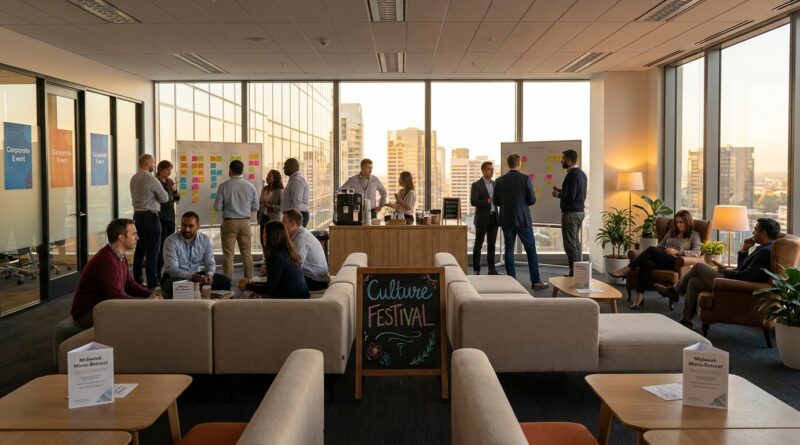
From Offsite To Hybrid-Hub Retreat: Why 2026’s Smartest Teams Turn ‘Midweek Office Days’ Into Culture Festivals
Your team is not imagining it. “Come into the office” has turned into a weird ritual at a lot of companies. People wake up early, fight traffic, badge in, grab coffee, then spend half the day on Zoom calls with people who are not even there. Nobody loves it. Leaders feel pressure to prove the office still matters. Employees want flexibility that feels real, not cosmetic. And the old fix, one giant annual offsite, is expensive, exhausting, and often overrated. A two-day hotel sprint can create a nice photo dump, but it does not always build trust or clarity that lasts. That is why some of the smartest teams in 2026 are trying something simpler. They are turning existing midweek office days into mini culture festivals. Not cheesy parties. Not forced fun. Intentional in-person days with a clear purpose, built into the rhythm the team already has. It is one of the most practical post pandemic hybrid corporate retreat ideas because it works with reality instead of fighting it.
⚡ In a Hurry? Key Takeaways
- Turn mandatory office days into themed, high-purpose “hybrid-hub retreat” days instead of asking people to commute for random desk work.
- Start with one predictable midweek day per month focused on strategy, social connection, learning, and cross-team time that cannot happen as well on Zoom.
- This cuts travel costs and planning stress while creating more frequent, lower-pressure culture moments that feel useful instead of performative.
Why the old model is breaking
The basic problem is not hard to spot. Many hybrid teams have copied the shape of office life without keeping the value of office life.
People show up, but the day has no center. Meetings still happen online. Teammates are on different schedules. The “why are we here?” question hangs over everything.
Then, to make up for that drift, companies plan a big offsite. Flights. Hotels. Catering. Icebreakers. A packed agenda. For a week or two after, people feel a little closer. Then normal life returns, and the effect fades.
That is why more leaders are moving away from the all-or-nothing model. They are using the office not as a default workplace, but as a recurring event space for connection, alignment, and memory-making.
What a hybrid-hub retreat actually is
Think of it as a built-in retreat, just smaller, more often, and tied to your existing hybrid schedule.
Instead of saying, “Everyone must come in Tuesday and Wednesday,” you say, “The second Wednesday of each month is our hub day. We use it for the things that matter most in person.”
That can include:
- Quarterly strategy sessions
- Team storytelling and wins
- Cross-functional problem solving
- Mentoring lunches
- Skills workshops
- Onboarding rituals
- Recognition moments
- Community service or local outings
The key is simple. If the activity would work just as well from home, it does not belong on the in-person agenda.
Why this works better than the giant annual offsite
1. It creates repetition, which is what culture actually needs
Culture is not built in one dramatic burst. It is built in repeated moments. The same faces. The same rituals. The same signals about what matters.
A once-a-year retreat can be fun. But monthly or biweekly in-person moments are what help people feel, “I know how this team works. I know these people. I belong here.”
2. It costs less
This is the part finance teams tend to appreciate immediately. You are using office space you already pay for. You are cutting flights, hotel blocks, and event agency costs. You are also spending less staff time planning giant productions.
That does not mean the day should feel cheap. It means the budget goes into food, facilitation, local experiences, and thoughtful design instead of airfare.
3. It lowers the emotional pressure
Big offsites can feel strangely high-stakes. If you are introverted, new to the company, or simply tired, three packed days of networking can be a lot.
A hybrid-hub retreat is easier to join. It is shorter. More familiar. Less forced. People do not feel like they have to become camp counselors to participate.
4. It makes office time easier to explain
This matters more than many leaders realize. Employees are much more open to commuting when the purpose is obvious.
“Come in because we said so” creates resentment.
“Come in because this is our customer story lab, team lunch, and roadmap workshop day” creates buy-in.
What turns an office day into a culture festival
Not balloons. Not swag. Not a DJ in the lobby.
A culture festival is really just an office day with three things most companies forget to add: meaning, rhythm, and design.
Meaning
Every in-person day should answer one question clearly. Why is this worth the trip?
Good answers include building trust, solving hard problems, welcoming new people, celebrating progress, or helping teams see the bigger picture.
Rhythm
Predictability matters. If the schedule changes every quarter, the office feels random. If people know the pattern, they can plan work, childcare, travel, and energy around it.
One of the smartest moves is to create a fixed cadence. For example:
- Week 1. Functional team planning
- Week 2. Cross-team collaboration day
- Week 3. Learning and development
- Week 4. Social and recognition focus
You do not have to use all four. But having a pattern turns attendance from obligation into habit.
Design
Most office days are under-designed. People show up and improvise. That is a missed chance.
A good hybrid-hub retreat day has:
- A clear start and end
- A host or facilitator
- Shared meals or snack moments
- At least one session that mixes teams
- At least one moment of reflection or recognition
- Enough free space for informal conversation
That last part is important. If every minute is booked, people cannot actually reconnect.
Five formats that work especially well
The strategy market
Each team sets up a “station” showing current priorities, roadblocks, and wins. People walk the room, ask questions, and spot overlaps. It is more active than a slide deck and much easier for non-executives to join.
The new-joiner welcome festival
Once a month, gather recent hires in person with their managers and key partners. Add origin stories, lunch, office tours, and short “how we work here” sessions. This can improve belonging more than a giant company retreat that happens six months too late.
The customer reality day
Use office time to reconnect people with the real-world impact of their work. Bring in customer stories, support call clips, product demos, or frontline staff panels. It grounds the culture in purpose, not slogans.
The learning salon
Employees teach each other. Short sessions. Small groups. Low pressure. One team shows a new tool. Another shares a project mistake and what changed after it. This creates generosity, which is one of the strongest forms of culture.
The quiet connection day
Not every culture event has to be loud. Some teams are finding that calmer formats work better. If that sounds appealing, you might like From Offsite To Silent Reading Retreat: Why 2026’s Boldest Teams Are Using Books To Rebuild Culture, which shows how quieter shared experiences can rebuild trust without the usual forced-fun energy.
How to build your first hybrid-hub retreat without overthinking it
Step 1. Pick one day with a fixed purpose
Do not redesign your whole company calendar at once. Start with one recurring midweek day each month.
Give it a name. Something plain is fine. “Team Hub Wednesday” works better than trying to sound trendy.
Step 2. Protect the day from normal meetings
This is where many attempts fail. If people still spend the day in regular status calls, nothing changes.
Block the day. Cancel low-value recurring meetings. Make room for the activities that actually need in-person energy.
Step 3. Create a simple agenda mix
A good starter formula looks like this:
- 30 minutes. Welcome and context
- 60 minutes. Team planning or strategy
- 45 minutes. Cross-functional session
- 60 minutes. Shared lunch
- 45 minutes. Learning or storytelling
- 30 minutes. Recognition and wrap-up
Notice what is not on that list. Eight straight hours of presentations.
Step 4. Give managers a toolkit
Managers often agree with the idea but do not know what to do with it. Help them out.
Provide templates for:
- Icebreakers that do not feel childish
- Discussion prompts
- Recognition rituals
- Retrospective questions
- Room setup ideas
The easier you make it, the more consistent the experience will be.
Step 5. Measure the right things
Do not just track attendance. Track usefulness.
Ask:
- Did people understand why they were there?
- Did they meet someone new or reconnect with someone important?
- Did the day help move a decision forward?
- Did they leave with more energy than they arrived with?
If the answer is no, tweak the design. That is normal.
Common mistakes to avoid
Making it feel mandatory and vague at the same time
This is the worst combination. If attendance is expected, the value has to be obvious.
Turning every hub day into a branding exercise
People can tell when an event exists mostly to create nice internal photos. Keep it grounded in work, relationships, and real conversation.
Forgetting remote fairness
Not everyone will be able to attend every time. Parent schedules, disability needs, distance, and travel limits are still real. Build a version of participation that does not punish people who cannot physically be there.
That might mean rotating key events, streaming selected sessions, or creating local hub versions for distributed teams.
Confusing “fun” with “trust”
A food truck is nice. So is trivia. But trust usually grows when people solve problems together, hear honest updates, and have room for real conversation.
Why this trend fits 2026 so well
Because most companies are no longer asking whether hybrid is real. They are asking how to make it make sense.
The old debate was office versus remote. The smarter question now is this: what kind of in-person time is worth paying for, planning for, and asking people to show up for?
That is why post pandemic hybrid corporate retreat ideas are shifting toward smaller, more frequent formats. Leaders want a realistic system, not a grand gesture. Employees want office time that feels earned.
A hybrid-hub retreat meets in the middle. It keeps flexibility. It adds structure. And it gives the office a job to do again.
At a Glance: Comparison
| Feature/Aspect | Details | Verdict |
|---|---|---|
| Annual offsite | High travel cost, heavy planning, big energy burst, but effects can fade quickly after one event. | Useful for major milestones, but weak as the only culture strategy. |
| Standard office day | People commute in, then do solo work or sit in video meetings that could happen anywhere. | Usually the least satisfying option for both leaders and employees. |
| Hybrid-hub retreat day | Uses existing office days for strategy, connection, learning, and rituals with a clear, repeatable purpose. | Best balance of cost, flexibility, and lasting culture impact for many teams. |
Conclusion
If your company is stuck between return-to-office pressure and employee demand for flexibility, this is one of the few ideas that does not require pretending it is still 2019. You do not need to scrap hybrid. You need to give it a purpose. By turning the midweek office pattern you already have into a built-in retreat engine, you can spend less on travel, plan less from scratch, and still create the kind of in-person moments people remember. More important, you stop asking employees to commute for symbolism. You give them a reason. For culture and people leaders, that is the real win. A practical playbook for distributed teams that still want trust, belonging, and shared identity, without the cost and theater of one giant offsite.