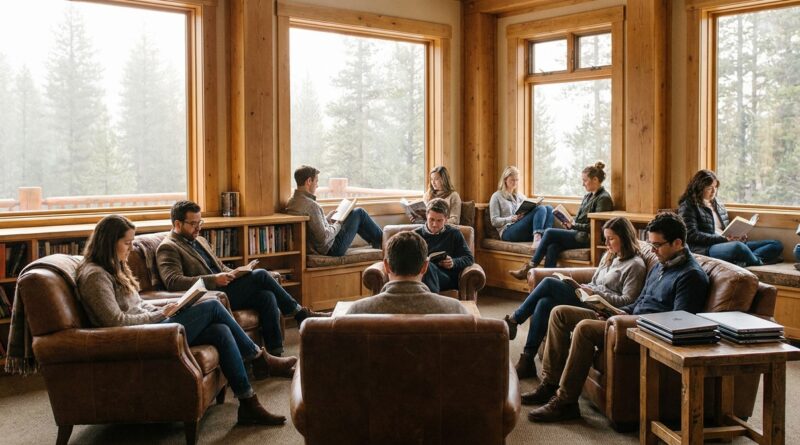
From Offsite To Silent Reading Retreat: Why 2026’s Boldest Teams Are Using Books To Rebuild Culture
Your team probably does not need another trust fall, cocktail mixer, or beachside icebreaker with a ukulele in the background. After years of remote work, hybrid schedules, layoffs, Zoom fatigue, and the strange social rust that followed the pandemic, a lot of people are simply worn out by forced fun. They do not want more noise. They want room to think. That is why the post pandemic corporate reading retreat is suddenly making so much sense. It swaps performance for presence. Instead of asking people to pretend they are energized by a packed agenda, it gives them quiet, books, and better conversations. For Millennials and Gen Z especially, that feels less like corporate theater and more like a real gift. Oddly enough, that calm can do more for culture than a loud luxury resort ever could. It helps people slow down, notice each other again, and talk about ideas that actually matter.
⚡ In a Hurry? Key Takeaways
- A post pandemic corporate reading retreat works because it replaces overstimulation with focus, calm, and real discussion.
- Start small with a one-day retreat, one shared theme, and a mix of solo reading time plus guided group conversation.
- This format is budget-friendly, lower pressure for introverts, and often more useful for culture repair than classic offsites.
Why the old retreat playbook is starting to feel tired
Classic team retreats were built for a different moment. The goal was often to get people out of the office, shake things up, and create a burst of energy. That still sounds nice in theory.
In practice, many teams come back more drained than before.
There is travel stress. Social pressure. Packed schedules. Group dinners that somehow feel like extra meetings. And then there is the unspoken part. A lot of employees still do not want to act like the pandemic changed nothing. It did. People now guard their attention more carefully. They notice overstimulation faster. They are less impressed by expensive settings if the experience itself feels hollow.
That is why quieter formats are getting real traction. You can see the same shift in wellness events, creator retreats, and even vacation trends. People want depth, not just activity.
What a post pandemic corporate reading retreat actually is
This is not a weekend where everyone is forced to read the same business book in silence like they are being punished.
A good reading retreat is much looser and much smarter than that.
At its best, it is a structured day or two built around three things. Quiet individual reading. Thoughtful reflection. Small-group conversation. The books become prompts, not homework. They give people something richer to talk about than quarterly targets or office gossip.
It usually includes:
Curated books or essays tied to a theme, such as attention, leadership, creativity, resilience, ethics, or the future of work.
Protected silent reading blocks, often 45 to 90 minutes at a time.
Journaling or note-taking prompts.
Small discussion circles with clear questions.
Optional walks, low-key meals, and no pressure to be “on” every second.
That last part matters more than many leaders realize.
Why books work so well for rebuilding culture
Books are useful because they create a shared reference point without forcing personal disclosure right away. People can talk about an author’s idea before they talk about their own frustration, burnout, or hopes. That makes the first step safer.
It also changes the tone of the room.
When a team talks about a story, argument, or passage, people tend to listen better. They interrupt less. They think before they answer. The conversation gets less reactive and more reflective. That is gold for teams dealing with tension, fatigue, or shallow communication.
This is also where a reading retreat overlaps with the broader move toward recovery-centered events. If your team is running on fumes, the logic is similar to what we discussed in From Offsite To Burnout Recovery Retreat: Why 2026’s Smartest Teams Are Prescribing Rest, Not Just Strategy. The best retreat format is not always the most exciting on paper. Sometimes it is the one that gives people their brain back.
Why Millennials and Gen Z are especially open to this format
Younger workers are often described as wanting experiences. That part is true, but it misses an important detail. They do not just want novelty. They want meaning.
Many are deeply familiar with burnout language, attention fatigue, and the emotional cost of constant digital input. They are also more comfortable with ideas like quiet wellness, solo reflection, and intentional community. A reading retreat fits that mix surprisingly well.
It feels thoughtful, not cheesy.
It gives introverts space without excluding extroverts.
It photographs well if that matters to your employer brand, but it does not feel designed only for photos.
And because book culture is already strong on TikTok, Instagram, podcasts, and newsletters, the idea does not feel weird or niche anymore. It feels current.
What leaders get out of it, beyond the warm fuzzy culture stuff
Let us be practical. A retreat still needs to justify the time and money.
A reading retreat can do that in a few clear ways.
Better strategic thinking
People think more clearly when they are not being rushed from one session to the next. Quiet reading and reflection often lead to stronger questions, not just louder opinions.
More honest discussion
It is often easier to say, “This chapter made me think about how we handle conflict,” than to start with, “I am unhappy with how this team communicates.” Books lower the temperature.
A more inclusive culture
Traditional retreats often reward the most social, most energetic, most talkative people in the room. Reading retreats widen the door. Quiet employees are more likely to participate when the format values listening and thought.
Lower costs
You do not need a flashy resort or an activity-heavy schedule. A calm venue, comfortable seating, decent food, good lighting, and a thoughtful facilitator can go a long way.
How to plan one without making it feel stiff or academic
This is where some teams get nervous. They hear “reading retreat” and picture school. Do not do that.
Keep it warm, simple, and human.
1. Pick a theme, not just a book
A strong theme helps people connect the retreat to real work and real life. Good examples include rebuilding trust, focusing in distracted times, leading through uncertainty, or making better decisions.
You can offer one shared book for everyone, or a small menu of choices that fit the same theme.
2. Use shorter formats if needed
You do not need to assign a 400-page hardcover. Essays, novellas, excerpts, longform articles, and audiobooks can all work. The goal is engagement, not endurance.
3. Protect the silence
This is the heart of the event. Do not treat reading time as filler between “real” sessions. It is the real session.
4. Guide the conversation gently
Give people a few prompts. Ask what surprised them, what challenged them, what felt relevant to team life, and what one idea they want to take back into work.
5. Leave room for low-stakes connection
Tea breaks, quiet walks, shared meals, and casual chats matter. The point is not to eliminate bonding. It is to stop forcing it.
Common mistakes to avoid
A reading retreat can go wrong if it gets too corporate too fast.
Do not turn every discussion into a KPI exercise
People will shut down if every insight has to become an action item by 4 p.m.
Do not overpack the agenda
If the day has fifteen sessions, it is not a reading retreat. It is a conference with books as decoration.
Do not pick a book that feels like propaganda
If the reading sounds like it was chosen to push a management message, trust drops fast. Pick something thoughtful, not self-congratulatory.
Do not make sharing mandatory
Some people think best on paper first. Let them.
A simple agenda that actually works
Here is a one-day version for a small or mid-sized team:
Morning
Arrival, coffee, short welcome, and clear explanation of the theme.
First silent reading block, 60 minutes.
Journaling prompt, 15 minutes.
Small-group discussion, 45 minutes.
Midday
Lunch with no programmed activity.
Optional quiet walk.
Afternoon
Second reading block, 45 minutes.
Partner or trio conversation, 30 minutes.
Whole-group reflection on what ideas should shape the next quarter, 45 minutes.
Close with one personal takeaway and one team commitment.
That is enough. Really.
Why this can be a smart move for budget-strapped teams
Some of the most effective retreat ideas right now are not the most expensive ones. Reading retreats fit that reality well.
You can host one in a local inn, a library event space, a quiet coworking venue, or even your own office if you can make it feel different for a day. Spend money on comfort, food, facilitation, and book selection. Cut the gimmicks.
The result can feel more premium than a bigger event because it shows care. It tells employees, “We respect your attention. We think your inner life matters. We are not going to fill every minute just to prove this was worth it.”
That is a strong cultural signal.
At a Glance: Comparison
| Feature/Aspect | Details | Verdict |
|---|---|---|
| Energy level | Classic offsites often rely on nonstop activity. Reading retreats use quiet focus, reflection, and slower conversation. | Better for tired teams and attention-fatigued staff. |
| Culture impact | Books give teams a safer way to discuss values, tension, and change without putting people on the spot too quickly. | Strong choice for rebuilding trust and depth. |
| Cost and logistics | Requires fewer flashy activities, less travel pressure, and simpler venues. Budget can go toward comfort and facilitation instead. | Accessible and easier to justify for lean teams. |
Conclusion
If your last few retreats felt loud, expensive, and strangely forgettable, that is not your imagination. A lot of teams are done with performative bonding. Reading retreats are spiking with Millennials and Gen Z right now because people are craving focused calm and meaningful input instead of another overstimulating trip. Bringing that idea into a corporate setting gives leaders a fresh, credible way to handle attention fatigue, support better strategic thinking, and rebuild culture without pretending that the pandemic never happened. When you build a retreat around shared silence, individual curiosity, and book-driven conversation, you create something memorable for the right reasons. It is calmer. It is more honest. It is often cheaper. And it instantly sets your company apart from competitors still booking the same old conference hotels and hoping a buffet lunch will somehow fix morale.