From Offsite To Micro‑Tribe Retreat: Why 2026’s Smartest Teams Now Split Into Curated Mini‑Groups, Not One Big Crowd
You can feel the letdown by lunch on day one. The company paid to fly everyone in, booked a nice venue, stacked the schedule, and still the room feels oddly flat. A few confident people talk nonstop. Quieter teammates smile, nod, and say very little. Cross-functional mingling barely happens unless someone forces it. Then everyone goes home with a tote bag, a few photos, and the same weak connections they had before. That is the real problem with the old offsite model. It treats presence as progress. It assumes that if enough people sit in one room long enough, culture will somehow fix itself. It usually does not. The post pandemic corporate retreat micro group trend is growing for a reason. Smarter teams are breaking one big crowd into smaller, curated mini-groups so people can actually talk, solve, build trust, and leave feeling included instead of managed.
⚡ In a Hurry? Key Takeaways
- Big all-hands retreats often create spectators. Micro-tribe formats create participation.
- Split attendees into small, curated groups of 6 to 10 with a clear purpose, mixed roles, and repeat touchpoints across the retreat.
- This is not about cutting fun. It is about making expensive in-person time safer, more useful, and more memorable for everyone.
Why the old offsite format is wearing people out
For years, the standard retreat formula looked pretty simple. Fly everyone in. Open with leadership updates. Add a keynote. Run a few workshops. Finish with dinner and drinks. On paper, it looks fine.
In practice, it often turns into passive listening with pockets of awkward small talk.
That mismatch matters more now because hybrid work is no longer a temporary setup. For many teams, the annual or twice-yearly retreat is one of the only moments when people can build real in-person trust. If that time gets swallowed by presentations and giant-room discussions, the opportunity is gone.
Employees are also far less patient with one-size-fits-all programming than they were a few years ago. People want some say in how they spend that time. They want conversation, not just content. They want to meet humans, not just hear updates.
What a micro-tribe retreat actually is
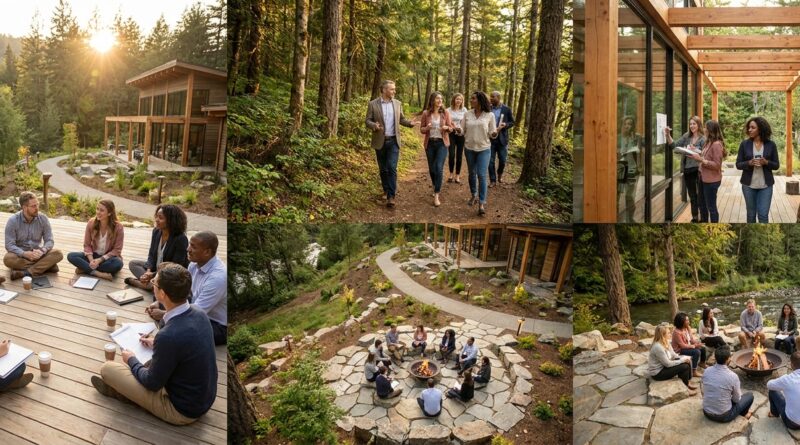
A micro-tribe retreat takes a larger company gathering and breaks it into small, intentional groups. Usually that means 6 to 10 people per group, though the exact number can change based on your team size.
These are not random lunch tables. They are curated circles with a job to do.
What makes a micro-tribe different
Each tribe is usually mixed on purpose. You might blend departments, seniority levels, personalities, locations, or project backgrounds. The point is to create enough variety for fresh thinking, while keeping the group small enough that everyone speaks.
A good micro-tribe has:
- A shared prompt or challenge
- A consistent set of members for part of the retreat
- Facilitated moments that help quieter people join in
- Enough unstructured time to let real chemistry form
If you want a close cousin to this approach, From Offsite To Micro‑Cohort Retreat: Why 2026’s Smartest Teams Now Split Big Groups Into Tiny Working Tribes captures the same shift. Teams are moving away from crowd management and toward small-group design.
Why smaller groups work better for hybrid teams
People do not build trust at the same speed, or in the same way. Some think out loud. Some need a beat before they speak. Some are new and do not want to interrupt. Some are remote-first employees who already feel slightly outside the social loop.
Small groups fix a lot of that.
1. They lower the social risk
Speaking up in front of 80 coworkers is a performance. Speaking up in front of 7 people feels more like a conversation. That difference is huge, especially for introverts and newer hires.
2. They stop the usual voices from taking over
Every team has a few people who naturally fill space. In a large room, they tend to dominate without even trying. In a small group, it is easier for a facilitator or host to make sure everyone gets airtime.
3. They create cross-silo relationships that stick
When engineering, sales, operations, and design actually work through something together in a small setting, they stop being job titles and start becoming people. That is the kind of connection that carries back into daily work.
4. They make the retreat feel personal
One giant agenda rarely fits everybody. A micro-tribe model gives people a more tailored experience without creating planning chaos. You can keep the whole-company moments, but the heart of the retreat happens in smaller circles.
What this looks like in real life
Let’s say you have 96 employees attending a retreat.
Instead of seating them theater-style for most of two days, you divide them into 12 tribes of 8 people each. Each tribe is mixed across role, tenure, and office location. Over the retreat, those tribes stay together for selected sessions.
That can include:
- A first-night story swap about proud career moments and hard lessons
- A problem-solving session on a real company challenge
- A walking discussion instead of another conference room block
- A team-designed ritual or idea they present back briefly
- A final reflection on what should change after the retreat
Now your retreat is not just content delivery. It is a social architecture. People leave remembering names, inside jokes, and actual conversations.
How to build micro-tribes without making it weird
This is the part leaders often overcomplicate. You do not need a retreat science lab. You just need clear design choices.
Start with the goal, not the seating chart
Ask one simple question first. What should people leave with that they do not have now?
Maybe it is trust across departments. Maybe it is better conflict skills. Maybe it is clearer understanding of the company direction. Your tribe design should match that goal.
Curate the groups on purpose
Do not leave it entirely to self-selection. When people choose for themselves, they often stick with familiar coworkers. That feels comfortable, but it rarely builds new connections.
Mix for variety, but do not create groups so mismatched that people struggle to relate. You want a healthy mix, not social chaos.
Give each tribe a reason to exist
Small groups work best when they have a clear role. Examples:
- Relationship tribe, focused on connection and trust
- Idea tribe, focused on solving a company problem
- Learning tribe, focused on reflecting after key sessions
- Experiment tribe, focused on testing a new process or ritual
Without a purpose, people just end up making polite small talk.
Use light facilitation
This is important. Small groups still need structure. Not a script, just enough guidance so one person does not hijack the conversation and another does not disappear.
Good prompts help. Time boxes help. A rotating speaker order can help. So can a simple check-in round where everybody answers the same question.
What to stop doing at retreats
If you want this model to work, a few old habits need to go.
Stop treating the retreat like a conference
Your employees are not attendees at an industry expo. They are the culture. If they spend most of the retreat sitting quietly and consuming content, you wasted your best chance for actual connection.
Stop packing every hour
When the schedule is wall-to-wall, people have no room to process or connect. Small groups need breathing room. Real conversations usually happen in the gaps.
Stop assuming fun equals bonding
Yes, activities matter. But paintball, cocktails, or a cooking class do not automatically build trust. Shared experience helps, but only if people have a chance to reflect, talk, and connect around it.
How to know if your retreat worked
Most retreat feedback forms ask the wrong questions. People will say the food was good and the hotel was nice. That tells you almost nothing.
Instead, ask:
- Did you have a meaningful conversation with someone you barely knew before?
- Did you feel comfortable speaking honestly in your group?
- Did you leave with new people you would actually reach out to at work?
- Did the retreat change how you understand another team?
- Did you feel included, not just present?
Those are much better signals of whether your investment created connection or just logistics.
Who benefits most from the micro-group trend
Almost any hybrid company can use this model, but it is especially helpful for teams that are:
- Growing fast and struggling with culture drift
- Spread across regions or time zones
- Dealing with visible silos between departments
- Trying to include remote-first employees more fully
- Tired of retreats that feel polished but forgettable
In other words, if your retreat currently feels like a company event instead of a relationship-building experience, this trend is worth serious attention.
At a Glance: Comparison
| Feature/Aspect | Details | Verdict |
|---|---|---|
| Traditional large-group offsite | Efficient for announcements, but often passive, top-down, and dominated by confident speakers | Good for updates. Weak for real connection. |
| Micro-tribe retreat design | Small curated groups create safer conversation, better participation, and stronger cross-team relationships | Best choice for hybrid culture building. |
| Employee experience | Less passive listening, more ownership, personalization, and memorable interaction | Higher value from the same travel budget. |
Conclusion
Structured hybrid work is now normal, which means retreats carry more weight than they used to. They are not just a nice break from Zoom. They may be your best shot all year to help people feel close, understood, and part of something shared. That is why the post pandemic corporate retreat micro group trend matters. It lines up with what employees actually want now. Less stage time. More voice. Less one-size-fits-all programming. More participation and personalization. A micro-tribe retreat turns a big, unwieldy gathering into a network of small, psychologically safer circles where people can speak, experiment, and build relationships across silos. That is the difference between “we went to a resort” and “we came back working like a real team.”