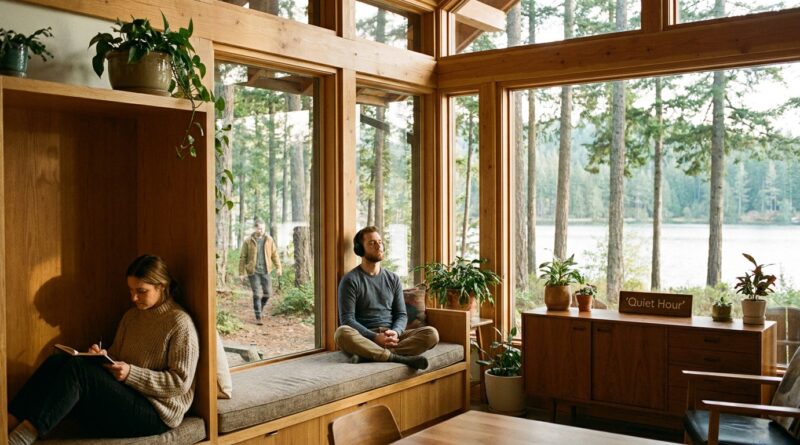
From Offsite To Quiet-Pod Retreat: Why 2026’s Smartest Teams Now Build Solo Recovery Time Into Every Agenda
You can feel the dread before the retreat even starts. The calendar invite says “energizing offsite.” The schedule says breakfast networking, team workshop, breakout sprint, group hike, dinner activity, fireside chat, late-night bonding. It looks generous on paper. To a burned-out team, it can feel like being trapped in a very pretty obligation. That is why the corporate retreat quiet time trend is gaining real traction in 2026. Smart teams are finally admitting something simple. People do not recover from overload by being scheduled harder in a nicer location. They recover when the agenda leaves room to breathe, think, walk, nap, read, or simply be quiet without guilt. Hotels and retreat brands have already caught on with silence-friendly spaces, quiet pods, digital detox packages, and wellness stays built around decompression. Many internal planners have not. If you want people to come back clearer, kinder, and more focused, you need to put solo recovery time on the agenda on purpose.
⚡ In a Hurry? Key Takeaways
- Yes, quiet time is now one of the smartest upgrades you can make to a corporate retreat because it helps reduce burnout, decision fatigue, and social overload.
- Block solo decompression time into the official agenda, label it clearly, and make it guilt-free so employees do not feel they are skipping “real” retreat time.
- Silence should be optional and supportive, not forced. The goal is recovery and better participation, not another rule-heavy wellness exercise.
Why the old offsite formula is wearing people out
For years, companies treated retreats like buffet tables. If some programming is good, more must be better. So planners packed every hour with value. More speakers. More activities. More networking. More team bonding.
That approach made sense when the main problem was getting busy people in one place. But hybrid work changed the emotional math. A lot of employees now spend their weeks bouncing between video calls, notifications, open-plan noise, family demands, and constant context-switching. By the time they arrive at an offsite, many do not need more stimulation. They need a nervous system reset.
This is the heart of the corporate retreat quiet time trend. Teams are starting to realize that an event can be productive without being relentless.
What “quiet time” really means at a retreat
Quiet time is not dead air. It is not bad planning. It is not giving up on engagement.
It means building intentional pockets of low-input time into the retreat so people can recover mentally and socially. That can include solo walks, phone-free lounge areas, reading nooks, quiet pods, optional journaling, spa access, unscheduled afternoons, or simply a block on the calendar that says: no meetings, no group tasks, no expectation to perform.
Why the label matters
If you just leave a random free hour, many people will fill it with email, catch-up work, or anxious small talk. If you label it “solo recharge time” or “quiet recovery block,” you give permission. That changes everything.
Why high performers often need it most
The people who look the most engaged on a packed agenda are often the ones most likely to push past their limits. They will show up to every dinner, every breakout, every sunrise yoga session, and then crash when they get home. Quiet time helps your most committed employees stop treating rest like a reward they have to earn.
Why this trend is growing now
Post-pandemic travel has moved well beyond massages and fruit-infused water. The new focus is decompression. Real decompression. Hospitality brands are packaging silence, better sleep, lower sensory load, and focused recovery as premium experiences. Some call it hushpitality. Others wrap it into optimization-focused wellness stays. Different label, same idea.
Meanwhile, many internal corporate retreat planners are still using the old “keep the energy high” playbook. That gap is getting harder to ignore.
If your venue understands quiet spaces better than your agenda does, your team notices.
The business case is stronger than it sounds
This is not just a soft perk. Recovery time improves the parts of work that leaders say they care about most.
Better decisions
Tired people make noisy decisions. They default to safe ideas, familiar voices, and rushed agreement. A little quiet creates room for reflection, which usually leads to better discussion later.
Less social overload
Not everyone recharges in groups. Even very social employees can hit a wall after back-to-back sessions and team dinners. Introverts feel this first, but they are not the only ones.
More useful participation
People contribute better when they are not fried. A retreat should not just extract energy from attendees. It should restore some too.
Higher goodwill
Employees remember how a retreat made them feel. If they return home exhausted, behind on work, and weirdly resentful, the fancy venue did not help much.
How to build solo recovery time into the agenda without making it awkward
1. Put it on the schedule like it belongs there
Do not hide it. Add a visible block such as “Quiet Recharge Time, 2:00 p.m. to 4:00 p.m.” That tells employees this is part of the retreat, not time they are stealing from it.
2. Give people a few clear options
Some people want silence. Some want a nature walk. Some want to sit alone with coffee and stare at trees. Offer a short menu. For example:
Quiet room access. Guided solo walk map. Spa or recovery lounge. Phone-free reading area. Journaling prompt card. Optional nap window.
3. Make participation flexible
Quiet time works best when it is sanctioned but not policed. You are creating psychological safety, not a monastery.
4. Trim one group activity to make room
If your agenda is too packed to fit recovery time, that is the point. Remove one low-value panel, repetitive icebreaker, or forced evening event. Most retreat schedules have at least one thing people attend out of duty, not benefit.
5. Brief managers before the retreat
If leaders keep pinging their teams during quiet time, the whole idea collapses. Managers need to know this block is protected.
What to say to leaders who worry it will look lazy
Some executives still hear “quiet time” and picture people avoiding work. The better framing is this: recovery is part of performance.
You are not paying for people to do nothing. You are creating the conditions for better thinking, better listening, and more sustainable collaboration.
In fact, if your retreat also has a learning goal, quiet time can make that goal stick. Reflection helps new information land. That pairs nicely with a more skills-focused model, like From Offsite To Skill-Stamped Retreat: Why 2026’s Smartest Teams Now Bring Home A New Certification, Not Just A T‑Shirt, where the retreat produces something more useful than swag and staged photos.
Simple retreat formats that work better in real life
The split-day model
Group sessions in the morning. Quiet solo time in the afternoon. Shared dinner later. This is often the easiest format to sell internally because it still feels structured.
The pulse model
Ninety minutes of group work, followed by 30 minutes of decompression. Repeat. This works well for strategy retreats where attention quality matters.
The arrival reset model
Do not start with an immediate workshop. Let people arrive, settle in, eat, and have a quiet hour before the first session. Starting calmer often means the whole event runs better.
The opt-in evening model
Instead of making every dinner and nighttime activity mandatory, make at least one evening fully optional. This single change can dramatically improve how people feel on day two.
Common mistakes to avoid
Calling it free time, then sneaking in expectations
If people suspect they are still supposed to network, answer messages, or be “seen,” they will not actually rest.
Forcing silence on everyone
Some people recover by moving, sketching, or taking a casual solo coffee break. Quiet should mean lower demand, not one strict format.
Using recovery time as overflow time
Do not let a delayed session eat the quiet block. If anything should be protected, it is the piece most likely to improve the rest of the retreat.
Ignoring the physical setup
You cannot promise decompression and then put people in a loud lobby with nowhere to go. Quiet planning needs real spaces.
At a Glance: Comparison
| Feature/Aspect | Details | Verdict |
|---|---|---|
| Wall-to-wall programming | Keeps people busy but often increases fatigue, social drain, and shallow participation by day two. | Looks productive. Often backfires. |
| Scheduled quiet recovery time | Builds in solo decompression, reflection, and lower sensory load so people return to sessions more focused. | Best fit for burned-out hybrid teams. |
| Optional evening activities | Preserves social choice and reduces the feeling that every hour must be performative. | Easy win with almost no downside. |
Conclusion
The smartest retreat agendas in 2026 are not the loudest or the fullest. They are the ones that understand people are carrying real fatigue into the room. Right now the strongest post-pandemic trend in travel and events is not just wellness. It is deliberate silence and decompression built into high-performing experiences. Hospitality brands are already selling this through hushpitality and recovery-focused retreats, while many corporate planners are still clinging to wall-to-wall programming. Giving teams sanctioned solo time during a retreat helps with chronic burnout, decision fatigue, and social overload, especially for hybrid workers who are already stretched thin. More importantly, it makes the whole event feel humane. That is what turns a retreat from something employees endure into something they actually want to attend.