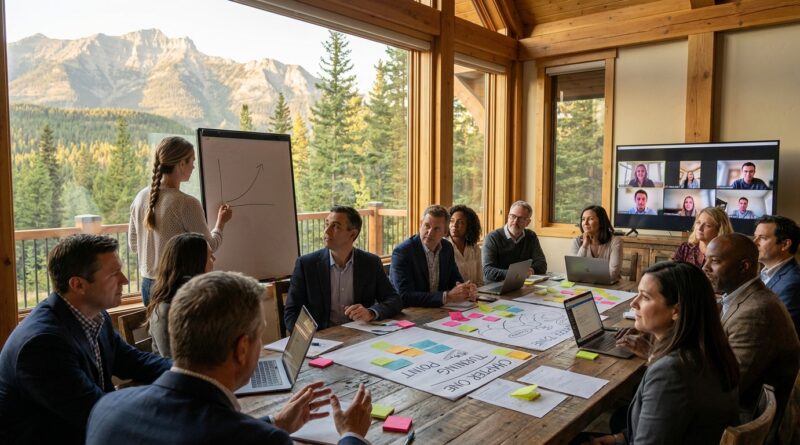
From Offsite To Story-Driven Retreat: Why 2026’s Smartest Teams Turn Gatherings Into Their Origin Myth
You can book the mountain lodge, hire the keynote, print the lanyards, and still end up with a retreat nobody talks about a month later. That is the frustration many leaders feel right now. The money was spent. The calendar was cleared. People traveled. But when everyone gets home, the event melts into the same fuzzy memory as the last three offsites. No clear turning point. No shared language. No story people can repeat.
That is why the smartest teams are moving toward the story driven corporate retreat. Instead of treating the gathering like a pile of sessions, they build it like a good movie. There is a beginning, a tension, a decision, and a next chapter. Every part of the retreat supports one simple idea about who the team is and what it is building next. In a hybrid, AI-accelerated workplace, that kind of clarity matters more than ever. Teams meet less often now. So when they do gather, the event has to do more than fill time. It has to create a memory that guides action later.
⚡ In a Hurry? Key Takeaways
- A story driven corporate retreat works better than a generic offsite because people remember stories, not slide decks.
- Start planning by asking, “What story do we want people to tell when they leave?” Then build the venue, sessions, and activities around that answer.
- This approach can save money and improve follow-through, because every choice has a purpose instead of being a random add-on.
Why old-style offsites are starting to feel flat
Most traditional retreats are built backwards. First comes the venue. Then the agenda. Then someone tries to invent a theme that makes it all look connected.
That is usually where the energy drops.
You get a welcome session, a few leadership talks, maybe a workshop, maybe a wellness break, maybe a team dinner. None of those things are bad on their own. The problem is that they often do not add up to anything people can carry home.
If you asked attendees six months later what the retreat meant, many would say some version of, “It was nice.” That is not enough anymore.
Travel budgets are tighter. Time is tighter. Patience is tighter. Leaders are being asked to prove why a gathering matters.
What makes a story driven corporate retreat different
A story driven corporate retreat starts with narrative, not logistics.
That does not mean writing something cheesy or theatrical. It means choosing a clear arc for the event. What challenge is this team facing? What choice is in front of it? What kind of team does it want to become? What should people believe by the time they go home?
Think of it like this. A regular offsite says, “Here are the topics.” A story driven retreat says, “Here is the journey.”
The core question to ask first
Before you compare venues or invite speakers, ask one question.
What story do we want people to walk out of here telling?
For example:
- “We stopped acting like separate departments and started building as one company.”
- “We faced the hard truth about our next stage and chose focus over noise.”
- “We are no longer maintaining the old business. We are building the next one.”
Once that story is clear, planning gets easier.
Why this matters more in 2026
Hybrid work changed the rhythm of teamwork. People can move fast online, but they do not always build shared meaning online. AI has sped up output, but speed without alignment can create very expensive confusion.
That is why in-person gatherings now carry more weight. They are one of the few moments when a team can reset its identity together.
The best companies have noticed this. They are not just gathering to “connect.” They are gathering to define what happens next, in a way people can remember and repeat.
This is also why the idea connects naturally with From Offsite To Purpose Lab: Why 2026’s Smartest Corporate Retreats Co‑Design The Company’s Next Move With Employees. If your retreat is meant to shape the company’s next move, then the event cannot feel like a random stack of presentations. It has to feel like a meaningful chapter in the company story.
How to build a retreat people will actually remember
1. Pick one narrative arc
Do not try to tell five stories at once. Choose one main thread.
Maybe your arc is transformation. Maybe it is recovery. Maybe it is focus. Maybe it is reinvention.
The point is to give the event a backbone.
If a session, speaker, or activity does not support that backbone, cut it.
2. Choose a venue that fits the story
Bigger is not always better. A ballroom can look impressive and still feel emotionally empty.
If your story is about honesty, rebuilding trust, or making tough choices, a smaller venue may work better. It can create closeness. It can make conversation easier. It can keep the event from feeling like a staged performance.
If the story is about fresh thinking, then a setting with strong local character may help more than a generic chain hotel.
The venue should support the mood, not fight it.
3. Replace long presentations with moments of participation
This is where many retreats lose people. The leadership team talks for hours. Everyone nods politely. Nothing changes.
A story driven corporate retreat gives attendees a role in the plot.
That means shorter inputs, better prompts, and real co-creation. Let teams shape decisions, react to scenarios, and help define the next chapter. People remember what they help build.
4. Use activities as narrative tools, not filler
Wellness, tech demos, local experiences, team challenges. All of these can work. But only if they mean something.
A silent morning walk can reinforce reflection before a strategy reset. A local maker workshop can support a story about craftsmanship and innovation. A simple collaborative exercise can show how work breaks when teams stay in silos.
Random activities entertain. Story-linked activities stick.
5. End with a clear chapter break
The last hour matters more than most planners think.
Do not end with a vague thank-you slide and airport instructions.
End by naming what just happened. What changed? What did the team decide? What words should people carry into Monday?
If possible, give the team a phrase they can repeat. Not corporate jargon. Plain English.
Something like, “This is the year we simplify.” Or, “We build one customer experience, not five disconnected ones.”
What this looks like in practice
Imagine two retreats for the same company.
The old version
Large hotel. Executive updates. Panel discussion. Breakout sessions with vague goals. Cocktail hour. A motivational speaker. People leave with tote bags and 87 photos on their phones.
Ask what changed. You get shrugs.
The story-driven version
Smaller venue. Opening session frames the real challenge facing the business. Teams work in short, focused sessions tied to one core question. Meals are used for cross-team discussion, not just downtime. A local activity is chosen because it reflects the retreat theme. The final session turns decisions into a visible next chapter with owners, language, and follow-up.
Ask what changed. You get the same answer from multiple people.
That is the goal.
Common mistakes to avoid
Trying to please everyone
If your retreat tries to be strategy summit, reward trip, wellness escape, skills boot camp, and culture festival all at once, it will likely become forgettable.
Pick the main job of the event.
Using a theme with no real meaning
Words like “ignite” or “elevate” are fine on a banner, but they do not create memory by themselves.
Your retreat needs a real point of view.
Saving the hard conversations for later
If the room knows there is tension but the agenda avoids it, trust drops fast. A shared story has to feel honest. Not perfect. Honest.
Treating follow-up like admin
The recap email is not the end. It is the first scene after the retreat.
Frame your follow-up as the next chapter. Show progress. Reuse the same language from the event. Remind people what the story was and where it goes now.
How to know if your retreat story is working
You do not need complicated event math for this part.
Ask three simple questions after the retreat:
- Can attendees explain the main point of the gathering in one or two sentences?
- Are different teams using similar language to describe what happens next?
- Did the event lead to a visible change in decisions, behavior, or priorities?
If the answers are yes, the retreat likely did its job.
If the answers are fuzzy, the story was probably fuzzy too.
At a Glance: Comparison
| Feature/Aspect | Details | Verdict |
|---|---|---|
| Planning approach | Traditional offsites often start with venue and agenda. Story driven retreats start with the message people should leave with. | Story-first planning creates stronger recall and better alignment. |
| Session design | Older formats rely on long talks and disconnected breakouts. Story-led retreats use shorter, more focused sessions tied to one narrative arc. | Short, connected sessions keep people engaged and make outcomes clearer. |
| Post-event value | Standard retreats end with recap notes. Story driven gatherings continue as a “next chapter” with repeated language and visible follow-through. | This gives the event a longer shelf life and makes the spend easier to justify. |
Conclusion
The companies getting the most from in-person gatherings are not always spending more. They are being more intentional. Teams are gathering less often and under more scrutiny, while hybrid work and AI have turned speed of alignment into a competitive advantage. That makes the story driven corporate retreat especially useful right now. It cuts through trend overload with one practical question: what story do we want people to walk out of here telling? Once that answer is clear, better choices follow. A smaller venue may beat a ballroom. Short co-creation sessions may beat a day of speeches. Tech, wellness, and local experiences can support the message instead of cluttering it. Most important, the follow-up becomes the next chapter, not another recap email nobody reads. If your next retreat needs to do more than look polished, start there. Give people a story worth carrying home.