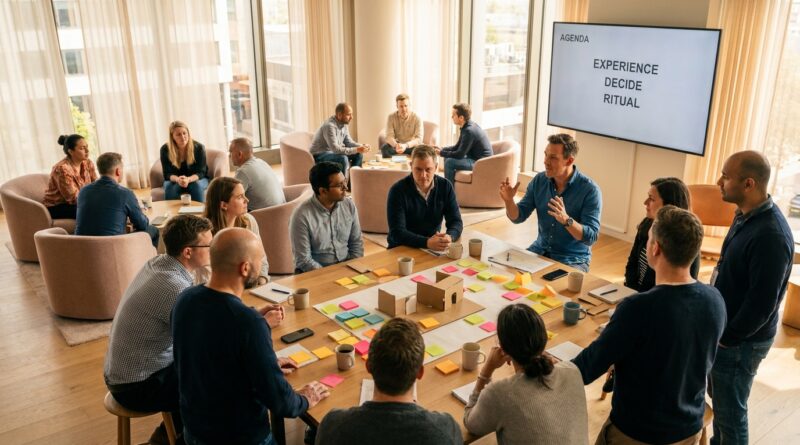
From Offsite To Anchor-Day Retreat: Why 2026’s Smartest Teams Now Build Their Culture Around One Legendary Day A Month
Hybrid work has solved some problems and quietly created a few new ones. A lot of teams now share calendars, projects, and chat channels, but not much actual time together that feels useful. One person comes in Tuesday. Another picks Thursday. The official anchor day arrives, everyone commutes in, and then spends half the day on video calls anyway. It is frustrating, and leaders know it. The old answer was the big offsite, but those take money, planning, and family tradeoffs that many teams cannot keep repeating. The better middle ground in 2026 is simpler. Turn one existing in-office day each month into a real anchor-day retreat. Not a forced fun day. Not a mini conference. One well-planned day with a clear purpose, a few human moments, and work that actually benefits from being in the same room. Done right, it gives hybrid teams the part they are missing most. Shared memory, trust, and momentum.
⚡ In a Hurry? Key Takeaways
- A monthly anchor-day retreat works better for many hybrid teams than rare offsites or random office days.
- Start with one fixed day a month, give it a theme, and design the agenda around discussion, decisions, and connection, not individual desk work.
- This format keeps costs low, respects family schedules, and helps rebuild trust without asking people to travel for several days.
Why the old offsite model is losing its grip
For years, the offsite was treated like the culture reset button. Fly everyone somewhere nice. Add a strategy session, a dinner, maybe a team activity. Hope it fixes the disconnect.
Sometimes it did. Often it did not last.
The problem was never just the event. It was the gap between the event and normal work. Teams would come back energized, then slide straight into scattered calendars, uneven office attendance, and the usual pile of Slack messages. Within a week or two, the glow was gone.
That is why more leaders are moving toward anchor day corporate retreat ideas for hybrid teams. They are not giving up on in-person culture. They are fitting it to how work really happens now.
If this shift sounds familiar, it lines up closely with From Offsite To Commute-Smart Retreat: Why 2026’s Sharpest Teams Now Design Gatherings Around Fixed Hybrid Schedules, which makes a strong case for building gatherings around schedules people already follow.
What an anchor-day retreat actually is
Think of it as a once-a-month reset day built inside your existing hybrid rhythm.
It is not a full retreat in the classic sense. No airport runs. No hotel block. No three-night agenda packed with icebreakers and keynote slides.
It is also not a normal office day with pastries in the kitchen.
An anchor-day retreat is one planned in-person day with a job to do. Usually that job includes three things:
- Work that is better done face to face
- Conversations that build trust faster in person
- A shared experience people remember after the day ends
That last part matters more than it sounds. Teams do not build culture from mission statements alone. They build it from repeated moments. The joke at lunch. The honest project debrief. The whiteboard session that untangles a messy issue in 20 minutes.
Why one great day a month works so well
It is easier to justify
Most companies can support one higher-quality office day a month far more easily than multiple big retreats a year. The budget is lighter. The logistics are simpler. The disruption is smaller.
It respects real life
People have school pickups, caregiving duties, long commutes, and limited appetite for extra travel. A one-day format asks less and often gets better buy-in.
It turns routine into ritual
Random office attendance creates drift. A recurring monthly retreat creates rhythm. People know when it is coming, what it is for, and why it matters.
It fixes the biggest hybrid mistake
Too many teams bring people in to do work they could have done from home. If staff commute in just to sit quietly with headphones on, resentment builds fast. A good anchor-day retreat uses in-person time for things screens are bad at.
What to put on the agenda, and what to leave out
The rule is simple. If it could have been an email, a solo task, or a standard Zoom, it does not belong in the core of the day.
What belongs
- Decision-making sessions with the right people in the room
- Cross-team problem solving
- Project kickoffs and post-mortems
- Coaching and feedback conversations
- Customer story reviews
- Celebrations, welcomes, and team recognition
- Informal meals with enough time to actually talk
What does not
- Status updates that can be shared in advance
- Slides read aloud to people
- Long blocks of silent laptop work
- Back-to-back meetings with remote attendees on a screen all day
If you are asking people to travel in, make the room matter.
A simple monthly template that busy managers can actually use
You do not need an event planner and a giant budget. You need a repeatable shape.
Sample anchor-day retreat schedule
9:00 to 9:30: Arrival, coffee, no formal presentation. Let people land and chat.
9:30 to 10:00: Team opening. One leader sets context. What matters this month. What decisions need to be made today.
10:00 to 11:30: Working session one. Strategy, planning, or problem-solving.
11:30 to 12:00: Short break and informal check-ins.
12:00 to 1:00: Lunch with mixed seating. Avoid the same department clumping every time.
1:00 to 2:30: Working session two. Cross-functional topic or project review.
2:30 to 3:00: Recognition, wins, shout-outs, welcomes.
3:00 to 4:00: Human time. Could be a walk, guided conversation, customer panel, or light activity.
4:00 to 4:30: Wrap-up. What got decided. What happens next. Who owns what.
That is enough. You do not need to fill every minute with entertainment. In fact, overstuffing the day usually makes it worse.
Anchor day corporate retreat ideas for hybrid teams that do not feel cheesy
This is where many managers get nervous. They want connection but do not want eye-rolling. Fair enough.
Try activities that have a point and feel adult.
1. The month-in-review wall
Print key wins, customer feedback, launches, lessons learned, and a few team photos. Let people walk through the month together. It helps newer employees connect dots quickly.
2. Ask-me-anything with leadership
Short, honest, and lightly moderated. Not a polished speech. Just useful answers to real questions.
3. Project clinic
Each team brings one stuck issue. Small mixed groups spend 20 minutes helping solve it. This creates practical value and cross-team respect.
4. New joiner speed rounds
Five-minute rotations so newer staff meet people outside their immediate lane. Better than one awkward introduction at the start of a meeting.
5. Customer reality check
Play a support call clip, read survey comments, or review a case study. Teams often reconnect faster when they focus on the people they serve.
6. Walking one-to-ones
Build in 20-minute walking chats between people who rarely work closely together. Low pressure. High payoff.
7. Skills swap mini-session
One teammate shows a useful trick, process, or shortcut. Keep it short and practical.
8. Team meal with prompts that do not feel forced
Skip childish icebreakers. Try prompts like, “What is one thing slowing us down?” or “What would make next month easier?”
How to avoid the three biggest anchor-day mistakes
Mistake 1. Calling it a retreat but running a normal meeting day
If the agenda is mostly updates and laptop work, people will notice. Fast.
Fix it by asking one question for every session. Why must this happen in person?
Mistake 2. Making it all social and no substance
People do want connection, but they also want progress. If the day feels fluffy, trust drops.
Fix it by pairing one meaningful work block with one human-centered block. Not one or the other. Both.
Mistake 3. Forgetting the follow-through
A great day that leads nowhere becomes another nice memory with no result.
Fix it by ending with a simple recap. Decisions made. Owners assigned. Next check-in date.
What smaller teams can do on a tight budget
This model is especially useful for lean people teams and managers who are already stretched.
You do not need a rented venue every month. Use your office, a nearby meeting space, or even a community venue when needed. Spend money where it counts:
- Good food
- Comfortable space
- Clear agenda design
- Occasional outside facilitation for tough topics
Cut the extras nobody remembers. Branded swag. Fancy production. Long slide decks.
People remember whether the day felt worthwhile.
How often should you do a bigger offsite now?
For many teams, the answer is less often but with better timing.
A monthly anchor-day retreat can handle the regular maintenance of culture and alignment. Then a larger offsite, once or twice a year, can focus on deeper planning, major milestones, or company-wide bonding.
That split tends to work better than treating the annual offsite as the only time culture gets attention.
How to tell if it is working
You do not need a complicated dashboard. Start with a few signs.
- Attendance improves without heavy pushing
- People stay for the full day and participate
- Cross-team issues get solved faster
- New hires integrate more quickly
- Managers report fewer misunderstandings and less drift
- Staff feedback mentions the day as useful, not just pleasant
Ask for simple feedback after each one. What should we keep, stop, and change next month? The format should improve over time.
At a Glance: Comparison
| Feature/Aspect | Details | Verdict |
|---|---|---|
| Traditional offsite | High travel cost, more planning, strong short-term energy, harder to repeat often | Best for big annual moments, not monthly culture repair |
| Standard anchor day | Easy to schedule, but often turns into ordinary office work and scattered meetings | Too flat if left unplanned |
| Monthly anchor-day retreat | Low travel burden, repeatable format, focused collaboration, stronger team rituals | Best fit for many hybrid teams in 2026 |
Conclusion
Most teams are not going back to the old pattern of several multi-day offsites a year, and they do not need to. Structured hybrid is sticking. Anchor days are already part of the calendar. The smart move is to make one of those days matter. A monthly anchor-day retreat gives managers and people teams a realistic way to turn an existing office day into something people can feel. It is lighter on budget, easier on family life, and much closer to how work actually looks now. If your team feels a little scattered, a little transactional, or just plain tired of commuting in for no clear reason, this is a practical fix. Start small. Pick one day. Give it purpose. Then repeat it well enough that it becomes part of your culture, not just another date on the calendar.