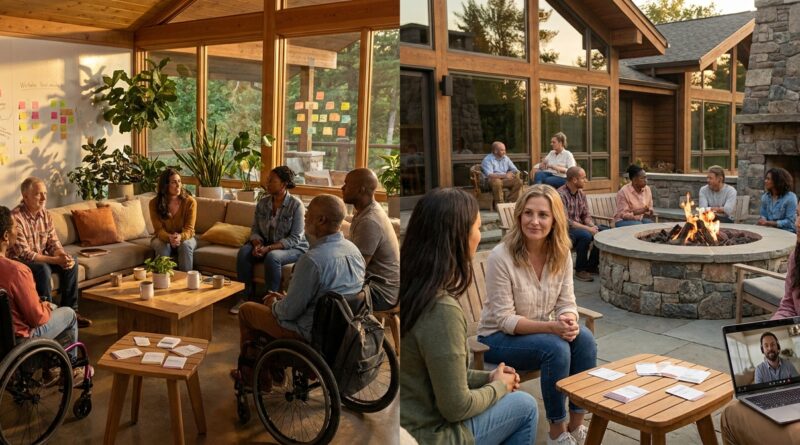
From Offsite To Belonging-Retreat: Why 2026’s Smartest Teams Now Design Gatherings Around Who Feels Left Out
You can feel the letdown almost as soon as the retreat starts. The resort is lovely. The food is expensive. The photos look like proof that your culture is thriving. But the new hire sits quietly at dinner. The remote employee spends half the day trying to catch up on side jokes. The caregiver leaves early from the late-night bonding event. The introvert nods through team-building games, then flies home feeling more observed than included. That is the real post pandemic corporate retreat belonging problem. Leaders are not just being asked to bring people together anymore. They are being asked to show that in-person time changes trust, communication and decision-making in a real way. The smartest teams in 2026 are responding by planning retreats around one simple question. Who is most likely to feel left out, and what would help them feel like they truly belong?
⚡ In a Hurry? Key Takeaways
- A great retreat is no longer judged by energy or attendance alone. It should be judged by whether quieter, newer and more distant employees leave more connected than they arrived.
- Start planning with the people most likely to feel excluded. Build the schedule, room setup and social time around their needs first.
- This approach protects your travel budget from being seen as a perk with no purpose, and makes it easier to show real value after everyone is back on Zoom.
Why the old offsite formula keeps missing the point
For years, many company retreats were built for the most socially comfortable people in the room. Big kickoffs. Loud dinners. Packed agendas. Optional activities that never really felt optional.
That used to pass as culture-building. Now it is getting a harder look.
After the pandemic, teams changed. Some people were hired remotely and still do not have the easy trust that comes from hallway chats. Some workers are caring for children, parents or both. Some employees are more productive than ever at home but feel awkward when suddenly dropped into a highly social in-person setting. And some people are simply tired of performative togetherness.
So when leaders ask why a retreat did not create better alignment, the answer is often simple. The event was designed around logistics and optics, not around belonging.
What a belonging-first retreat actually means
A belonging-first retreat does not mean making everything soft, slow or overly careful. It means being intentional about who gets included, how, and when.
Think of it this way. Most retreats are designed around a schedule. Better retreats are designed around outcomes. The best ones are designed around people who usually get the least from these events.
Ask the uncomfortable question early
Before you book the venue, ask this: who tends to leave our gatherings feeling like a guest instead of a trusted insider?
Common answers include:
- new hires who have not built natural relationships yet
- remote staff who are not part of office rhythms
- introverts who do better in smaller groups
- caregivers who cannot stretch into every dinner and late-night activity
- employees from underrepresented groups who are often expected to adapt to the dominant style in the room
That list should shape the retreat more than the chef selection or welcome bag ever will.
Start with design, not damage control
A lot of retreat planning still works backward. Leaders approve travel. A venue gets booked. Then HR or internal comms tries to patch over inclusion gaps with a few wellness breaks and a feedback form.
That is too late.
The smarter move is to build belonging into the structure from the start. This is one reason the shift toward co-designed events matters. If you want a useful companion read, From Offsite To Purpose-Built Retreat: Why 2026’s Smartest Teams Now Co‑Design The Agenda With Their People gets at the same core idea. People support what they help shape. More importantly, they tell you where the blind spots are before those blind spots become resentment.
What to gather before planning
You do not need a giant culture survey. You need useful signals.
- Ask who felt energized by the last retreat, and who felt drained.
- Find out which parts felt most useful, and which felt performative.
- Ask what made participation harder than it needed to be.
- Look at who spoke in sessions, who skipped optional events and who left with stronger cross-team ties.
This is not about making everyone happy. It is about removing predictable barriers.
The practical blueprint leaders can use this quarter
1. Define one belonging outcome
Do not settle for “better morale.” That is too vague to defend when budgets get tight.
Pick one specific outcome, such as:
- new hires leave with three real relationships outside their direct team
- remote and in-office staff report equal access to leaders during the retreat
- cross-functional project teams form naturally after the event
If you cannot name the change you want, you will not know whether the spend worked.
2. Plan the room for participation, not just presentation
A ballroom setup tells people to listen. Smaller circles tell people to speak.
If belonging matters, use formats that lower the social risk of joining in. Think table discussions, guided pair conversations, short facilitated breakouts and quiet reflection before group sharing. This helps people who need a little processing time, and it stops the most confident voices from taking over every discussion.
3. Rethink the social events
This is where many retreats quietly fail.
When the “real bonding” is pushed into cocktail hours, late dinners or physically demanding outings, a lot of people are excluded without anyone meaning to exclude them.
Instead:
- schedule meaningful connection earlier in the day
- offer more than one way to participate socially
- make at least one low-noise, low-pressure option feel just as legitimate as the lively one
- avoid making attendance at late events the unofficial test of commitment
4. Give new hires a social on-ramp
Newer employees often have the most to gain from a retreat, and the hardest time entering existing circles.
Pair them with a thoughtful host, not just a manager. Give them context before sessions. Introduce them by strengths and work, not just title. Build in structured moments where they can contribute early, before social hierarchies settle in.
The point is simple. People belong faster when they are useful, seen and welcomed in small moments, not just applauded in big ones.
5. Make leadership access real
One of the biggest missed chances at retreats is leader visibility without leader accessibility. Employees see the executive team on stage, but never get a comfortable chance to talk to them.
Fix that with smaller hosted lunches, rotating discussion tables, office-hours style sessions or guided Q and A circles. Not everyone will walk up to a senior leader at a reception. Many will speak in a smaller, more predictable setting.
How to tell if your retreat created belonging
The cleanest test is not whether people had fun. It is whether communication patterns changed afterward.
Watch for signs like:
- more cross-team messages and follow-ups after the retreat
- new hires reaching out more confidently in meetings
- remote staff being included faster in decisions
- employees naming specific people they now trust
This matters because leaders are being pressed to justify every travel dollar. A belonging-first retreat gives them something much stronger than “the team enjoyed it.” It gives them evidence that in-person time repaired distance and improved collaboration.
What belonging is not
It is not forced vulnerability. It is not making every session emotional. It is not asking underrepresented employees to do extra labor explaining inclusion to everyone else.
Belonging is a design choice. It shows up in timing, seating, pacing, facilitation and expectations. It is often less about adding something dramatic and more about removing the small frictions that tell people, quietly, this event was built for someone else.
Common mistakes that still trip teams up
Confusing attendance with connection
Just because everyone showed up does not mean they were included.
Overpacking the agenda
People need breathing room to build trust. If every minute is scripted, the human part never catches up.
Calling something optional when it clearly is not
Employees notice when career visibility happens at the bar or golf course.
Ignoring re-entry
The retreat should not end at checkout. If managers do not reinforce new connections once everyone is back online, the gains fade fast.
Make the post-retreat follow-through part of the plan
This is the part many teams skip. They spend heavily on the gathering, then return to the exact same meeting habits and silos.
Before the retreat ends, set up the next step:
- cross-team check-ins for people who met there
- small project pairings that keep new relationships active
- manager prompts for bringing quieter voices into the next few meetings
- a simple 30-day review of what actually changed
If belonging does not carry back into normal work, it was probably just a pleasant interruption.
At a Glance: Comparison
| Feature/Aspect | Details | Verdict |
|---|---|---|
| Traditional offsite | Built around venue, presentations and broad morale goals. Often rewards the most outgoing and available attendees. | Looks polished, but often leaves inclusion gaps untouched. |
| Belonging-first retreat | Starts with who may feel excluded, then shapes agenda, social time and facilitation around real participation. | More likely to change trust and communication after the event. |
| Budget justification | Measures outcomes like cross-team ties, leader access and new-hire integration instead of vague “good energy.” | Best option when finance and leadership want proof the spend solved something specific. |
Conclusion
The retreat question for 2026 is no longer “How do we get everyone in one place?” It is “What changes for the people who usually leave feeling outside the circle?” That is why the post pandemic corporate retreat belonging conversation matters so much right now. Leaders need more than photos, applause and a temporary boost. They need a clear reason to spend on travel, a way to repair trust after rushed return-to-office moves, and a gathering model that actually changes who talks to whom once normal work resumes on Zoom. A belonging-first retreat gives you that. It gives you language, structure and practical moves you can use this quarter. And if you do it well, the people who used to leave feeling invisible will leave feeling connected, useful and far more likely to stay.