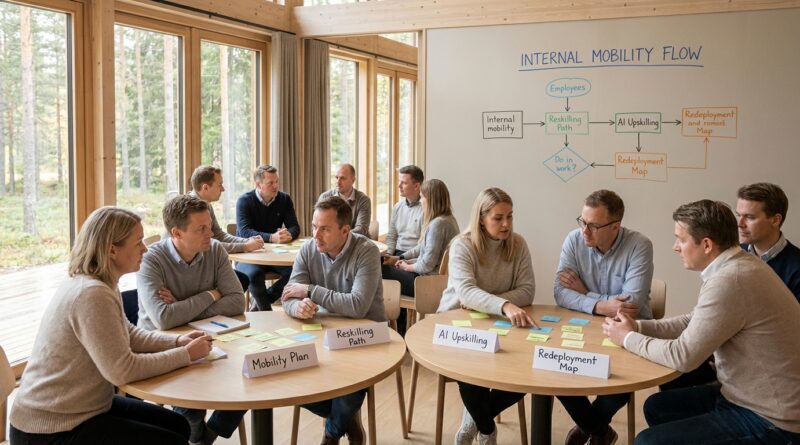
From Offsite To Job-Security Retreat: Why 2026’s Smartest Teams Now Use Gatherings To Face Layoffs Head‑On
People can tell when an offsite is dodging the real issue. They see the upbeat slides, the branded hoodies, the team dinner, and then glance down at their phones and read another round of layoff news. It is exhausting. Post-pandemic, many workers are not asking whether the snacks will be good or if the hotel has nice views. They are asking a much harder question. Am I safe here, and if not, what happens to me next? That is why some of the smartest companies in 2026 are changing the point of the retreat itself. Instead of treating layoffs, restructuring, and AI anxiety like awkward topics to avoid, they are putting them at the center of the agenda. Done well, this does not turn a gathering into a funeral. It turns it into something far more useful. A clear, honest, practical conversation about what is changing, what skills matter now, and how people can still build a future inside the company.
⚡ In a Hurry? Key Takeaways
- For 2026, the best post pandemic corporate retreat ideas for layoffs and restructuring focus on honesty, career clarity, and internal mobility, not fake positivity.
- Build sessions around direct leadership Q&A, skills mapping, and real pathways to new roles so people leave with a plan.
- If employees feel safe asking hard questions, you cut rumor-driven panic and make the retreat worth more than any swag bag.
Why the old offsite playbook is breaking
For years, the basic retreat formula was simple. Get everyone together. Run a few strategy sessions. Add a happy hour. Take photos that make the company look united and energized.
That formula works a lot less well when people suspect a reorg is coming.
When employees are already worried about budget cuts, AI replacing parts of their job, or another round of “streamlining,” a cheerful offsite can land badly. Not because people dislike connection. They need it more than ever. The problem is the mismatch. If the room feels upbeat but nobody is saying the obvious thing out loud, trust drops fast.
That is the big shift behind newer retreat planning. The event is no longer just about culture. It is about reassurance, transparency, and next steps.
What a job-security retreat actually looks like
This is not a retreat where leaders stand on stage and promise that everything is fine. Most employees can spot that kind of spin in about 30 seconds.
A job-security retreat is built around candor. It accepts that people are anxious, then gives them useful information instead of vague optimism.
1. Leaders answer the question everyone is already asking
Start with the hard part early. Do not make people sit through hours of product updates before hearing about restructuring risk.
A strong opening session covers:
- What changes the company expects over the next 6 to 12 months
- Which teams or functions may shift
- How AI is changing workflows
- What the company can say clearly, and what it cannot yet promise
The key here is plain language. No jargon. No dodging. If there are unknowns, say so. People usually handle uncertainty better than they handle corporate theater.
2. Career survival becomes part of the agenda
This is where many retreats miss the mark. They talk about business goals but not employee futures.
If you want the gathering to feel useful, include sessions such as:
- Skills that are growing in value inside the company
- Roles likely to expand even during restructuring
- Internal mobility options across departments
- How to document transferable skills
- How managers can support role changes instead of blocking them
Think of it this way. Employees do not need a pep talk nearly as much as they need a map.
3. Managers get trained too
One of the biggest weak points in any restructuring is the middle layer of management. Leaders at the top may have talking points. Employees have fears. Managers are stuck in the middle, often with incomplete information.
So use part of the retreat to train managers on how to handle questions like:
- “Is our team at risk?”
- “Should I start looking elsewhere?”
- “What skills should I build now?”
- “How does AI affect my role?”
If managers freeze, get defensive, or overpromise, rumors fill the gap immediately.
Why this works better than “business as usual”
It sounds counterintuitive, but talking openly about instability often makes people calmer.
Not because the news is always good. Sometimes it is not. But when workers feel that leadership is willing to tell the truth, even when the truth is uncomfortable, they stop spending so much energy reading between the lines.
That matters for morale. It also matters for productivity. A team running on rumors is distracted, defensive, and less likely to take smart risks.
A retreat that names the fear in the room can create something rare: psychological safety. Not the fluffy, overused version. The real version. The kind where people can ask, “What happens if my role changes?” and get a straight answer.
Practical post pandemic corporate retreat ideas for layoffs and restructuring
If you are planning a gathering and want it to help rather than backfire, here are formats that make sense in 2026.
Run an “ask me anything” with ground rules
Open Q&A works best when employees can submit questions in advance and live during the session. Let people ask anonymously. Have a moderator group similar questions and push for direct answers.
Ground rules matter:
- No punishing people for blunt questions
- No PR-style non-answers if a direct answer is possible
- A written follow-up after the retreat for unanswered questions
Hold a skills triage workshop
This sounds more dramatic than it is. The goal is to help people sort their work into three buckets:
- Skills the company still needs badly
- Skills likely to change because of automation or AI
- Skills employees should start building next
That gives people a realistic sense of where they stand without forcing them to guess.
Create an internal mobility fair
Set up short sessions where department leaders explain open roles, future needs, and likely hiring areas. Think of it like a career fair, but inside your own company.
This is especially useful during restructuring because people often assume layoffs are the only path. Sometimes the better path is movement.
Offer one-on-one career clinics
Bring in HR, learning teams, or trusted senior managers for private 20-minute sessions. Employees can ask about role changes, promotion timing, skills gaps, and realistic next steps.
Privacy is important here. Many people will not raise these topics in a group setting.
Replace one “fun” block with a real planning block
You do not need to strip all joy from the retreat. Shared meals and informal time still matter. But if the agenda is packed with icebreakers and almost no career clarity, employees will notice.
One practical swap is simple. Cut one low-value bonding activity and replace it with a future-of-work planning session.
What leaders should say, and what they should avoid
Say this
- “We know people are worried, and we are going to address that directly.”
- “Here is what we know today.”
- “Here is what is still undecided.”
- “Here is how we will support internal moves and retraining.”
- “We will share updates by this date, even if the answer is still evolving.”
Avoid this
- “We are one big family.”
- “Change is exciting for everyone.”
- “There is nothing to worry about,” when people clearly have reason to worry
- Long speeches about resilience that never get specific
People do not expect perfection. They do expect honesty.
The hidden benefit: You learn what your people are really afraid of
These retreats are not just a chance for leadership to talk. They are a chance to listen.
When employees finally feel safe enough to ask hard questions, patterns show up fast. You may learn that workers are less worried about layoffs than about being trapped in outdated roles. Or that they are more anxious about AI tools being imposed without training than about the tools themselves.
That kind of feedback is gold. It tells you what support actually matters.
How to keep the retreat from feeling bleak
There is a fair concern here. If you focus on layoffs and restructuring, will the whole event feel heavy?
Only if you stop at the problem.
The best gatherings do two things at once. They tell the truth about uncertainty, and they show people where they still have agency. That mix matters. Workers can handle difficult news much better when they leave with specific options.
So yes, talk about the risk. But also talk about:
- New training budgets
- Mentorship for people shifting roles
- Internal job boards and first-look hiring programs
- Manager support for cross-functional moves
- Real examples of employees who adapted successfully
That keeps the retreat grounded instead of grim.
Signs your retreat is still just a photo-op
If you are not sure whether your current plan is helping or hurting, look for these warning signs:
- The agenda avoids any mention of restructuring
- There is no open Q&A with leadership
- Employees hear more about brand values than career paths
- AI is discussed only as a growth story, not a job-change story
- Managers have no guidance for follow-up conversations
If that sounds familiar, your team may leave with nice photos and worse anxiety.
At a Glance: Comparison
| Feature/Aspect | Details | Verdict |
|---|---|---|
| Traditional offsite | Focuses on morale, strategy updates, and team bonding while sidestepping layoff fears and role uncertainty. | Looks positive, but can feel tone-deaf during restructuring. |
| Job-security retreat | Includes direct leadership Q&A, skills planning, internal mobility sessions, and honest talk about AI and reorgs. | Best choice for building trust in an anxious 2026 workplace. |
| Employee outcome | Traditional events send people home with swag. Better-designed retreats send them home with information, options, and follow-up steps. | Clarity beats giveaways every time. |
Conclusion
With 2026 shaping up as a year of constant restructuring, teams are worn out by cheerful offsites that ignore the churn waiting back at work. The smarter move is not to cancel gatherings. It is to make them more honest and more useful. A retreat that directly addresses job security, skills transitions, and internal mobility can build trust at the exact moment trust is hardest to keep. It can cut rumor-fueled panic, give managers a better script, and give employees something they rarely get during times of change: a safe place to ask blunt questions and hear real answers. If people leave with a clearer view of their future, the retreat did its job. If they only leave with a tote bag, it probably did not.