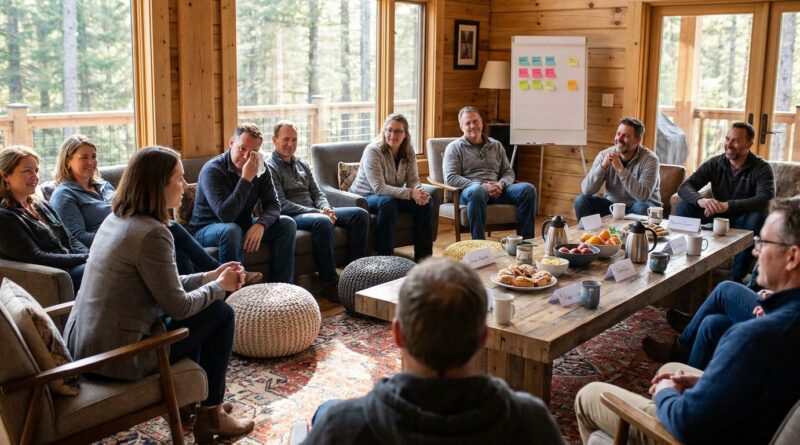
From Offsite To Belonging-Retreat: Why 2026’s Smartest Teams Now Design Gatherings Around Workplace Loneliness
Your team might be performing well on paper and still feel strangely alone. That is the part many leaders miss. People log into meetings, hit deadlines, show up for the midweek office day, then go home without feeling known by the people they work with. It is frustrating because companies are spending real money on retreats, yet too many of those gatherings feel like the same workweek with better lighting and a nicer hotel. The old offsite model was built to share plans. The new problem is human disconnection. In 2026, the smartest teams are starting to accept a simple truth. If your people are dealing with post pandemic corporate retreat loneliness and belonging issues, then a retreat should not treat connection like a side activity. It should be the main event. When belonging is designed on purpose, strategy gets easier, trust forms faster, and people stop feeling like strangers working under the same logo.
⚡ In a Hurry? Key Takeaways
- Teams are replacing traditional offsites with belonging-focused retreats because loneliness is quietly hurting trust, energy, and culture.
- Start by designing small-group conversations, shared meals, and follow-up rituals before you plan slides, speakers, or swag.
- A retreat cannot fix a broken culture in two days, but it can create the social glue that makes daily work safer, smoother, and more human.
Why the old offsite is starting to fail
For years, the standard company retreat had a familiar formula. Fly everyone in. Put up a big stage. Share goals. Run a workshop. Add one fun evening event. Call it culture.
That formula made some sense when people spent most of their week together in person. They already had hallway chats, lunch buddies, and casual moments to build trust. The retreat was just an extra boost.
Hybrid work changed that.
Now many employees see co-workers mainly through scheduled calls. They know job titles, not personalities. They hear updates, not stories. They collaborate, but they do not always connect. So when they arrive at a retreat, they are not just ready for strategy. They are hungry for real human contact.
Loneliness at work is not soft. It shows up in hard business problems.
Some leaders still hear the word “belonging” and assume it is vague or optional. It is not. When people feel isolated at work, the effects show up everywhere.
What it can look like
Meetings stay polite but flat. Cross-team handoffs feel clunky. Feedback gets avoided. New hires take longer to settle in. Managers sense disengagement but cannot quite name the cause. People do the work, but there is very little lift, warmth, or shared momentum.
This is why post pandemic corporate retreat loneliness and belonging has become such an important planning issue. The retreat is one of the few moments when a hybrid team can reset how it feels to work together.
What a belonging-retreat does differently
A belonging-retreat does not ignore business goals. It simply puts human connection first because that is what makes the business goals easier to reach later.
Think of it this way. A normal offsite asks, “What do we need everyone to know?” A belonging-retreat asks, “What do people need to feel so they can do their best work together?”
The shift in priority
Instead of filling the agenda with long presentations, these retreats make room for conversation. Instead of treating networking as something that happens during coffee breaks, they build connection into the structure itself.
That means more thought goes into table mixes, shared activities, story prompts, team rituals, and quiet spaces where people can talk honestly. It sounds simple. It is. But it works because it matches the actual problem.
How to design a retreat around belonging
You do not need a giant budget or a celebrity keynote. You need intention.
1. Start with the real outcome
Do not begin with the venue. Begin with the human result you want.
Ask questions like these:
- Do people leave with two or three stronger relationships?
- Do remote employees feel less like outsiders?
- Do newer team members feel seen and included?
- Do managers understand their people beyond project status?
If the answer is yes, you are designing for belonging. If the answer is mostly about slides and announcements, you are probably planning an old-style offsite.
2. Use small groups, not just big rooms
Big sessions have their place, but belonging rarely happens in rows of chairs facing a stage. It happens in smaller, safer settings.
Try groups of four to six people. Give them prompts that are specific enough to be useful and personal enough to matter. Not “Tell us about yourself.” More like, “What part of your work week drains you?” or “What is something your team relies on you for that most people do not see?”
Those prompts open the door to empathy. They help people move past job descriptions.
3. Plan shared meals with purpose
Meals are not filler between sessions. They are one of the best tools you have.
Do not let everyone sit with the same familiar people every time. Assign some seating lightly and thoughtfully. Mix departments. Mix seniority. Mix office regulars with remote-first staff. Give each table one good conversation starter and then let people talk.
This feels natural, not forced, when done well.
4. Make room for stories, not just updates
Facts inform. Stories connect.
Ask leaders and employees to share moments that changed how they work, what they learned during the hard parts of hybrid work, or what kind of support helps them do their best work. A five-minute honest story can do more for trust than a polished 30-slide presentation.
5. Protect unscheduled time
This surprises people. One of the biggest mistakes in retreat planning is overpacking the schedule.
If every minute is controlled, people have no chance to follow up on a meaningful chat or simply relax enough to connect. Leave breathing room. Belonging often forms in the spaces between official agenda items.
6. Do not end the feeling at checkout
A retreat should start something, not just create a nice memory.
Set up simple follow-through. Pair people for monthly coffee chats. Create small peer circles. Ask managers to reference retreat conversations in one-on-ones. Build a few rituals that continue once everyone is back at work.
Without that step, even a great retreat can fade fast.
What leaders often get wrong
The most common mistake is treating connection as entertainment. A fun activity can help, but belonging is not the same as booking a trivia night or a cocktail hour.
People feel connected when they are included, understood, and able to participate without pretending. That takes design.
Three traps to avoid
- Too much stage time. If senior leaders talk all day, everyone else stays in audience mode.
- Forced vulnerability. Not everyone wants to share deeply with strangers right away. Build trust in layers.
- One-size-fits-all socializing. Not every person connects best in loud evening events. Offer quieter options too.
Why this matters even more in hybrid teams
Hybrid work is not just about where people sit. It changes how relationships form.
Office regulars naturally pick up more casual contact. Remote employees often miss that invisible glue. They may join the same meetings and still feel one step outside the circle. A belonging-retreat helps correct that imbalance by giving everyone a fuller, more equal chance to connect as people.
This is one reason the smartest companies now take post pandemic corporate retreat loneliness and belonging seriously. They know loneliness is not always dramatic. It is often quiet, polite, and expensive.
What success actually looks like
A successful belonging-retreat does not always look flashy.
Sometimes it looks like a product manager finally understanding what support a designer needs. It looks like a new hire feeling comfortable enough to speak up. It looks like a remote team member no longer dreading group calls because they now know the people behind the faces on screen.
That kind of progress can seem small. It is not. It changes how work feels the next Monday, and the Monday after that.
At a Glance: Comparison
| Feature/Aspect | Details | Verdict |
|---|---|---|
| Traditional offsite | Heavy on strategy decks, executive updates, and tightly packed agendas. | Useful for alignment, weak for fixing isolation. |
| Belonging-retreat | Built around small-group conversations, shared experiences, and relationship-building by design. | Best choice for hybrid teams that need stronger trust and culture. |
| Follow-up after the event | Light rituals, check-ins, and peer connections keep the retreat from becoming a one-off moment. | Essential if you want lasting change instead of a temporary high. |
Conclusion
Workplace loneliness is real, and it does not disappear just because a team shares goals, chat channels, or a nice resort for two days. In a hybrid world, people can be productive and disconnected at the same time. That is why the move from offsite to belonging-retreat matters. It meets the problem honestly. Leaders already see the warning signs in disengagement, quiet quitting, and brittle culture. The answer is not another packed agenda full of keynotes. It is a smarter gathering design that treats connection as the main outcome, not the side dish. When the Corporate Event world puts belonging at the center, retreats stop being expensive calendar events and start becoming repair tools for the social fabric of work. And once that fabric is stronger, every meeting after that gets easier, faster, and a lot more human.