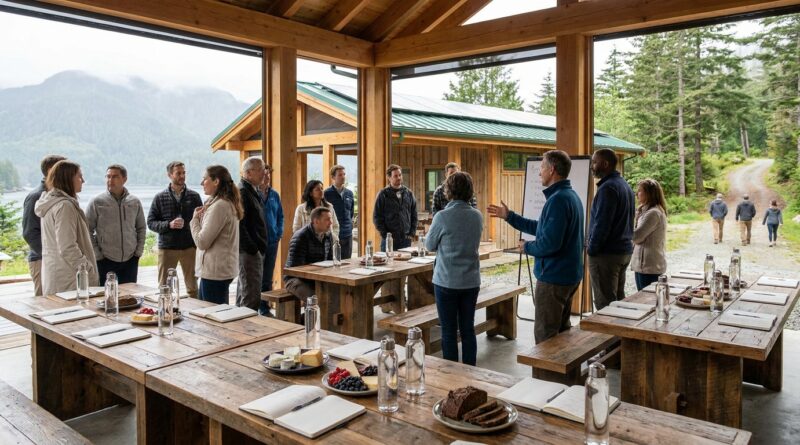
From Offsite To Climate-Conscious Retreat: Why 2026’s Smartest Teams Now Chase Cool Air Instead Of Hot Destinations
You can feel the trap, can’t you. Leadership wants a retreat that feels fresh and meaningful, but the shortlist keeps filling up with overheated resort towns, crowded airports, and venues that talk a big sustainability game while serving bottled water by the pallet. Meanwhile, your people are less willing than they were a few years ago to put up with long travel days, sticky weather, and forced fun in a place that looks great on Instagram but leaves everyone drained. That is why post pandemic climate conscious corporate retreats are moving from niche idea to smart default. Cooler regions, shoulder-season dates, and lower-density destinations are not just a style choice. They solve real problems. They protect energy, reduce stress, support accessibility, and give Finance something better than a vague promise. If you are trying to please People, Ops, ESG, and budget at the same time, this shift is not risky. Repeating the old template is.
⚡ In a Hurry? Key Takeaways
- Climate-conscious retreats work because cooler, calmer destinations reduce burnout, weather risk, and travel friction at the same time.
- Start with a simple planning filter: temperature, crowding, air quality, travel time, and venue sustainability proof before you compare room rates.
- This is not just about optics. It supports health, DEI, ESG reporting, and retention by making the trip genuinely easier on people.
Why the old retreat formula is starting to fail
For years, the standard offsite recipe was simple. Pick somewhere sunny. Add a golf course, a rooftop dinner, maybe a team photo at sunset, and call it memorable.
That recipe is aging badly.
Heat waves are more common. Popular destinations are more crowded. Travel delays are more disruptive. And employees who now split time between home and office are much less patient with uncomfortable, exhausting trips.
That is the key shift. People are not rejecting retreats. They are rejecting bad energy management disguised as company culture.
If your team spends half a day in transit, arrives in 96-degree heat, waits in check-in lines, and then gets pushed into outdoor programming at 2 p.m., the retreat has already started in a deficit. No keynote fixes that.
What a climate-conscious retreat actually means
It does not mean making everyone sleep in a cabin with no heating and calling it sustainable.
A climate-conscious retreat is a company gathering designed around human comfort, environmental conditions, and practical sustainability choices. It asks a better set of planning questions.
Instead of asking only “What looks impressive?” ask:
What destination will keep people physically comfortable?
What time of year lowers climate risk?
What travel pattern reduces exhaustion?
What venue can show real sustainability practices, not just marketing copy?
What location gives us breathing room instead of crowd pressure?
This is where smart teams are changing course. They are moving away from “hot destination equals desirable destination” and toward “calm, cool, and workable equals successful retreat.”
Why cooler and lower-density locations are gaining ground
There are three big reasons.
1. Heat changes behavior
Extreme heat is not a small inconvenience. It affects sleep, focus, mobility, hydration, and mood. It can also create real health concerns for employees who are pregnant, disabled, older, managing chronic illness, or sensitive to medications that affect heat tolerance.
If your retreat depends on everyone thriving in hot weather, you are already narrowing who can fully participate.
2. Crowding drains people fast
Big-name destinations often come with packed airports, busy streets, slow transfers, noisy hotels, and fully booked restaurants. That can be fun on a personal holiday. It is much less fun when the goal is recovery, connection, and clear thinking.
Many planners are now blending climate-conscious choices with smaller-scale destination strategy. That is why the logic in From Offsite To Locals-Only Retreat: Why 2026’s Smartest Teams Now Trade Bucket-List Destinations For Neighborhood-Scale Experiences fits so well here. Smaller, more grounded places often create better conversations than famous hotspots ever do.
3. Hybrid work changed the standard
When people only gathered occasionally, the trip itself was supposed to feel exciting enough to justify the effort. Now the bar is different. Teams want in-person time to feel useful, human, and considerate.
That means less spectacle. More thought.
The business case you can actually take to Finance
If your VP of Finance hears “cooler climate retreat,” they may hear “experimental.” So translate it into operational language.
Risk reduction
Cooler destinations and shoulder-season travel reduce the chance of heat-related schedule changes, wellness issues, and expensive last-minute fixes.
Better attendance and participation
People are more likely to join and engage when the trip sounds manageable. That matters if you have caregivers, neurodiverse employees, people with mobility concerns, or team members already burned out by heavy travel.
Stronger ESG proof
Choosing lower-density regions, shorter transfer routes, local suppliers, and venues with real waste, water, and energy policies gives your company something concrete to report. Not just “we care about sustainability.”
Higher value per dollar
A retreat that leaves people restored, connected, and able to think clearly delivers more value than a glamorous trip that produces fatigue and low attendance at sessions.
A practical playbook for post pandemic climate conscious corporate retreats
Start with climate data, not venue photos
Before you look at suites and banquet menus, screen destinations by average temperature, humidity, wildfire risk, air quality, storm patterns, and daylight hours for your likely dates.
This one step can save you from planning around a postcard instead of a real experience.
Choose shoulder season on purpose
You do not have to go to cold places only. Often the smarter move is visiting a destination in a cooler, quieter month. You get better rates, fewer crowds, and more flexible local partners.
Keep transfer friction low
Look closely at total door-to-door time. A “cheap” venue that needs two flights and a long coach ride may cost more in lost energy than it saves in room rates.
If the team arrives tired, your first day becomes recovery time, whether you planned for it or not.
Audit the venue’s sustainability claims
Ask for specifics. Waste diversion. Water refill systems. HVAC efficiency. Food sourcing. Linen policy. Public transport access. Backup cooling during heat spikes. Indoor air quality. If they cannot answer clearly, keep moving.
Design for energy, not just agenda density
Build more indoor-outdoor flexibility. Schedule demanding sessions in the coolest hours. Leave breathing room between programmed moments. Offer quiet space. Give people a genuine choice between activities.
This is one of the biggest differences between old-school offsites and smarter new ones. The best retreats now protect energy the way good IT teams protect uptime.
Make accessibility part of site selection
Climate-conscious planning often improves DEI without needing a separate speech about it. Mild temperatures, shorter walking distances, lower crowding, and calmer transportation all make the retreat easier for more people to join fully.
Use local partners thoughtfully
Smaller destinations often shine here. You can work with regional food suppliers, local guides, conservation groups, and community-based experiences that feel real instead of generic.
That also helps avoid the stale “airport, ballroom, rooftop, airport” cycle.
What to avoid when pitching the idea internally
Do not frame this as a moral lecture about carbon footprints. That turns a practical planning shift into a culture war no one needs.
Do not sell it as trendy wellness language either. Finance and Ops need clearer reasons.
Instead, say this:
We are choosing a retreat model that reduces weather disruption, supports employee wellbeing, improves accessibility, and gives us measurable sustainability decisions. We expect stronger participation and less travel fatigue.
That is plain English. And it is hard to argue with.
Signs a destination is a strong fit
Average daytime weather supports walking and outdoor conversation without heat stress.
The location is not dealing with peak-season overload.
The venue can prove, not just claim, sustainable operations.
Travel is simple enough that most attendees arrive functional, not flattened.
The setting supports both structured work and real decompression.
Signs you are forcing it
You are planning around a famous destination because a senior leader likes the name.
The agenda depends on perfect weather.
Your “green” story relies mostly on tote bags and reusable name badges.
The destination looks aspirational but creates long transfers, high heat, or overpacked tourism zones.
At a Glance: Comparison
| Feature/Aspect | Details | Verdict |
|---|---|---|
| Traditional hot-spot retreat | High recognition, but often crowded, hotter, more expensive in peak season, and harder on energy levels | Looks familiar, but risk is rising |
| Cooler climate, lower-density retreat | More comfortable conditions, calmer logistics, better fit for accessibility and sustainability goals | Best all-round choice for thoughtful teams |
| Venue sustainability claims | Marketing language is common, but real proof comes from data on water, waste, energy, sourcing, and transport | Trust documents, not brochures |
Conclusion
The smartest retreat planners are not chasing colder weather because it sounds novel. They are responding to what employees actually feel now. Heat, crowding, and burnout make a bad mix, and hybrid work has made people much less willing to tolerate draining travel for the sake of a few polished photos. Cooler climate travel and low-density destinations are rising because they solve real problems. They support health and accessibility, give ESG teams concrete choices to point to, and help companies compete for talent by showing care in a practical way. Most of all, they shift retreat design toward energy management and environmental intelligence, instead of treating budget and room blocks as the whole job. If you are in People, Ops, or Events, that is the opening. You do not need a flashy new concept. You need a better planning lens. Right now, climate-conscious retreats are exactly that.